
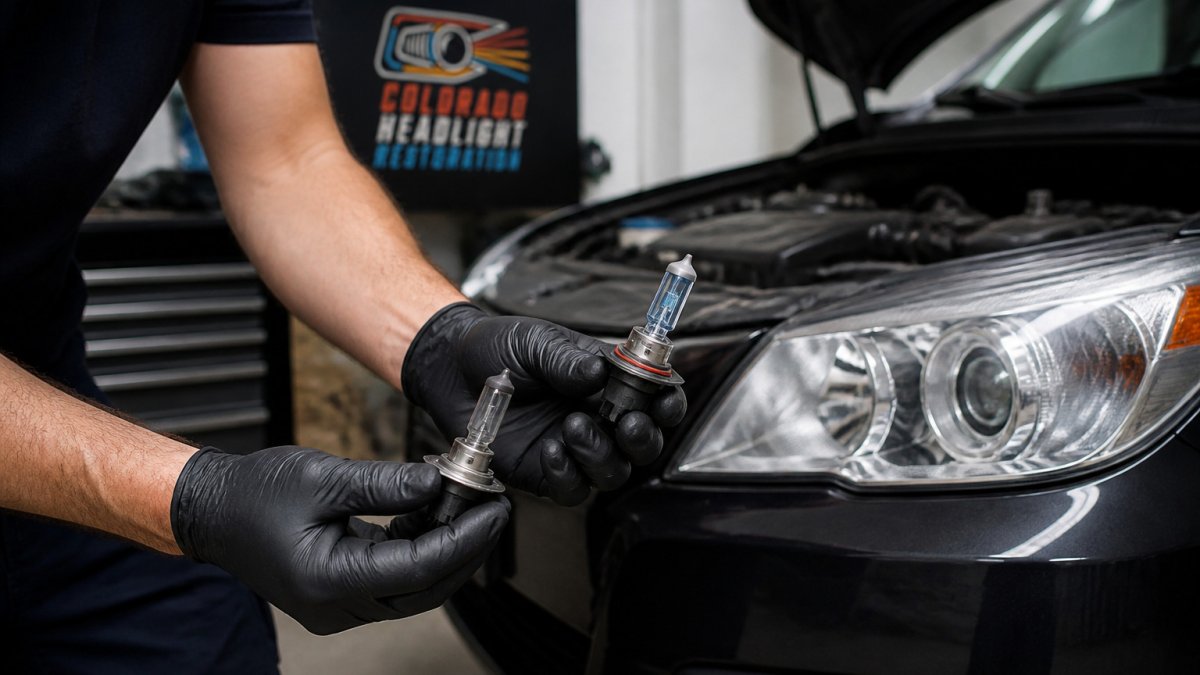
Last Updated: November 4, 2026
Quick Summary
Most car headlight bulbs last between 500 and 1,000 hours, but the right time to replace headlight bulbs is when output has dropped enough to shorten your seeing distance, not only when a bulb burns out. Halogens typically last one to two years, LEDs several years, and HID bulbs roughly 2,000 to 3,000 hours. Replace bulbs in pairs.
- Halogen bulbs typically last about one to two years of regular use.
- LED headlights usually last several years, though heat and moisture can shorten them.
- HID bulbs are often rated for roughly 2,000 to 3,000 hours of use.
- Replace headlight bulbs in pairs so both sides match in brightness and color.
- Check the lens for cloudiness or yellowing before buying new bulbs.
Table of Contents
- How Long Car Headlight Bulbs Typically Last
- How Many Years Do Halogen Headlights Last?
- How Long Do LED Headlights Last in Years?
- How Long Do HID Headlights Last in Years?
- Signs a Headlight Bulb Needs Replacing, and Failure Versus Dimming
- Should You Replace Both Headlight Bulbs or Just One?
- Scheduling Your Next Headlight Check in Denver
- Frequently Asked Questions
How Long Car Headlight Bulbs Typically Last
Most car headlight bulbs last somewhere between 500 and 1,000 hours of use, though the exact figure depends on the bulb type and how often you drive at night. Understanding the difference between what bulbs are rated for and what drivers actually get out of them can help you decide when to replace headlight bulbs before dimming becomes a safety problem.
Bulbs rarely fail all at once. They lose output slowly, which is why many drivers don't notice until night driving starts to feel harder than it used to.
Rated life versus real-world use
Manufacturers print a rated life for each bulb, usually measured in hours. That number assumes a controlled test, not a car that sits in the cold, bounces over potholes and gets switched on every night.
Real-world life is often shorter. Frequent short trips, heat cycles and vibration all wear bulbs out faster. Check your owner's manual for the replacement guidance for your specific vehicle.
Bulb life varies by type, so here is how the typical lifespans compare.
| Bulb type | Typical life | Common warning sign |
|---|---|---|
| Halogen | About one to two years | Gradual dimming or yellowing |
| LED | Several years | One side looks darker |
| HID (xenon) | Roughly 2,000 to 3,000 hours | Color shift, slow warm-up, flicker |
How Many Years Do Halogen Headlights Last?
Halogen bulbs are the most common type in older vehicles. They typically last one to two years of regular use, depending on how many hours you run them.
Halogens lose brightness as the filament ages. You may notice a yellowish or dimmer beam long before the bulb actually burns out.
- Typical life: about one to two years of regular use
- Common warning sign: a gradual dimming of the beam
- Good practice: replace them in pairs for even light output
How Long Do LED Headlights Last in Years?
LED headlights usually last much longer than halogen bulbs, often several years. Their rated life is commonly much higher, but heat and moisture can still shorten it. Compare the full cost of a halogen-to-LED conversion before you decide.
Even LEDs can dim over time. If one side of your car looks noticeably darker, check the bulb, the connection and the lens before assuming the whole system is done.
How Long Do HID Headlights Last in Years?
HID bulbs, also called xenon bulbs, generally outlast halogens but fall short of LED life. HID bulbs are often rated for roughly 2,000 to 3,000 hours of use, which for a driver logging regular night and evening miles works out to a range of years depending on driving habits. The rated figure assumes a stable electrical supply and a sealed housing; real-world life is often shorter.
HID systems are more complex than halogens, and the bulb is only one part that can fail. Each HID lamp relies on a ballast to strike and regulate the arc and an igniter to fire it. A bulb can still light while the ballast degrades, and a failing ballast can mimic a failing bulb. That is why HID diagnosis should start with the whole system, not just the lamp.
What HID failure actually looks like
HID bulbs do not simply burn out. They shift color as they age, often toward pink, purple or a cooler blue, and they lose output gradually. A bulb that takes several seconds longer to reach full brightness, flickers after startup, or lights in a different color than its pair is a candidate for replacement even if it still produces light.
- Typical life: roughly 2,000 to 3,000 hours, or about three to five years of regular use
- Common warning signs: color shift, slow warm-up, flicker, dimming
- System parts to check: bulb, ballast, igniter, wiring and connectors
- Good practice: replace HID bulbs in pairs and have the ballast tested at the same time
Watch out: swapping a new HID bulb into a system with a failing ballast can shorten the new bulb's life, so diagnose the ballast before buying parts.
Why HID life varies by vehicle
HID output and lifespan depend on the housing, the ballast design and how the system is wired. Some vehicles run the bulbs at higher output and shorten life; others use a more conservative ballast and get closer to the rated hours. Rather than relying on a universal interval, check your owner's manual for the recommended inspection interval and the specified bulb type, and confirm the bulb number on the housing or in the manual before ordering. If the manual calls for a D2S, D1S or D3S bulb, that number matters, the wrong bulb can fit physically but run incorrectly.
Signs a Headlight Bulb Needs Replacing, and Failure Versus Dimming
Most drivers think of a headlight problem as a bulb that stops working. In practice, the more common and more dangerous failure is a bulb that still lights but no longer produces enough usable light. Knowing the difference changes when you replace and what you replace.
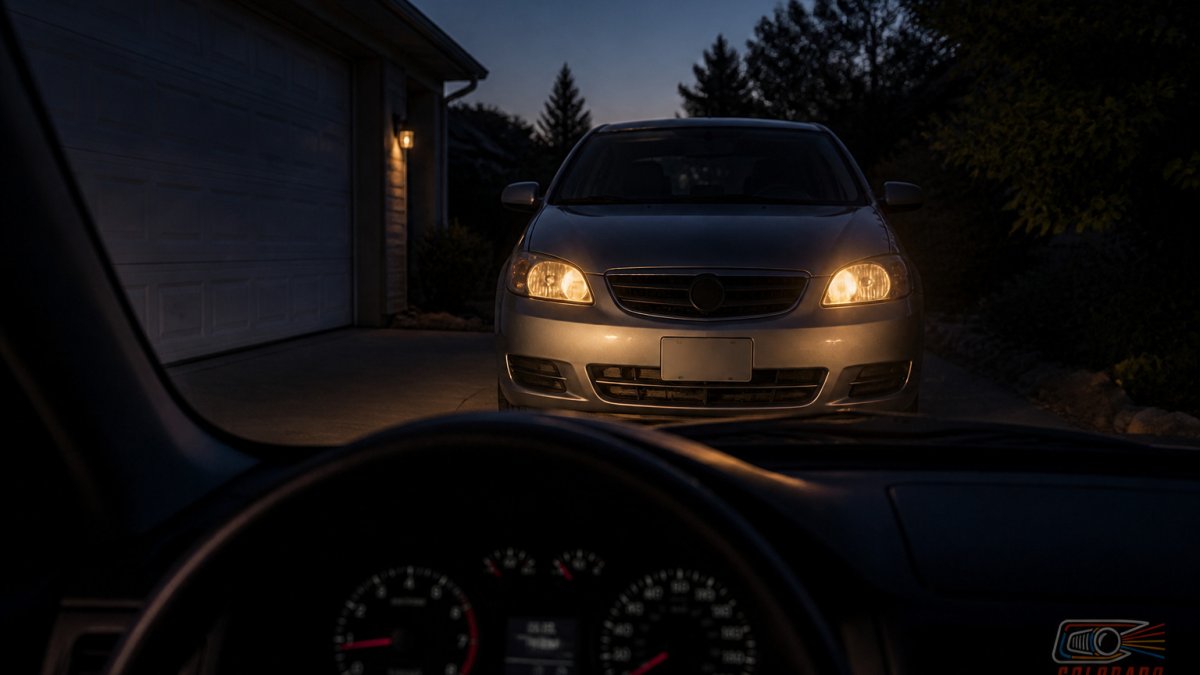
Watch for these signs that a bulb needs attention:
- The beam looks dimmer on one side than the other
- The light has turned yellow, blue or uneven in color
- One bulb has burned out completely
- The beam is aimed too high or too low
- Night driving feels harder than it did last year
- Oncoming drivers flash their high beams at you when yours are on low
Failure versus gradual dimming
A burned-out bulb produces no light at all, the fix is straightforward. A dimming bulb still works but puts out less light than it should, and that loss is easy to miss because it happens slowly. Halogen filaments thin with age and lose output well before they break; HID bulbs shift color and lose intensity; LEDs can dim as heat and moisture degrade the emitter and driver. In each case the lamp can pass a quick "is it on?" check while failing the test that matters: can you see far enough to stop in time?
Clouded or yellowed lenses can mimic dim bulbs, so check the lens before buying new bulbs. Learn to spot headlight UV coating failure early by checking for yellowing, peeling and cloudiness. A hazy lens scatters light and can cut output dramatically even with a healthy bulb behind it.
How to assess output and aim yourself
A practical check takes a few minutes and a flat, level surface facing a wall:
- Park about 25 feet from a wall on level ground and note where the top edge of each beam lands.
- Compare the two sides, a noticeable height or brightness difference points to a failing bulb, a misaimed housing or a lens problem.
- Look at the color of each beam; a pink or purple HID or a yellowed halogen on one side signals age.
- Walk to the front of the car at night and compare the two lamps side by side; uneven output is easier to see from outside the cabin.
- Check the lens for cloudiness, cracks or moisture before blaming the bulb.
If the beam pattern is uneven but both bulbs look healthy, the issue may be aim rather than output. Many states require headlights to be aimed within specified limits, and a shop with an aiming screen can reset them correctly.
When to replace for safety rather than failure
Replace when output has dropped enough to shorten your seeing distance, not only when a bulb dies. A common pattern is to replace a bulb at the first sign of dimming or color shift, and to replace the pair together so both sides match in brightness and color. An older companion bulb is usually close to failing, and mismatched output is its own safety problem.
Vehicle-specific guidance beats a universal interval
There is no single correct replacement interval across all vehicles. Check your owner's manual for the recommended inspection schedule and the specified bulb type, find the bulb number on the housing or in the manual, and note whether your vehicle uses a conventional halogen, HID or LED system, each has different failure modes and different replacement procedures. If the manual specifies a bulb number, match it exactly; the wrong bulb can fit but run too hot, too dim or with the wrong beam pattern.
Watch out: never touch a halogen bulb's glass with bare fingers. Oils from your skin create hot spots that can crack the bulb or shorten its life, so handle it with a clean cloth or gloves.
Should You Replace Both Headlight Bulbs or Just One?
Replace both bulbs at the same time whenever possible, since you should replace headlight bulbs in pairs. Bulbs age at roughly the same rate, so if one has failed, the other is usually close behind.
Matching bulbs also keep the light even on both sides of the road. A new bulb paired with an old one often produces uneven brightness and color.
Scheduling Your Next Headlight Check in Denver
If you're in the Denver area and your headlights look cloudy, yellowed or dim, a professional check can save you time. Colorado Headlight Restoration offers mobile headlight restoration that comes to your home or office, taking about 30 to 60 minutes. See local Thornton mobile service and pricing.
Book a headlight restoration visit to restore clarity to cloudy lenses, or compare LED and halogen options for Colorado driving. You can also call (303) 514-8037 to schedule a visit or ask about current pricing on our website.
Frequently Asked Questions
How long do headlight bulbs usually last?
Most halogen bulbs are rated for roughly 450 to 1,000 hours of use, while LED and HID bulbs are often rated for considerably longer. Real-world life depends on how often the lights are switched on, driving conditions, vibration, moisture inside the housing, and the electrical system. Check your owner's manual for the bulb type your vehicle uses, and treat any published lifespan as a rough guide rather than a guarantee. A bulb that is still lit but noticeably dimmer or uneven should be inspected even if it has not burned out.
Should I replace both headlight bulbs or just one?
In most cases, replace both bulbs at the same time. The bulb that remains has been exposed to the same heat, vibration, and hours of use, so it is often close to the end of its life. Matching bulbs also keep color temperature and light output consistent, which avoids uneven illumination on the road.
Can dim headlights mean the bulbs are wearing out?
Yes, gradual dimming is a common sign of an aging bulb, especially with halogen types. However, dim headlights can also come from a cloudy or oxidized lens, a dirty housing, misaligned beams, or a weak electrical connection. Test by comparing the light output of both headlights against a wall at night, and inspect the lenses for haze. If the lens is clear and the beam is still weak, the bulb or the wiring should be checked.
What are the signs that a headlight bulb needs replacing?
Common signs include a bulb that has completely stopped working, flickering or intermittent operation, a color shift toward orange or purple, visibly reduced brightness compared with the other side, and a burned or blackened appearance inside the glass. If a bulb fails repeatedly within a short period, look for causes such as loose connectors, moisture in the housing, or a voltage problem before installing another bulb.

Learn more about our headlight restoration in Denver, or see headlight restoration in Longmont.
Cloudy headlights? Get your price in 30 seconds.
Mobile service across the Denver metro. Most vehicles finished in 30–60 minutes, right in your driveway.