Last Updated: November 1, 2026
Quick Summary
The cost difference between halogen and LED headlight conversion depends on your housing: a halogen bulb is a cheap consumable, while an LED headlight conversion is a system upgrade whose price hinges on whether your housing is projector or reflector. Projector housings need only a kit, but reflector housings often require a projector retrofit or full assembly, pushing totals far higher.
- A projector housing with accessible bulbs needs only an LED kit, costing $40 to $250 in parts.
- A reflector housing proper retrofit runs $300 to $800 or more in parts, plus $300 to $800 or more in labor.
- Full assembly replacement costs $400 to $1,500 or more per pair, plus $200 to $600 or more in labor.
- Over five years and 60,000 miles, estimated parts totals are $60 to $240 for halogen versus $70 to $330 for LED.
- Inspect the lens first, since oxidation and clouding block light that a bulb upgrade cannot fix.
Table of Contents
- LED vs. Halogen Headlights: What You Actually Pay For
- Upfront Cost: Halogen Bulbs vs. an LED Headlight Conversion Kit
- LED Headlight Installation Cost: DIY vs. Paying a Shop
- Are LED Headlight Conversion Kits Legal for Road Use?
- Long-Term Cost: Lifespan, Energy Draw, and Replacement Frequency
- Headlight Restoration vs. Replacement Cost: The Third Option
- Deciding Which Option Fits Your Vehicle and Budget
- Book a Headlight Restoration and Skip the Conversion Bill
- Frequently Asked Questions
LED vs. Halogen Headlights: What You Actually Pay For
The cost difference between halogen and LED headlight conversion comes down to two very different purchases. A halogen bulb is a cheap consumable you replace every few years. An LED headlight conversion is a system upgrade, and the price depends far more on how your headlight housing is built than on the bulbs themselves.
Here is the core distinction most buyers miss. Halogen headlights push current through a tungsten filament that glows and slowly burns out. LED headlights use light-emitting diodes that run cooler, draw less power, and last far longer. The U.S. Department of Energy guide to LED lighting explains why LEDs convert more electricity into light and less into heat.
That efficiency is real. But the sticker on the box is only one line item in the total cost of ownership.
Upfront Cost: Halogen Bulbs vs. an LED Headlight Conversion Kit
A halogen replacement bulb is the cheapest path forward. Halogen replacement bulbs are the cheapest path forward, and most drivers replace them in pairs for even light output.
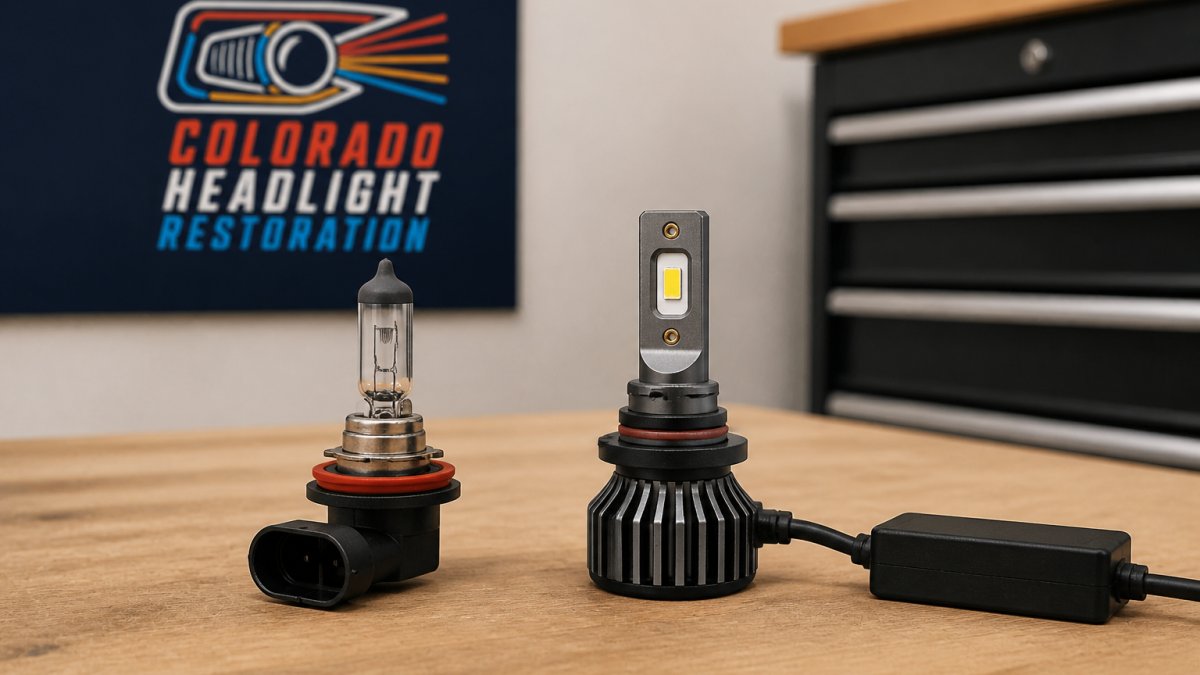
An LED headlight conversion kit costs more up front because you are buying emitters, drivers, and cooling hardware in one package.
The real upfront cost depends on what your vehicle needs beyond the bulbs, and that is where the totals separate. If a full assembly swap turns out to be the answer, see our cost of replacing headlight assemblies guide.
Itemized Conversion Costs by Vehicle Type
Use this breakdown to build a realistic total instead of comparing bulb prices in isolation.
| Vehicle situation | Parts | Typical parts total | Labor (if shop-installed) |
|---|---|---|---|
| Projector housing, accessible bulb | LED kit only | $40-$250 | $0 (DIY) to $100-$200 |
| Reflector housing, drop-in kit | LED kit plus adapters | $60-$300 | $100-$200 |
| Reflector housing, proper retrofit | Projectors, shrouds, housing work, LED kit | $300-$800+ | $300-$800+ |
| Bumper-removal or hidden housing | LED kit plus trim/clips | $60-$300 | $200-$400 |
| Full assembly replacement | New assemblies plus bulbs | $400-$1,500+ per pair | $200-$600+ |
A common pattern is that the kit price is the smallest line item once a reflector housing forces a projector retrofit or a full assembly swap. Drivers who budget only for the kit are the ones most often surprised at checkout.
What Comes in a Conversion Kit
A typical kit includes two LED bulbs, a driver or ballast for each side, a cooling fan or braided heat sink, and a wiring adapter. Some kits add CANbus modules to stop dashboard error codes on newer vehicles.
- Two LED emitters with matched color temperature
- Heat dissipation hardware, usually a fan or braided sink
- Plug-and-play wiring harness or adapter
- Optional anti-flicker or error-canceler modules
Check the kit contents against your housing before buying. A kit that lacks a proper adapter or error-canceler can add $20 to $80 in separate parts and still leave you with a dashboard warning.
When Bulbs Alone Are Not Enough
Here is the part that changes the math. If your headlight housing uses a reflector bowl rather than a projector assembly, a drop-in LED bulb can scatter light into oncoming traffic and fail to put light where you need it. In those cases a conversion needs more than bulbs: it needs a projector retrofit or a full assembly, which costs more than the kit alone.
LED Headlight Installation Cost: DIY vs. Paying a Shop
Installation cost splits cleanly into two routes. Doing it yourself costs only your time and a few basic tools. Paying a shop adds labor, and labor is where the total bill surprises people.
DIY installation is realistic on many vehicles. If you plan to do it yourself, our list of DIY headlight replacement tools and safety tips covers the essentials before you start.
Shop labor varies by vehicle, so ask for a quote rather than guessing. On vehicles that require bumper removal, expect the labor line to grow.
| Route | What You Pay For | Best For |
|---|---|---|
| DIY install | Tools and your time | Simple, accessible bulb housings |
| Shop install | Parts plus hourly labor | Bumper removal, tight engine bays |
| Full retrofit | Projectors, housing work, alignment | Reflector housings, strict inspections |
Are LED Headlight Conversion Kits Legal for Road Use?
Legality is where LED conversions get complicated, and the answer is not a simple yes. Federal rules govern the lighting equipment itself, while state inspection requirements decide what passes on the road. A kit marketed as "off-road only" is exactly that.
The relevant federal standard is FMVSS No. 108, the lighting equipment standard, which sets requirements for lamps and reflective devices. Factory LED and matrix systems are not immune to lens problems either, learn how LED and matrix headlights can be restored.
Housing and Beam Pattern Compatibility
Beam pattern and cutoff decide whether a conversion is safe and legal in practice. A proper cutoff keeps light below the horizon so you see the road without blinding oncoming drivers. Projector housings control that cutoff well. Reflector housings rarely do with a drop-in LED.
Glare is the tell. If oncoming cars flash their high beams at you after a conversion, your beam pattern is wrong.
Long-Term Cost: Lifespan, Energy Draw, and Replacement Frequency
Long-term savings depend on how long you keep the vehicle, and the only honest way to compare is to run the numbers over a defined ownership window with stated assumptions. Here is a transparent lifetime comparison using a five-year, 12,000-miles-per-year ownership period, 60,000 miles total.
Assumptions used in this comparison:
- Halogen bulb life: shorter than LED, so halogens need replacing more often.
- LED kit life: rated by most manufacturers for longer service, though real-world life is often limited by the driver or cooling fan rather than the emitter.
- Energy: LED bulbs draw less power than halogen bulbs, which eases the electrical load.
Five-year parts cost, bulbs only:
| Item | Halogen | LED (basic to mid-tier kit) |
|---|---|---|
| Initial purchase | $20-$60 | $40-$250 |
| Replacements over 5 years | 2-3 pairs ($40-$180) | Usually none, but budget one driver or fan failure ($30-$80) |
| Estimated 5-year parts total | $60-$240 | $70-$330 |
The LED advantage grows if you keep the vehicle longer or if your halogen housings are easy to access and you do the swaps yourself. It shrinks if you pay a shop for each halogen replacement, since labor can exceed the bulb price.
Where the real long-term cost hides:
- Cooling hardware. A kit with a weak cooling fan fails early, and a failed driver often means buying the whole kit again rather than a single bulb.
- Moisture and housing condition. A cracked or water-filled housing kills LED drivers faster than halogens, and the repair cost belongs in the lifetime total.
- Dashboard warnings and flicker. CANbus issues can require additional modules, adding cost after the initial purchase.
- Warranty terms. Compare warranty length and what it covers, emitter only versus full kit, because a short warranty shifts replacement cost back to you.
- Replacement availability. A discontinued kit can force a full re-purchase if one side fails.
Lower power draw eases the electrical load. Heat dissipation, not emitter life, is the real reliability factor, and reliability is what actually drives lifetime cost.
Headlight Restoration vs. Replacement Cost: The Third Option
Before you spend on a conversion, check whether your headlights are actually dim because of the bulbs or because of the lens. Oxidation, yellowing, and clouding block light before it ever leaves the housing.
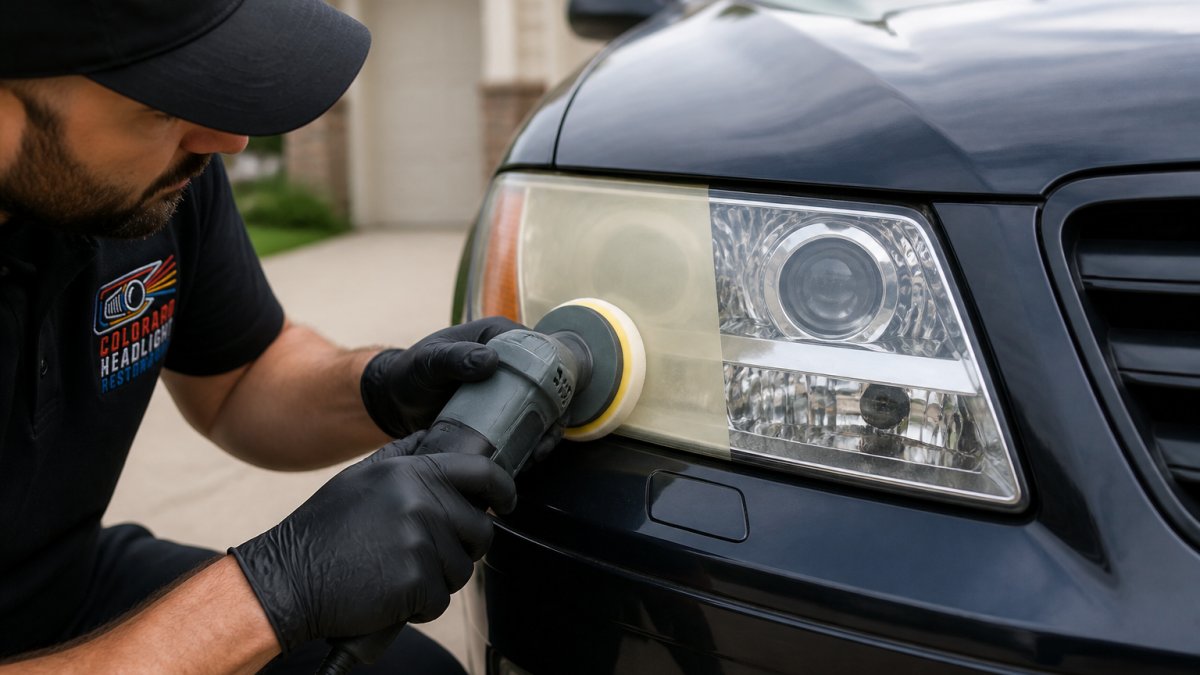
Headlight restoration is the process of removing oxidized clear coat and re-sealing the lens so it passes light like it did when new. See our headlight restoration cost in the Denver metro for local pricing and what the service includes.
Our mobile service restores lenses to OEM clarity in 30 to 60 minutes and finishes with a ceramic UV sealant rated for up to three years. We back it with a one-year free re-restoration guarantee.
Deciding Which Option Fits Your Vehicle and Budget
Match the fix to the actual problem. That is the whole decision, and it saves the most money.
- Cloudy or yellowed lens, bulbs working: restore the lens first. Cheapest fix, biggest visibility gain.
- Burned-out halogen bulb, clear lens: replace the bulbs. Skip the conversion.
- Projector housing, clear lens, want more light: a quality LED conversion is worth considering.
- Reflector housing: budget for a projector retrofit or skip the conversion entirely.
- Cracked or water-filled housing: replacement is unavoidable.
Our recommendation: inspect the lens before you buy any kit. Most drivers who call us about "dim headlights" have a lens problem, not a bulb problem.
Book a Headlight Restoration and Skip the Conversion Bill
If your lenses are cloudy, oxidized, or yellowed, restoration can deliver the visibility gain you need. Our mobile team comes to your home or office, restores your lenses to OEM clarity in 30 to 60 minutes, and seals them with a ceramic UV coating rated for up to three years. Every job includes our one-year free re-restoration guarantee.
Get started with Colorado Headlight Restoration and see the road clearly again. Book a headlight restoration.
Frequently Asked Questions
How much does it cost to convert halogen headlights to LED?
Parts are the biggest variable, and prices depend on brand and vehicle. Add installation if you pay a shop, plus adapter or wiring costs on some vehicles. Prices vary widely by fitment, so get a quote for your specific make and model before committing.
Are LED headlight conversion kits legal for road use?
It depends on the kit and the housing. Federal rules require replacement lighting to meet the same photometric standards as the original equipment, and dropping an LED bulb into a reflector housing built for halogen often scatters light and creates glare. Check your state inspection rules and confirm the kit is sold for your specific assembly. A kit that is not designed for your housing can fail inspection even if the bulbs themselves work.
Which is cheaper, LED or halogen?
Halogen bulbs usually cost less up front, and you can often install them yourself. LEDs cost more initially but are generally rated to last longer. Whether LEDs save money over time depends on how long you keep the vehicle and whether the kit is reliable.
Do LED headlight conversion kits need professional installation?
Many kits are plug-and-play and can be installed at home with basic hand tools, especially on vehicles with accessible bulb housings. Some require removing the bumper or headlight assembly, adding adapters, or fitting a cooling fan into a tight space, which is where labor costs climb. If your housing needs modification or the kit includes external drivers, a shop is the safer choice to avoid fitment and warranty problems.
Is it better to restore my headlights or replace the whole assembly?
If the lens is cloudy or yellowed but the housing is intact, restoration can bring back usable light output. Replacement makes sense when the housing is cracked, waterlogged, or the internal reflector has failed. A professional restoration with a UV sealant also protects against the sun damage that caused the clouding in the first place, which is why many drivers choose it before considering a full assembly swap.

Learn more about our headlight restoration in Denver, or see headlight restoration in Longmont.
Cloudy headlights? Get your price in 30 seconds.
Mobile service across the Denver metro. Most vehicles finished in 30–60 minutes, right in your driveway.