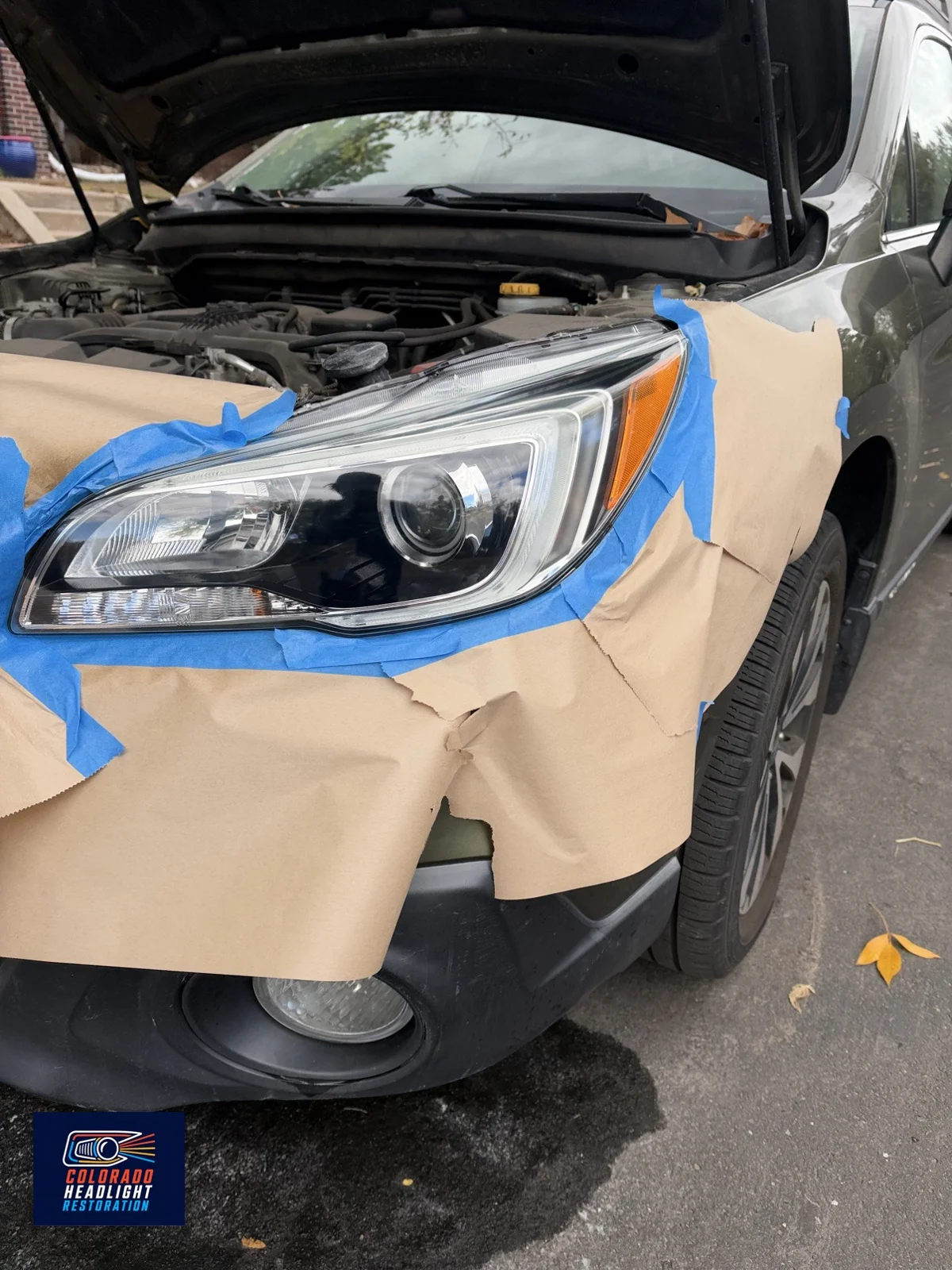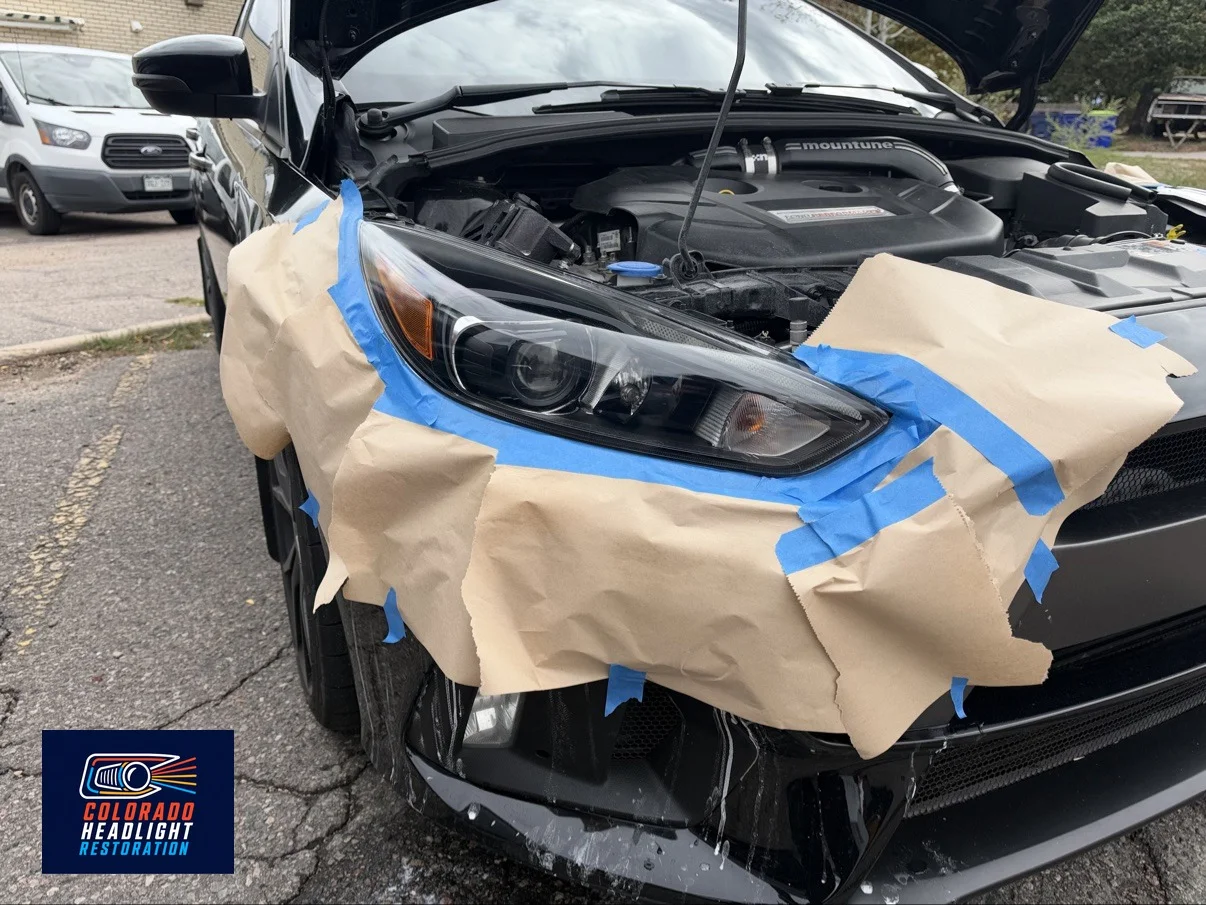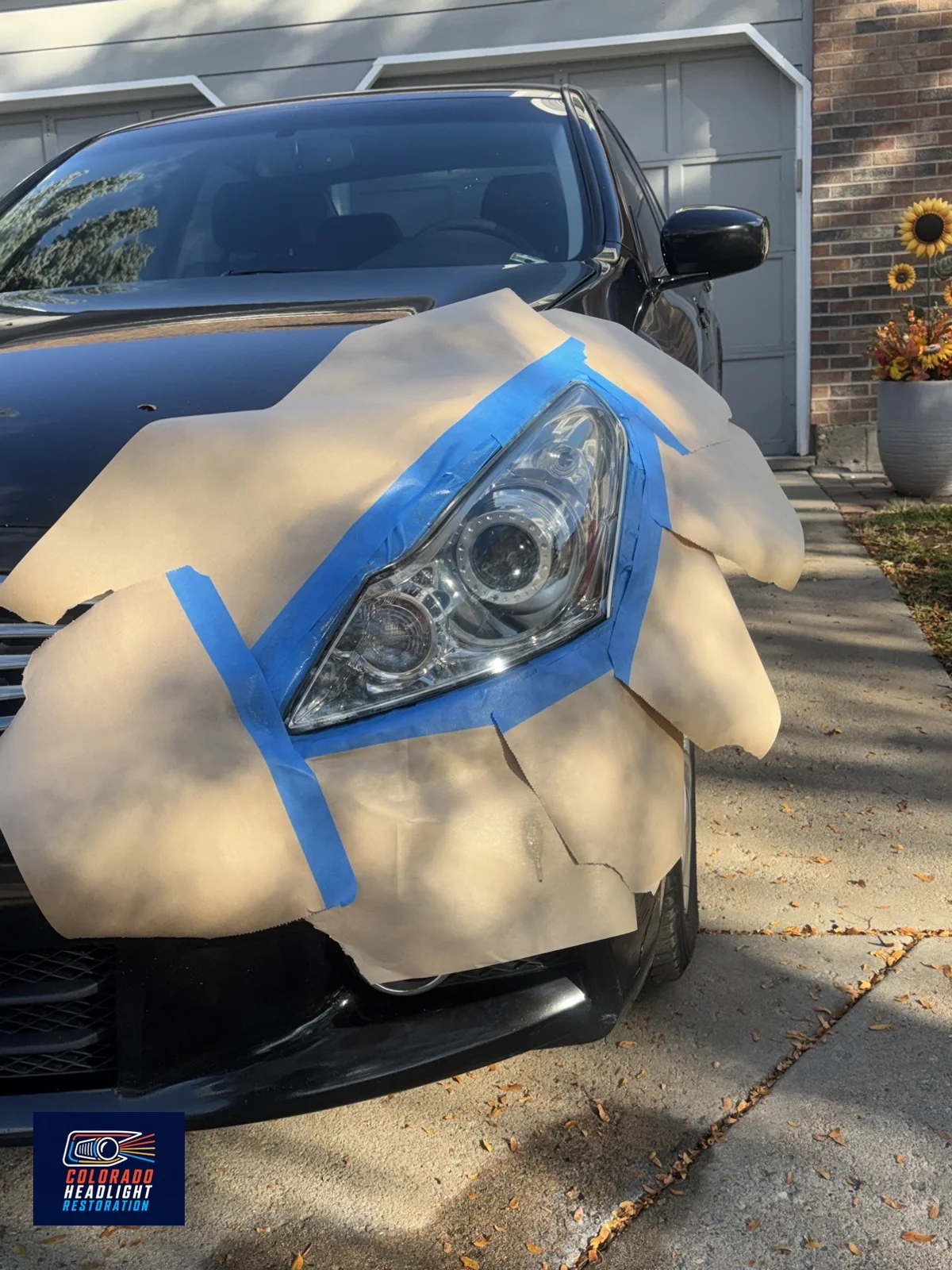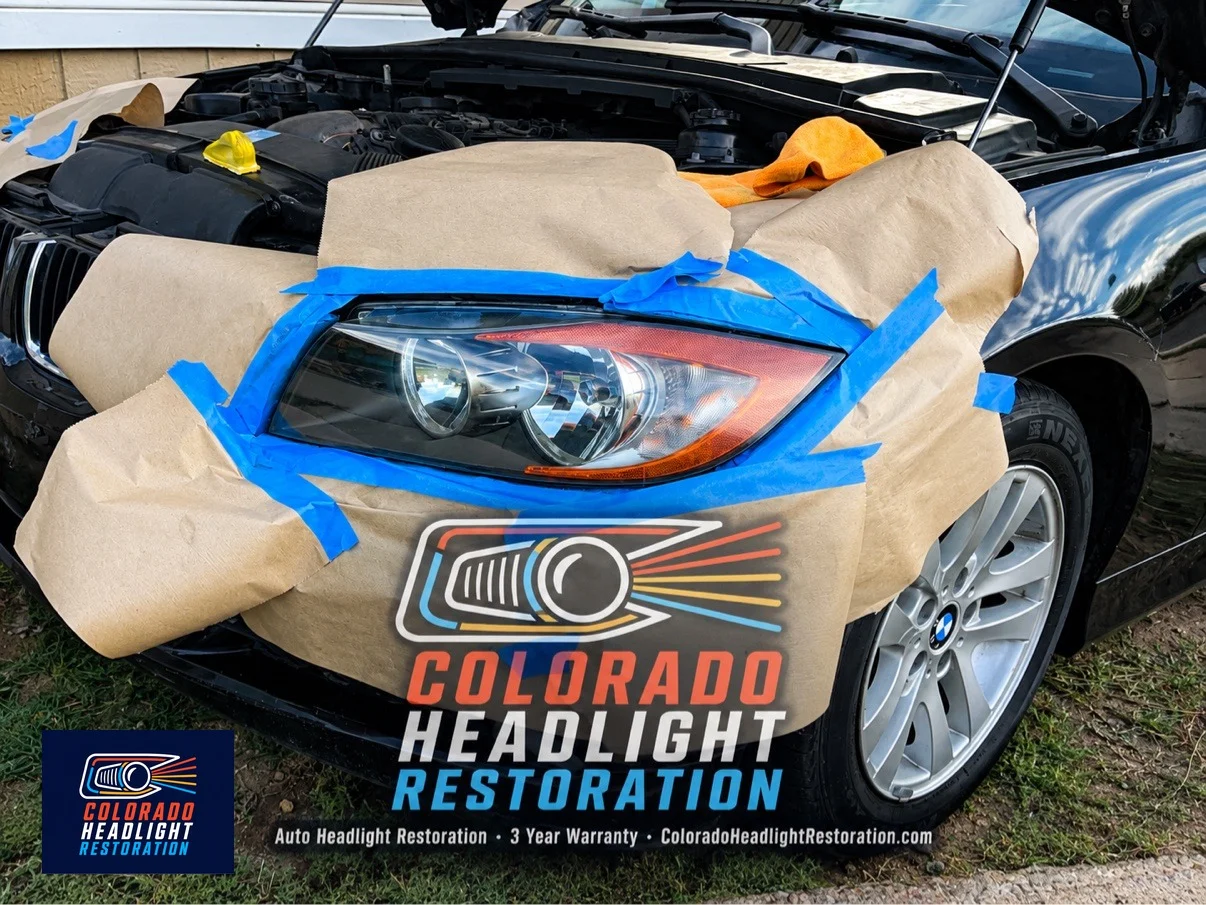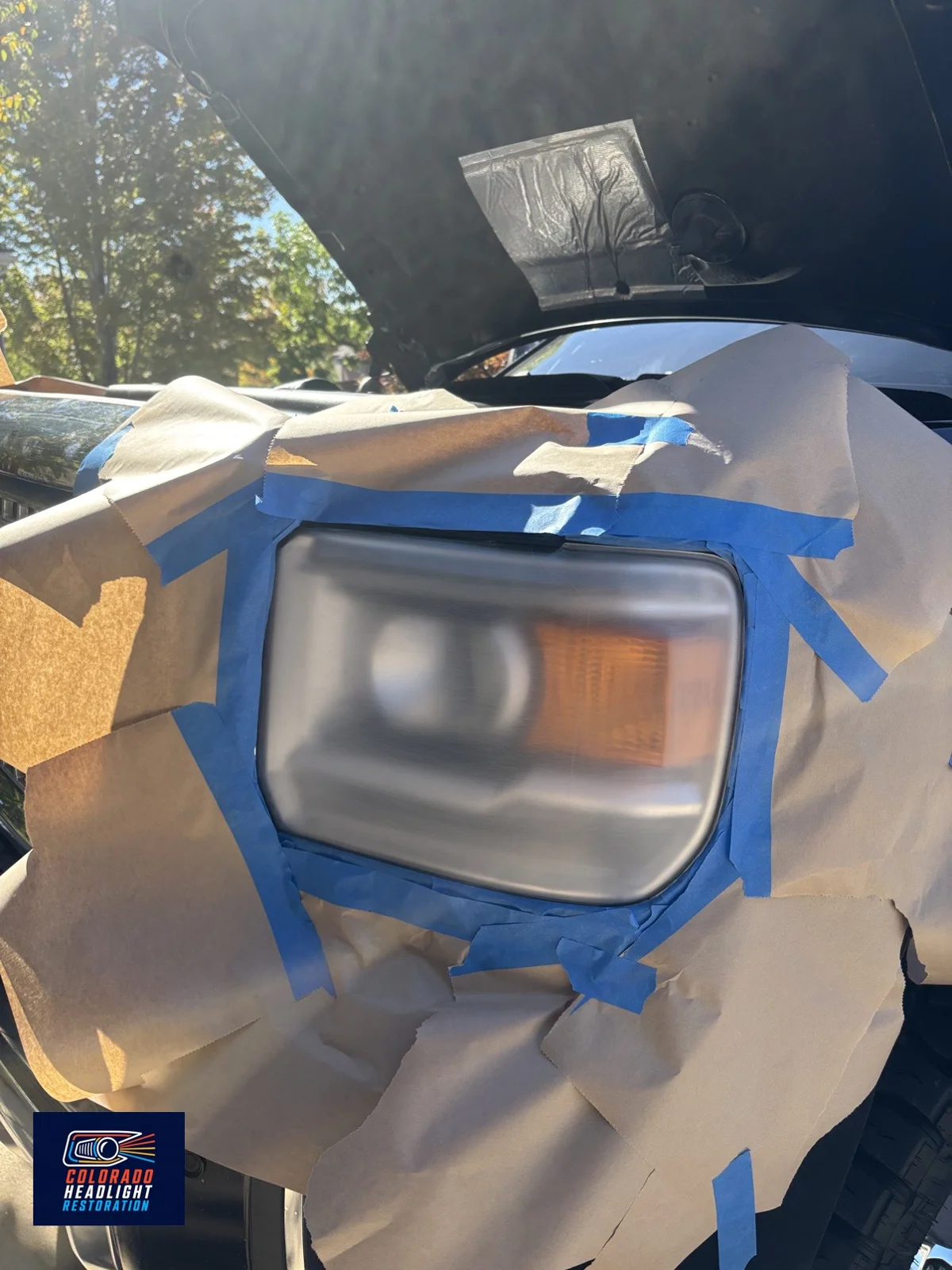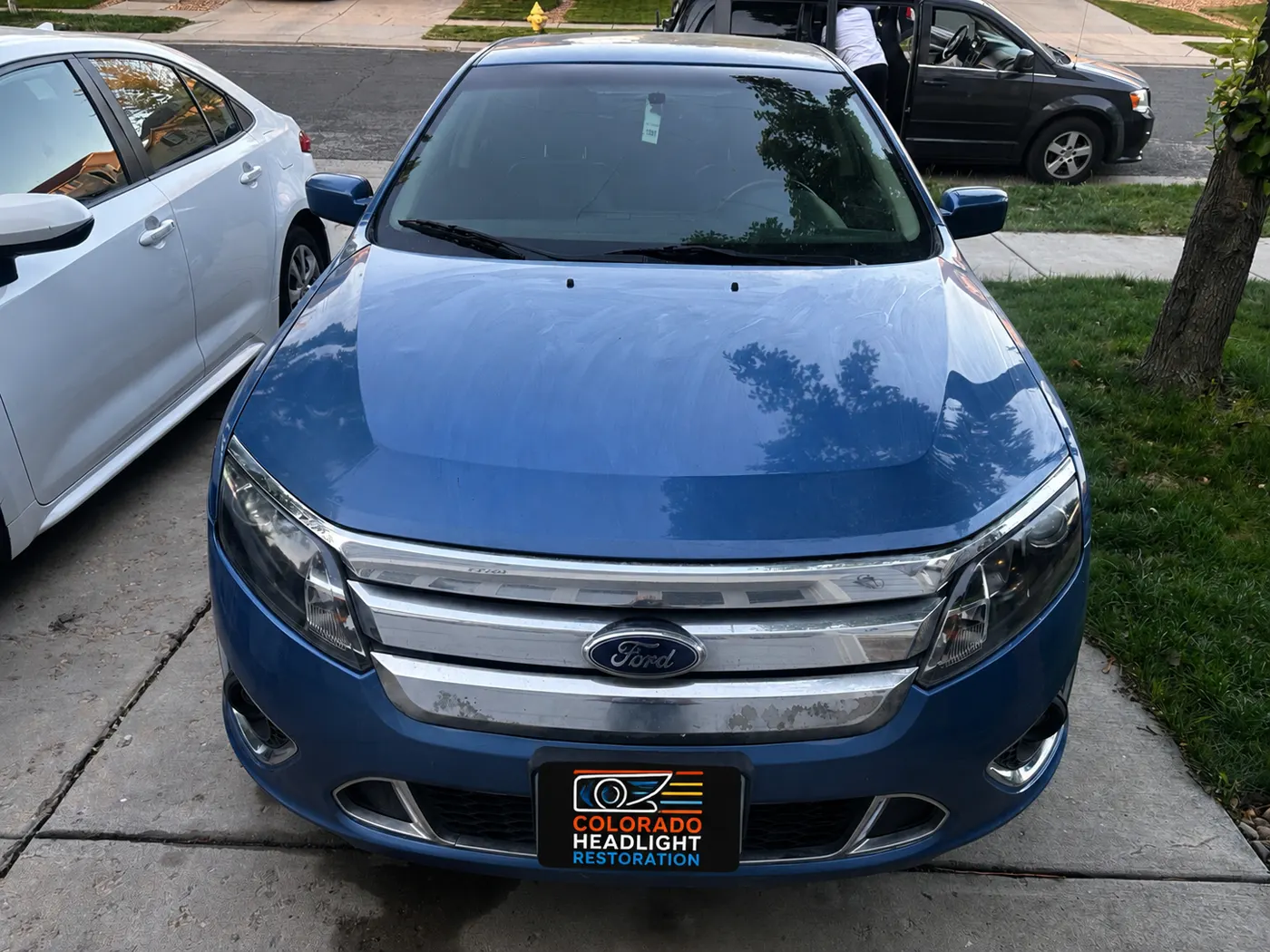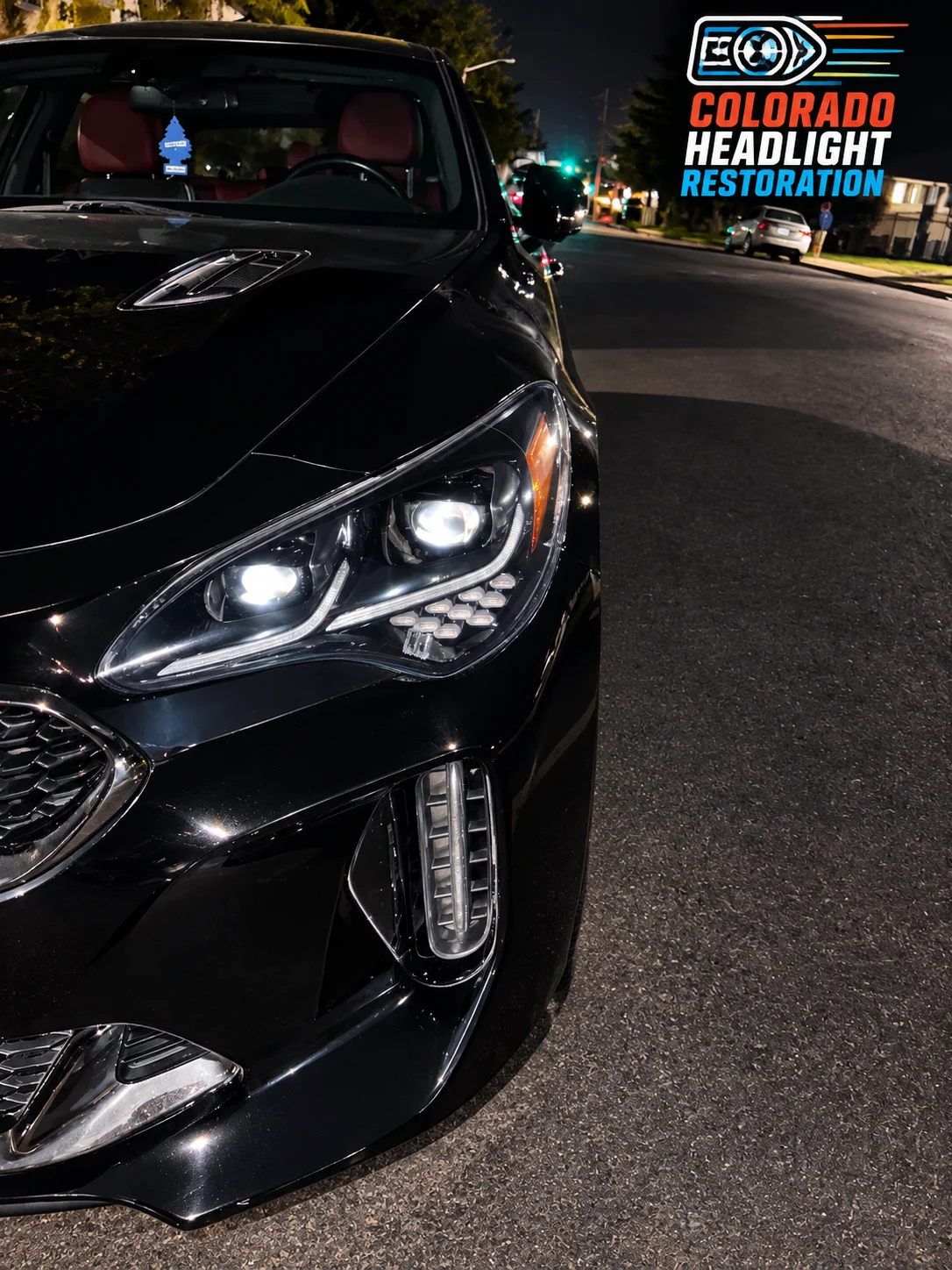
Proper surface preparation
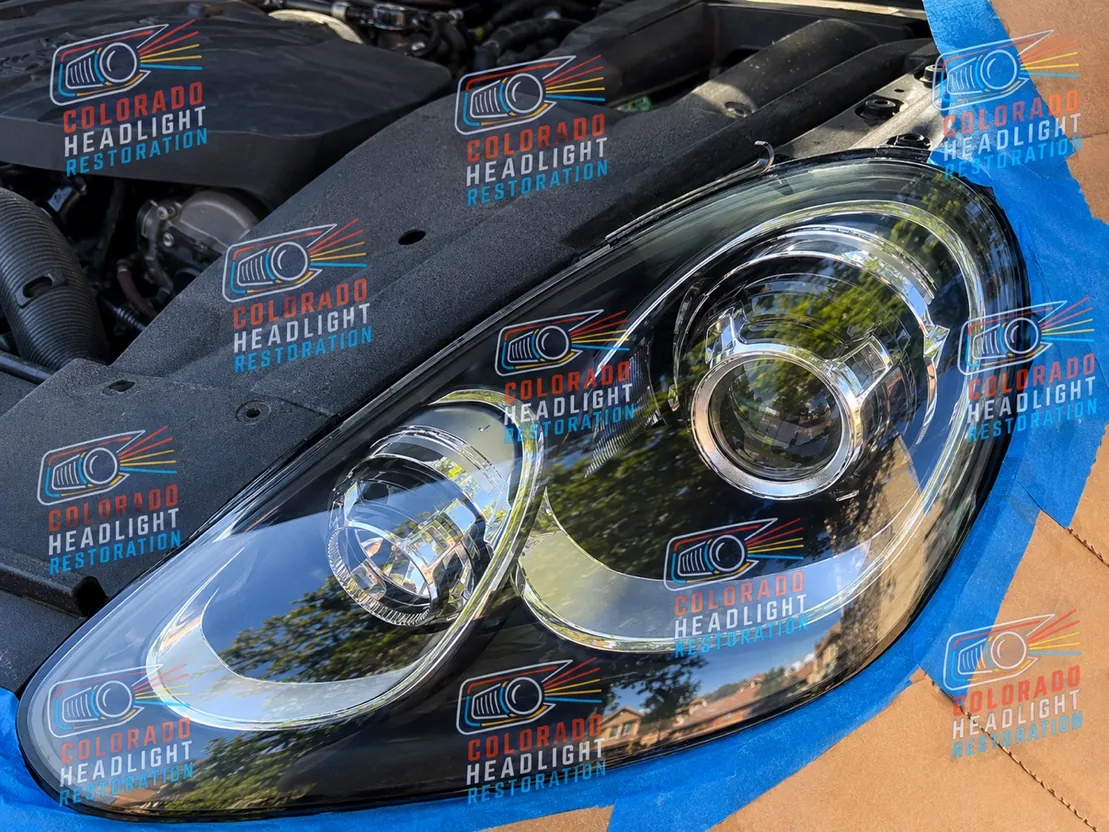
The failed factory coating and oxidation are fully removed, then the lens is refined and cleaned so the new coating bonds to a sound surface.
PROFESSIONAL MOBILE SERVICE
Clear Headlights Are Only Half the Job.
We restore cloudy, yellowed headlights at your Denver-area home or office in 30–60 minutes. Both headlights start at $100 — most vehicles are $100–$175 depending on vehicle and lens condition — with a professional-grade protective clearcoat and a 3-year warranty included.
Professional-Grade Protective Clearcoat Included · 3-Year Warranty
Mobile service near you
We come to your driveway, office, or job site with everything needed. Most vehicles are restored in 30–60 minutes. Both headlights start at $100. Most vehicles are $100–$175 depending on the vehicle and how oxidized the lenses are; one headlight is $50–$60. Caleb confirms the final price before starting.
Popular service areas
Professional-Grade Protective Clearcoat Included · 3-Year Warranty
Check all Denver-metro service areasCaleb did a fantastic job, he takes pride on his craft restoring my headlights. I'm very grateful to find him.
Amazing work! My headlights were cloudy and yellowed, and now they look brand new - crystal clear, like they just came off the lot. The technician was professional, careful, and took the time to do it right. Huge difference in how my car looks and how well can see at night. Highly recommend if your headlights need a refresh!
Great experience with Colorado Headlight Restoration. Caleb was responsive, communicated well, and got me scheduled quickly. He came to my office and restored both headlights on my older Nissan Rogue in just over an hour. The results were excellent. I was happy to support someone who clearly works hard and takes pride in his work. Friendly, professional, reasonably priced, and top-notch work. Highly recommend!
Very professional and high quality work, it's an older vehicle but managed to leave the headlights as if they were new. I recommend their work 100% and will definitely use them again
More than sanding and polishing
A freshly polished lens is bare plastic until it's protected. Three things decide how long that clarity lasts.
The failed factory coating and oxidation are fully removed, then the lens is refined and cleaned so the new coating bonds to a sound surface.
Coatings differ in UV protection, durability and resistance to yellowing. We use a professional-grade clearcoat formulated for headlight lenses. Many products like it are sold through specialized suppliers rather than auto-parts stores.
Denver's altitude means more UV on your lenses every day. A UV-resistant clearcoat helps slow the yellowing that made your headlights cloudy in the first place.
Many DIY kits can improve clarity for a while. The difference in a professional restoration is the preparation and the protection that follows.
If your lenses fade noticeably within 3 years, we come back and re-restore them at no charge. Sun exposure, parking and care still affect every headlight — that's why we stand behind the work.
Find Us On Google
Mobile headlight restoration across the Denver metro. See what Colorado drivers say, then tap through to our Google listing.
View Our Google ListingDenver Service Area
We come to your driveway, curb or office parking lot all over Denver. Denver driving is hard on headlights: at a mile high, lenses take more UV than at sea level, spring hail storms leave grit and debris on the roads, and the magnesium chloride sprayed on winter streets coats lenses with a film that dulls them further. Over time the factory coating breaks down and the plastic turns cloudy and yellow.
We remove that oxidation on site, polish the lens and finish with a professional-grade protective clearcoat — usually in 30–60 minutes, with both headlights from $100 and a 3-year warranty included.
Get Your Instant QuoteSee the full Denver service page for more local details.
Why Choose Us?
Short answer
Headlight restoration costs $100–$175, takes 30–60 minutes at your home or office, and includes a professional-grade protective clearcoat. Replacement often costs $250–$2,000+ per assembly.
Restore vs Replace
Professional restoration with UV protection.
OEM or aftermarket headlight assemblies.
Our Process
We confirm restoration is the right fix.
Oxidation and yellowing are removed.
Lenses are polished to optical clarity.
Professional-grade protective clearcoat locks in clarity.
Colorado Conditions
Every modern headlight lens is molded from polycarbonate — light, shatter-resistant, and unfortunately very sensitive to ultraviolet light. From the factory the lens carries a thin protective hard coat. That coat is what actually fails. Once it thins and cracks, sunlight reaches the raw plastic underneath, oxidizes it, and the lens turns hazy, then yellow, then chalky.
Along the Front Range that clock runs faster than it does at sea level. Denver sits a mile up, where the atmosphere filters noticeably less UV, and the metro area averages well over 240 sunny days a year. Cars parked outside at work, in apartment lots, or on the street take that exposure on the hood-facing surface of the lens all day long. We routinely see five- and six-year-old vehicles with oxidation that would take a decade to develop in a milder, cloudier climate.
Winter adds a second kind of damage. Colorado road crews rely heavily on magnesium chloride brine and sand. The brine leaves a mineral film that holds moisture against the lens, while sand and grit thrown up on I-25, I-70 and I-76 sandblast the surface into a field of fine pits. Hail does the same thing in one afternoon. Pitted, filmed, sun-baked lenses scatter light instead of projecting it — which is why the problem shows up as poor night vision long before it looks bad in the driveway.
Restoration is not a polish. The failed factory coating and the oxidized layer of plastic beneath it have to be physically removed, and then the lens has to be brought back to optical clarity before anything is sealed over it. We wet-sand through a progression of grits — starting coarse enough to cut past the damage, then stepping finer until the sanding marks are too small to scatter light. Skipping grits is the single most common reason a driveway restoration looks cloudy again within weeks.
After sanding, the lens is machine-polished with automotive compound until it reads clear against a light source, then cleaned with a solvent wipe so nothing is trapped under the sealant. The final step is a professional-grade protective clearcoat applied in a controlled coat and cured on the vehicle. That coat is the part that determines longevity: it replaces the protection the factory coating used to provide and helps restoration typically last 3–5 years and lets us back the work with a 3-year warranty, with free re-restoration inside the 3-year warranty.
The whole process takes 30 to 60 minutes for a typical pair of headlights, and we do it in your driveway, your apartment lot, or your office parking space. Nothing is removed from the vehicle, no wiring is touched, and there is no headlight aiming or sensor recalibration to worry about afterward — all of which are real costs when a shop replaces an assembly instead.
Restoration works when the damage is on the outside of the lens, which covers the large majority of cloudy headlights we see: yellowing, milky haze, chalky film, light pitting, and wiper-style scuffing. In those cases you can expect a dramatic improvement in both appearance and usable light output for a fraction of what a new assembly costs.
There are limits, and we would rather tell you before we start. Deep cracks through the lens, moisture trapped inside the housing, a broken mounting tab, burned-out bulbs, or fogging on the inside surface are not surface problems and cannot be sanded away. Severely delaminated lenses sometimes need extra passes and an in-person look before we quote. If your headlights fall into that group, we will say so and point you toward the cheaper or more durable fix rather than sell you work that won't hold.
For everything else, clear lenses are one of the least expensive safety upgrades available on an older vehicle. Oxidized headlights can lose a large share of their effective beam distance, which matters on unlit stretches of Colorado highway, in canyon driving, and during the long dark commutes between November and March. It also matters at resale, where cloudy lenses read as deferred maintenance.
Cost & Scheduling
Both headlights start at $100. Most vehicles are $100–$175 depending on the vehicle and how oxidized the lenses are; one headlight is $50–$60. Caleb confirms the final price before starting. The estimate reflects the lens condition and the work involved, including removing failing factory clear coat. Adding both fog lights is $10 on top of whatever the headlights come to.
Both headlights start at $100. Most vehicles are $100–$175 depending on the vehicle and how oxidized the lenses are; one headlight is $50–$60. Caleb confirms the final price before starting.
| Vehicle | Price |
|---|---|
| Sedans & small cars (except Kia/Hyundai), light to heavy oxidation | $100–$125 |
| Kia & Hyundai, any body style | $100–$150 |
| SUVs, crossovers, minivans & small vans, light to heavy oxidation | $100–$140 |
| Cars & SUVs with severe oxidation (heavy sanding) | $135–$150 |
| Pickup trucks, light haze | $100–$115 |
| Pickup trucks, moderate or heavy oxidation | $125–$165 |
| Pickup trucks, severe / failing clear coat | $150–$175 |
| Full-size vans | $100–$150 |
| Large SUV, truck or van headlights needing clearcoat removal | $150–$175 |
| One headlight | $50–$60 |
| Add both fog lights | +$10 |
You can price your own vehicle in under a minute with our instant quote calculator — pick your vehicle type and condition and tell us whether you want fog lights included. We don't add trip charges inside our service radius, we don't upsell coatings you already paid for, and the final price is confirmed by Caleb before starting.
Compare that to replacement. A single OEM assembly commonly runs $250 to $800, and on newer vehicles with projector or adaptive LED units it can pass $2,000 before labor. Add installation, and on many cars add headlight aiming or camera and sensor recalibration. Even budget aftermarket lenses frequently arrive with thinner UV coatings than the originals, which means the fogging comes back sooner than you expect.
Scheduling is deliberately simple. Tell us where the car will be parked and roughly when, and we bring water, power and everything else the job needs. Driveways, apartment and condo lots, office parking, and job sites all work; we only need a few feet of space around the front of the vehicle and dry conditions. Most appointments are booked within a day or two, and same-day slots open up regularly across the Denver metro.
We work on daily drivers, work trucks, family SUVs, classics, and small fleets. Fleet and multi-vehicle pricing is available when several vehicles are staged at one location — it is usually the cheapest way to bring an entire crew's trucks back to legal, usable light output in a single visit. If you are not sure whether your lenses are candidates, send a photo when you reach out and we will tell you honestly.
Warning Signs
Oxidation is gradual, so most drivers never notice the exact week their headlights stopped doing their job. The easiest check takes ten seconds in daylight: stand a few feet in front of the car and look at the lens from an angle rather than straight on. Clear polycarbonate reflects the sky cleanly. A degraded lens looks milky, chalky or faintly yellow, and the reflection breaks up instead of staying sharp.
Run a fingertip across the surface next. Healthy lenses feel slick, almost like glass. Once the factory UV coating has failed, the plastic feels dry and slightly rough, and a wet paper towel wiped across it will often lift a faint yellow film. That film is not dirt — it is the coating itself breaking down, and washing the car will not bring the clarity back.
At night the symptoms are more obvious. The beam looks fuzzy at the edges instead of throwing a clean line across the road, unlit streets feel darker than they used to, and oncoming drivers flash you even though your aim has not changed. Falling snow and rain seem to glare straight back at you because a hazed lens scatters light in every direction, including toward your own eyes.
A few other signs are worth acting on quickly: fine cracks that look like dry riverbed patterns, cloudiness that has crept in from the outer corner toward the center, condensation inside the housing after a wash, or a lens that has gone amber enough that the light itself reads warm rather than white. Cracking and internal moisture mean the surface is past the point where polishing alone helps, so send us a photo before you book and we will tell you honestly whether restoration or replacement is the right money.
Timing matters in Colorado more than in most states. Restore while the haze is still on the surface and the lens polishes back to near-new clarity, then holds that clarity under professional-grade protective clearcoat. Wait until the plastic has crazed all the way through and no amount of sanding will save it — at that point you are buying an assembly instead of a 30 to 60 minute appointment.
Sealant & Aftercare
Sanding and polishing is only half the job. Every headlight lens leaves the factory with a sacrificial UV coating, and once that layer is gone the raw polycarbonate underneath oxidizes fast. Polishing a lens without replacing that protection produces a beautiful result that yellows again in a matter of months — which is exactly why so many drivers assume restoration "doesn't last."
We finish every restoration with a professional-grade protective clearcoat that cures into a hard, glass-like protective film. It blocks the ultraviolet light doing the damage, resists road film, bug residue and winter road chemicals, and gives us the confidence to back the work: typically 3–5 years of protection, plus a free re-restoration inside the 3-year warranty if the lens hazes on us.
Aftercare is genuinely easy. Leave the vehicle dry for a couple of hours while the sealant cures, then wash the lenses the way you wash the paint — soap, water and a soft towel. Skip abrasive polishes, magic erasers, bug-and-tar removers and household cleaners containing ammonia, because all of them attack the coating you just paid for. A quick wipe after long highway trips or a snowy week does more for longevity than anything else.
Parking has a real effect too. Front-facing sun is the single largest factor in how quickly a lens degrades, so a garage, a carport, or simply backing into a spot on a south-facing lot buys you meaningful extra life at Colorado's altitude, where UV intensity runs noticeably higher than at sea level.
Every appointment includes the same steps regardless of vehicle: masking the surrounding paint and trim, multi-stage wet sanding to remove the failed coating and oxidation, machine polishing back to optical clarity, a solvent wipe-down, and the protective clearcoat application. We show you the finished lenses before we collect payment, and nothing about the process requires removing the assembly or drilling the housing.
Vehicles We Restore
Almost every vehicle on Colorado roads built after the mid-1990s uses polycarbonate headlight lenses, which means almost every vehicle eventually needs this service. Compact cars and sedans are the quickest work: smaller lenses, simpler curves, and usually 30 to 45 minutes for the pair. Family SUVs and crossovers take a little longer because the lenses wrap further around the fender and the upper surface catches direct sun all day.
Trucks and vans are the heaviest oxidation cases we see. The lenses are physically larger, they sit at a flatter angle to the sky, and work vehicles spend their lives outdoors with gravel, sand and road chemicals hitting the front end. Half-ton and heavy-duty pickups, cargo vans, box trucks and utility bodies all restore well, but they take more sanding time, which is why the pricing sits above a sedan.
Older vehicles and classics are welcome too. On a car with original glass or acrylic lenses there is often nothing to restore, but the plastic-lensed 1990s and 2000s models respond dramatically — the change from amber haze back to clear is usually the most striking result we produce. Newer projector, HID and LED assemblies are worth protecting sooner rather than later, because a replacement unit on those vehicles can run into four figures before installation and aiming.
Fleet work is one of the most practical things we do. Landscaping crews, plumbing and HVAC vans, delivery vehicles, small dealer lots and property-management trucks all lose real light output on exactly the vehicles being driven before sunrise and after dark. Stage several vehicles at one address and we work through them in a single visit at multi-vehicle pricing, with no shop downtime and no drivers sitting in a waiting room.
If you want specifics before booking, our vehicle pages break down lens type, common failure patterns and replacement-assembly costs by make and model, so you can see what your own car is dealing with and what restoration saves you against buying new housings.
Timing & Seasons
The honest answer is that the best time is before the season you need the light. Late summer and early fall are the smartest bookings: daylight is still long enough that the sealant cures easily outdoors, and you go into the dark half of the year with a lens that is already clear, already sealed, and ready for wet pavement and early sunsets.
Spring is the second-best window, mostly because winter is hard on the front of a vehicle. Magnesium chloride and sand thrown up on I-25, I-70 and E-470 etch the lens surface, and a hazed lens that spent months under road film usually looks worse in March than it did in November. Cleaning that up early keeps the damage surface-level instead of letting it work deeper into the plastic through the high-UV summer months.
Summer restorations are common and work fine, but they are also when Colorado's UV load is at its worst. Nearly a mile of elevation means noticeably more ultraviolet energy hitting the plastic than the same vehicle would see at sea level, and an unsealed lens can visibly regress in a single hot season. That is the whole argument for the protective clearcoat rather than a quick polish.
Winter work happens too, with one requirement: the lens needs to be dry and the temperature reasonable for the sealant to cure properly. A garage, carport or covered lot solves that on almost any day, and plenty of our December and January appointments happen exactly that way — usually for drivers who just failed to see a turn on an unlit road and decided they were done gambling on it.
Whenever you book, the appointment itself does not change: 30 to 60 minutes at your home, office or job site anywhere inside 35 miles of Commerce City, no shop visit, and clear lenses before we leave. Use the instant quote calculator for your estimated total, or call (303) 514-8037 and we will find the first open slot near you.
Headlight restoration is a multi-step process that removes oxidation, yellowing, and cloudiness from a headlight's outer polycarbonate lens and applies a protective UV sealant. The result is dramatically clearer lenses, brighter nighttime light output, and a refreshed appearance — without replacing the headlight.
Most vehicles are completed in 30 to 60 minutes. Heavily oxidized lenses or larger SUV/truck headlights may take slightly longer.
Both headlights start at $100. Most vehicles are $100–$175 depending on the vehicle and how oxidized the lenses are; one headlight is $50–$60. Caleb confirms the final price before starting. Professional-grade protective clearcoat is included. Call (303) 514-8037 or use our instant quote calculator for an estimate.
Our UV-protected restoration typically lasts 3–5 years. We also offer a 3-year warranty — if your lenses fade significantly within 3 years, we restore them again at no charge.
Colorado does not require routine safety inspections for most passenger vehicles, and Air Care Colorado checks emissions — not headlight clarity. State law still requires working headlamps, and clear lenses put more of your headlight's light on the road. The main benefits of restoration are night visibility and appearance/resale value.
Absolutely. We use professional-grade abrasives and sealants made specifically for automotive polycarbonate lenses.
The #1 cause is UV exposure. The factory UV coating wears off over time, and Colorado's high altitude and intense sunshine accelerate the process. Road debris, chemicals, and heat from the bulb also contribute.
New OEM headlights commonly cost $500–$2,000+ per pair plus labor and aiming. Restoration delivers OEM-level clarity for a small fraction of that cost — and many modern aftermarket headlights aren't as bright or as well-sealed as the originals.
Service Area
We serve homes, offices, and job sites within 35 miles of Commerce City. Start with Denver, see how mobile service works, or check your city.
Popular service areas: headlight restoration in Denver, headlight restoration in Boulder, headlight restoration in Aurora, headlight restoration in Lakewood, headlight restoration in Centennial and headlight restoration in Thornton. Check the headlight restoration cost in Denver, browse headlight restoration by vehicle (Ford, Toyota, Chevrolet, Honda), or book your headlight restoration.
Our home base — fastest scheduling, fleet pricing available.
Mobile service across every Denver neighborhood and ZIP code.
On-site restoration from Havana to Southlands and E-470.
Northeast Denver, minutes from our Commerce City base.
Night Driving
A headlight is an optical system. The bulb or LED produces the light, but the reflector and the lens decide where that light lands — a sharp cutoff ahead of you, wide fill at the shoulders, and as little glare as possible for oncoming traffic. When the outer lens hazes over, it stops transmitting light in straight lines and starts diffusing it. Brightness at the bulb is unchanged; usable distance down the road collapses.
The practical result is that you see hazards later. Independent testing has repeatedly shown that badly oxidized lenses can cut effective forward light by a large margin, and that the loss is worst exactly where it matters most: the far edge of the beam, where a deer, a cyclist, black ice, or debris first becomes visible. Diffused light also scatters back at you in snow, fog and rain, so the same lenses that see less also make you squint more.
Colorado makes this concrete. Unlit county roads east of the metro, canyon routes with no shoulder, mountain passes, and the long dark stretches of a December commute all depend on beam distance rather than raw brightness. Cloudy headlights also throw uneven light that reads as glare to drivers coming the other way, which is a common complaint on two-lane highways. Restoring the lens fixes both sides of that problem at once.
If you want the technical background before booking, our headlight guides cover oxidation, DIY kit results, and replacement costs in detail, and our vehicle pages list lens specifics and assembly pricing by make and model. If you would rather just get it handled, a booking request or a call to (303) 514-8037 is all it takes.
DIY vs Professional
A $20 kit from the parts store genuinely improves a hazed lens for a while. The sandpaper and polish in the box do remove oxidation, and the first look at a freshly polished lens is satisfying. The problem is what the kit cannot include: a durable replacement for the factory UV coating you just sanded away, and the machine polishing needed to bring the plastic back to true optical clarity rather than merely clean.
Most kits finish with a wipe-on liquid sealant that lasts weeks to a few months in Colorado sun. The lens then oxidizes faster than it did originally, because the raw polycarbonate is now fully exposed. Drivers who have repeated the cycle two or three times usually end up with a lens that is thinner, slightly wavy, and harder to restore properly than it was the first time.
Hand sanding is the other risk. Without wet sanding through progressively finer grits and then machine polishing, the surface keeps micro-scratches that look clear in daylight but scatter light badly at night — the exact problem you were trying to solve. Uneven pressure around the edges leaves cloudy corners, and a stray pad on the paint or trim beside the lens turns a cheap job into body-shop money.
Our process is the same idea done with better tools and a real coating: masking, multi-stage wet sanding, machine polishing to optical clarity, then a cured professional-grade protective clearcoat that helps restoration typically last 3–5 years, backed by a free re-restoration inside the first 3 years. You spend 30 to 60 minutes not doing it yourself, at your own driveway, and the result is measured in years rather than weeks.
If you want the full side-by-side, including what the kits cost over three years compared with one professional visit, read headlight restoration versus DIY.
Local & Accountable
Colorado Headlight Restoration is a local mobile service based in Commerce City, working within roughly 35 miles of home. That radius is deliberate. It covers Denver, Aurora, Thornton, Westminster, Arvada, Brighton, Northglenn, Lakewood, Broomfield, Boulder and the communities between them, and it keeps arrival windows honest instead of promising a statewide reach nobody can actually drive.
Everything happens where the vehicle already is. We bring water, power, sanding and polishing equipment, and the protective clearcoat, so there is no shop appointment, no drop-off, no loaner car, and no afternoon lost in a waiting room. Home driveways, apartment and condo lots, office parking and active job sites all work as long as there is a few feet of room at the front of the vehicle and conditions are dry.
Your estimated price depends on vehicle type, lens condition and the work involved. Caleb confirms the final price before starting; fog lights add ten dollars for the pair, and there are no trip charges inside the service area. You see the finished lenses before paying, and the work carries a 3-year warranty alongside professional-grade protective clearcoat that helps restoration typically last 3–5 years.
The simplest way to start is the instant quote calculator for an estimated total, or a booking request with your location and a rough time window. If you would rather just talk it through — including sending a photo of a lens you are unsure about — call or text (303) 514-8037 and you will reach the person who does the work.
Learn Before You Book
Local answers about restoration costs, ultraviolet damage at Colorado altitude, when replacement makes more sense than polishing, and how much night visibility a clear lens actually gives back. Everything below is written for drivers in the Denver metro rather than generic advice.
Plain-language guides to restoration costs, how oxidation actually starts, why DIY kits fade, and the specific ways Colorado sun, hail and winter road chemicals damage headlight lenses.
Lens type, common failure patterns, restoration time and replacement-assembly pricing broken down by make and model, so you can see what your own vehicle is dealing with before you book.
Street-level coverage across the Denver metro, from Montbello and Green Valley Ranch to Stapleton, Highlands, Westminster and the Boulder corridor, with typical arrival windows for each.
One index linking every guide, city page, neighborhood page and vehicle page on the site, plus pricing and booking, if you would rather browse than search.
If you only read one thing before booking, make it the cost comparison. Restoration keeps the original factory housing, the original mounting hardware and the original beam pattern, and it typically costs between $100 and $175 for a vehicle. Replacement means new assemblies at $250 to $800 each on common models, more on projector, HID and adaptive LED vehicles, plus installation and often aiming or sensor recalibration.
The second thing worth knowing is that the clock is running on a hazed lens. Oxidation starts at the surface, where polishing removes it easily, and works downward into the plastic until crazing reaches a depth no polish can reach. Booking while the damage is still shallow is the difference between a short appointment and buying parts, and it is the single most common regret we hear from drivers who waited another summer.
What To Expect
Step one is the quote. Run your vehicle through the instant calculator or send us the year, the body style and whether you want fog lights included, and you get an estimated total up front, with Caleb confirming the final price before starting. If the lenses look questionable in photos, we say so up front instead of showing up and charging you for work that will not hold.
Step two is scheduling around your day. Tell us the address where the vehicle will be parked and a rough window, and we confirm a slot — often within a day or two, sometimes same day near Commerce City. You do not need to be present the whole time, only reachable, and the keys are not required unless the lenses are blocked by something that needs moving.
Step three is the appointment itself, typically 30 to 60 minutes. We mask the paint and trim around each lens, wet sand through progressively finer grits to strip the failed factory coating and the oxidation under it, machine polish until the plastic is optically clear again, clean the surface, and apply the protective clearcoat. Nothing gets removed from the vehicle and nothing gets drilled.
Step four is the walk-around. We show you both lenses before payment, explain the short cure window, and tell you how to wash them from then on. Payment happens after you have seen the result, and your 3-year warranty coverage starts that day alongside UV protection that helps restoration typically last 3–5 years.
Step five is optional but appreciated: if the difference is as obvious as it usually is, a quick review helps other Colorado drivers find us, and photos of your finished lenses may end up in our gallery of real local work.
Reviews
Loved your restoration? A quick Google review helps other Colorado drivers find us — and takes less than 30 seconds.
Call us today or reserve your service online. We come to you, anywhere in the Denver metro.
Professional-Grade Protective Clearcoat Included · 3-Year Warranty