Table of Contents
- How Long Does Mobile Headlight Restoration Take
- What Factors Affect Restoration Time
- The Professional Headlight Restoration Time Breakdown
- How Long Does Headlight Sealant Take to Dry
- Mobile Headlight Restoration Process and On-Site Requirements
- Headlight Restoration Kit Time vs. Professional Service
- When Restoration Takes Longer Than Expected
- How to Prepare for Your Appointment
- Frequently Asked Questions
Last Updated: October 20, 2026
How Long Does Mobile Headlight Restoration Take
When your headlights turn cloudy or yellow, you're not just dealing with a cosmetic problem. Poor visibility at night affects your safety and everyone else on the road. That's where mobile headlight restoration comes in. At Colorado Headlight Restoration, we bring the service directly to you. The typical mobile headlight restoration takes between 30 and 60 minutes for both headlights, though the exact time depends on several factors we'll break down here.
Typical Service Duration
A standard mobile headlight restoration appointment runs 30 to 60 minutes total. This includes everything: surface prep, the actual restoration work, and applying the protective coating. For most vehicles with moderate oxidation, you're looking at the lower end of that range. More severely yellowed or damaged lenses may push toward the full hour.
The speed matters because mobile service means minimal disruption to your routine. You stay home or at the office while the technician handles the work right in your driveway.
Hands-On Work Time vs. Curing Time
Here's something many people miss: the hands-on service time and the curing time are different things. The technician finishes the restoration in 30 to 60 minutes. But the protective coating needs additional time to fully cure and harden.
Hands-on service time: 30-60 minutes (you can drive immediately after)
Coating cure time: Several hours to full strength (reaches peak protection over time)
You can drive your vehicle right after the technician leaves. The coating is dry enough for normal use. However, it continues to harden and reach full durability over the next 24 to 48 hours. This is why we recommend avoiding harsh car washes or extreme conditions for the first day or two after service.
What Factors Affect Restoration Time
Several variables change how long your appointment will take. Understanding these helps you set realistic expectations and know whether your headlights might need extra attention.
Lens Condition and Severity of Oxidation
The worse your headlights look, the longer the restoration takes. Light hazing or mild yellowing requires less aggressive sanding and fewer polishing passes. Heavy oxidation, deep pitting, or severe clouding demands more time to restore clarity.
A vehicle with one moderately yellowed lens and one heavily oxidized lens will take longer than a car where both lenses have the same level of damage. The technician adjusts the approach based on what they see when they arrive.
Vehicle Type and Headlight Assembly Design
Different vehicles have different headlight designs. Some assemblies sit flush and easy to access. Others sit recessed or partially hidden behind trim pieces. SUVs and trucks often have larger headlight units, which means more surface area to restore.
A 2015 sedan with simple halogen headlights restores faster than a 2024 truck with complex LED assemblies. The complexity of the lens design, whether it's a simple clear cover or an intricate multi-chamber design, affects how thoroughly the technician needs to work each section.
Weather and Temperature Effects
Environmental conditions matter more than most people realize. Cold temperatures slow the coating curing process. High humidity can interfere with the surface preparation stage. Extreme heat speeds curing but can affect adhesion if the lens gets too hot during sanding.
The best appointment windows are mild, dry days. If you're scheduling in winter or during humid conditions, the technician may need extra time to ensure proper surface preparation. Some conditions might require the technician to take additional steps to protect the work quality.
The Professional Headlight Restoration Time Breakdown
The mobile headlight restoration process follows a specific sequence. Each stage takes a predictable amount of time, and understanding the flow helps you know what the technician is doing during your appointment.
Surface Preparation and Cleaning
The first step is thorough cleaning. The technician removes dirt, road grime, and oxidation buildup from the lens surface. This stage typically takes 5 to 10 minutes total for both headlights. It's critical because any remaining debris interferes with the next steps and reduces the final clarity.
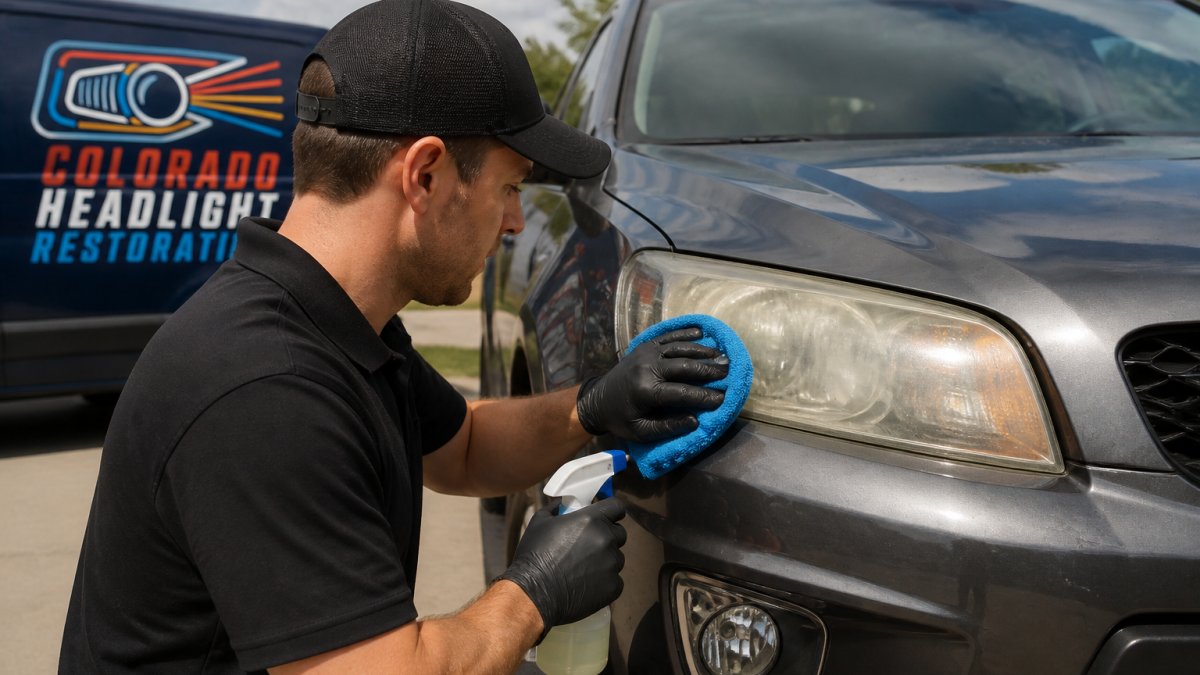
A clean surface is the foundation for everything that follows. Rushing this step compromises the entire restoration. That's why Colorado Headlight Restoration takes time to get it right.
Sanding and Polishing
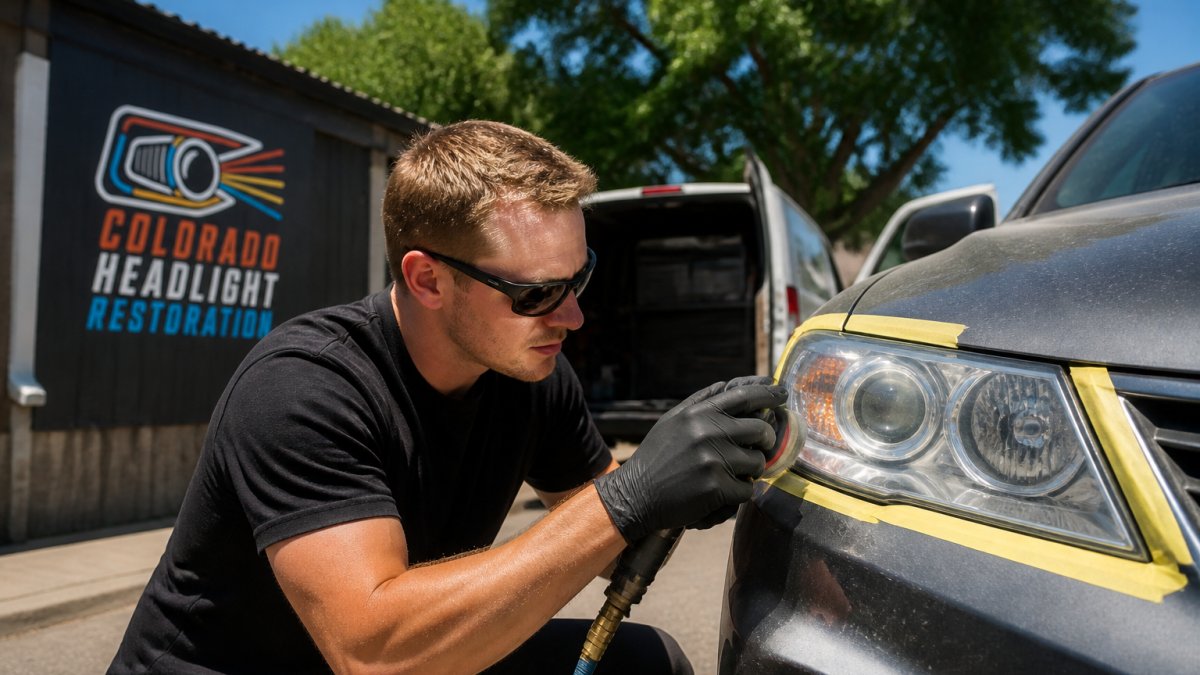
Sanding removes the oxidized layer and restores the lens surface. The technician uses progressively finer abrasive pads to sand away the cloudiness. This stage takes 15 to 30 minutes depending on severity.
After sanding, polishing brings out the clarity and shine. Multiple polishing passes with different compounds smooth the surface and remove any remaining haze. This takes another 10 to 15 minutes. Together, sanding and polishing make up the bulk of the restoration time.
The technician watches the lens closely during this stage. As the cloudiness lifts and clarity returns, they adjust their technique to avoid over-working the lens. This hands-on judgment is why professional service is effective.
Applying the Protective Coating
Once the lens is clear and smooth, the technician applies a ceramic UV sealant. This protective layer guards against future oxidation and yellowing. Application takes 5 to 10 minutes for both headlights.
The coating is what keeps your headlights clear for years. It's designed to withstand high-altitude sun and Colorado's intense UV exposure. The application is quick, but the quality of the product and the care in application determine how long the protection lasts.
How Long Does Headlight Sealant Take to Dry
The ceramic sealant used in professional mobile headlight restoration dries quickly enough that you can drive immediately. The surface is touch-dry within minutes of application.
However, full cure takes longer. The coating reaches its peak hardness and UV protection strength over 24 to 48 hours. During this window, avoid high-pressure car washes, abrasive cleaning, and extreme temperature swings. Treat the headlights gently, and the sealant bonds completely with the lens surface.
This is why the protective coating lasts so long, it has time to cure properly before facing harsh conditions.
Mobile Headlight Restoration Process and On-Site Requirements
Mobile service means the technician comes to you. But your location and parking situation affect how smoothly the appointment runs.
What You Need to Prepare
You don't need to do much, but a few simple steps help the technician work efficiently. Park your vehicle in a location with good access to both headlights. A driveway or parking lot works perfectly. If you have a garage, the technician can work inside if there's adequate lighting and space to move around the vehicle.
Make sure the vehicle is clean enough that the technician can work safely. You don't need a pristine car, but excessive mud or debris makes the job harder. If your vehicle is very dirty, a quick rinse beforehand speeds things up.
Have the vehicle keys ready so the technician can position it if needed for better access to the headlights.
Parking and Access Considerations
The technician needs clear access to both headlights and space to set up equipment. A standard driveway provides enough room. Tight parking spots or vehicles parked against walls can make the job slower or impossible.
If you live in an apartment or condo with limited parking, discuss this when booking.
Weather protection is helpful but not required.
Headlight Restoration Kit Time vs. Professional Service
DIY headlight restoration kits are tempting because they're cheap and promise quick results. But the time comparison tells a different story.
A typical DIY kit takes 1 to 3 hours of your own labor. You sand, polish, and apply sealant yourself. The work is messy, requires patience, and the results depend entirely on your technique. Many people find the results fade within weeks or a few months because the sealant wasn't applied correctly or the lens wasn't properly prepared.
Professional mobile headlight restoration takes 30 to 60 minutes and includes expertise and a durable ceramic sealant. You get OEM clarity that lasts up to three years. The technician does the work while you do something else.
Colorado Headlight Restoration also backs the work with a one-year free re-restoration guarantee. If your headlights start to fade within that first year, we restore them again at no charge. DIY kits come with no such promise.
When Restoration Takes Longer Than Expected
Occasionally, a restoration takes longer than the standard 30 to 60 minutes. Understanding why helps you stay patient if your appointment runs over.
Severe damage: Headlights with deep pitting, cracks, or extreme oxidation need more sanding and polishing passes. A lens that looks like it's been through a sandstorm takes longer than one with surface haze.
Hidden damage: Sometimes the technician uncovers damage that wasn't visible at first. A lens might have internal moisture, delamination, or structural issues that affect the restoration approach. These discoveries change the timeline.
Assembly complexity: Newer vehicles with integrated LED systems or complex lens designs require more careful work. The technician must be precise to avoid damaging sensitive components.
Environmental conditions: Cold weather, high humidity, or extreme heat can slow curing or require extra prep steps. The technician adjusts the process to ensure quality, which may extend the appointment.
If your restoration is taking longer than expected, the technician will update you.
How to Prepare for Your Appointment
A little preparation ensures your mobile headlight restoration appointment runs smoothly and finishes on time.
Schedule during favorable weather. Mild, dry days are ideal. Avoid appointments during heavy rain, extreme cold, or peak heat.
Park strategically. Choose a spot with clear access to both headlights and room for the technician to move around. A level surface is best.
Clear the area. Make sure there are no obstacles blocking the headlights or preventing the technician from positioning equipment.
Have your keys ready. The technician may need to move the vehicle slightly for optimal access.
Avoid driving aggressively for 24 hours. After the appointment, treat the headlights gently while the sealant cures. Skip high-pressure car washes and extreme conditions.
Document the results. Take before-and-after photos if you want to track the improvement. Many customers are amazed at how much clearer their headlights become.
| Stage | Duration | Purpose |
|---|---|---|
| Surface cleaning | 5-10 min | Remove dirt and oxidation buildup |
| Sanding | 15-30 min | Strip away cloudy, oxidized layer |
| Polishing | 10-15 min | Restore clarity and smooth finish |
| Sealant application | 5-10 min | Apply UV-protective coating |
| Total hands-on time | 30-60 min | Complete restoration |
| Sealant curing | 24-48 hours | Reach full hardness and protection |
Mobile headlight restoration is fast, convenient, and effective.
Frequently Asked Questions
How long does professional headlight restoration take?
Professional mobile headlight restoration typically takes 30-60 minutes of hands-on work, depending on lens condition and oxidation severity. This timeframe covers surface preparation, sanding, polishing, and applying a protective ceramic UV sealant. The sealant itself requires additional curing time after the technician leaves, but your headlights are drivable immediately. Severely oxidized or damaged lenses may require extra sanding time, pushing the appointment closer to 60 minutes.
How long does a headlight restoration kit take?
DIY headlight restoration kits typically take 1-3 hours to complete both headlights, depending on your experience and the kit instructions. However, results often fade within weeks to a few months because DIY kits lack the professional-grade polishing equipment and durable sealants used by professionals. A professional service delivers longer-lasting clarity with a ceramic UV sealant rated for up to three years of protection.
How long does headlight sealant take to dry?
Most professional ceramic UV sealants cure fully within 24 hours, though your headlights are safe to drive immediately after the technician finishes. Full hardness and UV protection develop over the first day. Avoid car washes or heavy rain for the first 24 hours to allow the coating to set completely. Temperature and humidity can slightly affect curing speed, so dry conditions accelerate the process.
Can weather affect how long headlight restoration takes?
Yes. Cold temperatures slow sealant curing, while high humidity can interfere with the polishing stage and coating application. Wind and dust may require extra cleaning steps before sanding begins. Mobile technicians typically work in moderate conditions (above 50°F, low humidity) to ensure optimal results. Extreme weather may delay your appointment or extend service time, so scheduling during mild conditions produces the fastest, most durable outcome.
Ready to restore your headlights? Schedule your mobile headlight restoration appointment today and get back the clarity and safety your vehicle deserves. Colorado Headlight Restoration brings the service to your driveway in Commerce City and the surrounding Front Range area, completing the job while you focus on what matters most.
Learn more about our headlight restoration in Denver, or see headlight restoration in Longmont.
Cloudy headlights? Get your price in 30 seconds.
Mobile service across the Denver metro. Most vehicles finished in 30–60 minutes, right in your driveway.