Table of Contents
- Peak vs ProClear: Side-by-Side Comparison
- Professional vs DIY Headlight Restoration
- Best Clear Coat for Headlight Restoration
- Ceramic Coating for Headlights: Protection and Application
- How Long Headlight Restoration Lasts
- Which Service Should You Choose?
- Frequently Asked Questions
Last Updated: October 17, 2026
Peak vs ProClear: Side-by-Side Comparison
This headlight restoration comparison section separates what each provider documents from what owners merely report.
What Each Option Actually Is
Peak Headlight Restoration is a service-model restoration: a technician preps, sands, polishes, and seals the lenses, usually in a single visit. The value is turnaround and a workmanship warranty, not a take-home product.
ProClear is positioned around a longer, multi-step process built on a ceramic-based UV sealant. The pitch is durability: more prep, a harder coating, and a longer guarantee.
You are comparing a faster service with a shorter protection window against a slower one with a longer window. Neither is a DIY kit, so neither should be judged on kit criteria.
Process, Time, and What Gets Done
A typical Peak visit runs roughly 45 to 60 minutes: surface prep, a stepped sanding progression to remove oxidation and dead plastic, polishing, and a UV-resistant top coating.
ProClear's process runs 60 to 90 minutes because it adds deeper prep and a multi-layer coating application. Most premature coating failure traces back to prep and cure, not the coating itself.
UV Protection and Coating Chemistry
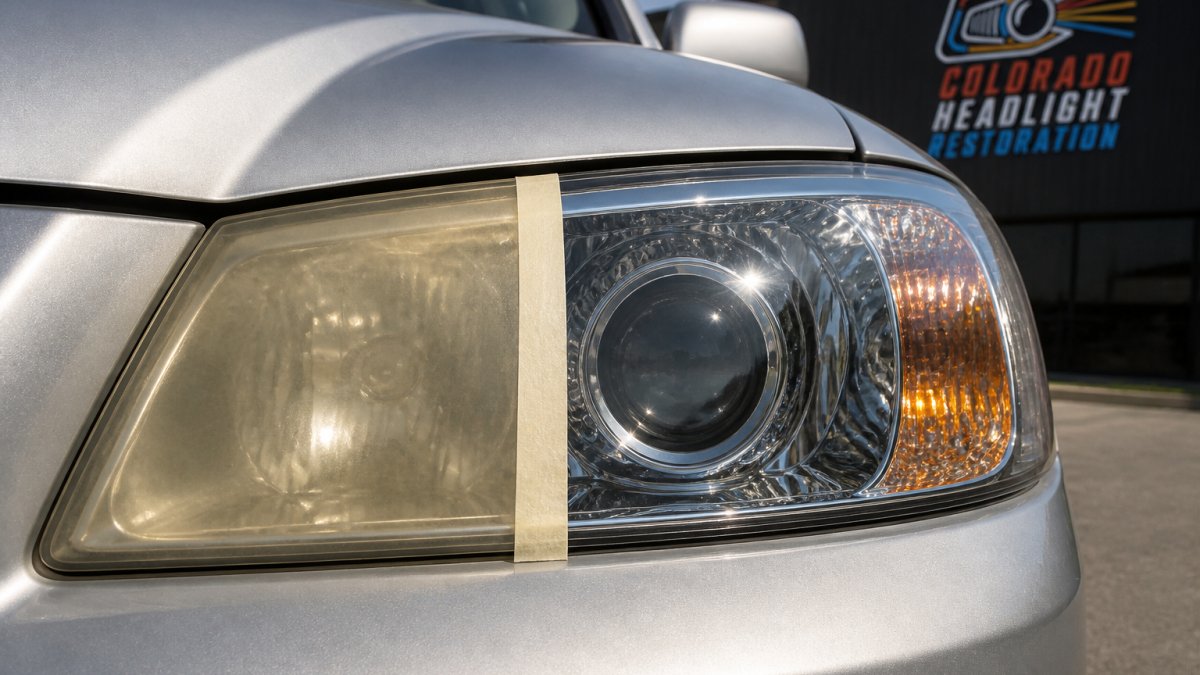
Peak applies a standard UV-resistant coating that blocks the UV that oxidizes the polycarbonate lens. Owners report a realistic 12-to-18-month protection window before yellowing returns.
ProClear uses a ceramic-based UV sealant engineered for longer sun exposure. Ceramic chemistry bonds to the prepared lens and cures to a harder, more chemical-resistant barrier than a conventional clear coat. The difference shows in year two, when a weaker coating chalks and hazes.
Warranty and Durability Guarantees
Peak's warranty is typically a 12-month workmanship guarantee: if the lenses yellow or fog inside that window, they redo the work.
ProClear backs its work with an 18-month durability guarantee, with some locations offering paid extensions. If you plan to keep the vehicle past two years, the guarantee window is the number to compare.
Transparent Cost Comparison
Neither provider publishes a national price; quotes vary by location, lens condition, and mobile versus in-shop work. Treat any online dollar figure as a local quote. What you can compare is structure:
- Peak: one service price for prep, sand, polish, and standard UV coating, with a 12-month workmanship warranty included.
- ProClear: a higher service price reflecting the longer process and ceramic sealant, with an 18-month guarantee included and paid extensions at some locations.
- Extra supplies: neither service requires you to buy sandpaper, compound, or coating separately, the hidden cost that makes DIY kits look cheaper than they are.
- Cost per pair of headlights: divide the quoted price by two lenses and compare that number against a DIY kit plus the supplies it omits.
If a quote is dramatically below the local market for a full sand-and-seal service, ask what coating is applied and how long the warranty runs.
Where Each One Wins
Peak wins when the lenses are moderately oxidized, you need the vehicle back the same day, and a 12-to-18-month protection window is acceptable. ProClear wins when the lenses are more degraded, the vehicle parks outdoors in strong sun, or you intend to keep it past the guarantee period. Neither wins on severely pitted or internally hazed lenses, which need replacement.
Professional vs DIY Headlight Restoration
The headlight restoration comparison doesn't end with two professional services. Many owners consider DIY kits, a decision that hinges on skill level, time, and expectations.
When DIY Kits Make Sense
DIY kits offer genuine value in specific situations. If your headlights are mildly hazy, not severely oxidized, a kit can restore reasonable clarity at a fraction of professional cost.
DIY restoration works best when you have time to follow instructions carefully and the headlights aren't deeply damaged.
Most DIY attempts look acceptable for 4 to 8 weeks. Without professional-grade UV protection, oxidation then returns fast, you're essentially buying temporary clarity.
Why Professional Services Deliver Better Results
Professional services win on three fronts: technique, materials, and durability.
Technique matters because professionals assess lens condition, choose grit sequences, and apply coatings evenly. An experienced technician can tell whether a headlight needs aggressive sanding or gentle polishing.
Materials make the difference in longevity. Professional-grade ceramic coatings and UV sealants cure harder, bond more effectively, and resist environmental damage far longer than consumer kit products.
Durability is the real separator. Professional restoration, when done correctly, lasts 2 to 3 years or longer.
Best Clear Coat for Headlight Restoration
Choosing the right clear coat is foundational: not all coatings perform equally, and the wrong choice undermines even excellent restoration work.
The best clear coats cure to a hard finish, provide excellent light transmission without yellowing, and stay clear under extended UV exposure.
Durability is the metric that matters most. A coating that lasts 3 years beats one lasting 6 months even if the initial appearance is similar.
Ceramic Coating for Headlights: Protection and Application
Ceramic coating has become the preferred protection method for headlight restoration work. Understanding how it works and how it's applied explains why professional services use it.
Ceramic coatings bond chemically with the lens surface at the molecular level, stronger and more durable than surface coatings that sit on top.
Application requires precision: the lens must be completely clean and properly prepared, since any dust or residue compromises the bond.
Ceramic coating for headlights typically requires 24 to 48 hours to fully cure, protected from water, dirt, and direct sunlight.
How Long Headlight Restoration Lasts
Longevity depends entirely on the method used and the conditions your vehicle faces.
Professional headlight restoration with ceramic UV sealant typically lasts 2 to 3 years before noticeable yellowing or oxidation returns. Some customers report clarity lasting longer with good maintenance and limited sun exposure; in high-UV environments or with daily outdoor parking, the timeline may be shorter.
DIY kit restoration typically lasts 2 to 4 months. Initial results can look quite good, but without professional-grade UV protection, oxidation returns rapidly.
Durability Factors: Climate, UV Exposure, and Maintenance
Climate is a major factor. Vehicles in high-altitude regions with intense sun, like the Front Range, see faster degradation than those in temperate climates with less direct sunlight.
UV exposure directly correlates with headlight longevity. A vehicle parked outdoors daily faces constant UV bombardment, while garaged vehicles degrade much more slowly.
Maintenance habits matter too. Regular washing and occasional waxing protect the coating, and avoiding automatic car washes with harsh brushes reduces micro-scratching. Some services recommend periodic maintenance treatments that keep headlights clear without full restoration.
Which Service Should You Choose?
The right choice depends less on brand loyalty than on three inputs: how far the lens has degraded, how much sun the vehicle sees, and how comfortable you are with sanding and coating work. Use the decision path below, because the correct answer changes with the lens.
Decision Path by Headlight Condition
Step 1: Is the haze on the surface or inside the lens? Shine a light through the lens at night.
Step 2: How severe is the surface damage? Light haze with no pitting responds well to a DIY kit or a fast professional service. Moderate yellowing without deep pits suits a standard professional sand-and-seal.
Step 3: How much UV will the lenses see? A garaged vehicle in a temperate climate can live with a standard UV coating.
Matching the Option to the Owner
- Mild haze, tight budget, willing to redo it: a DIY kit is defensible, with the understanding that the protection layer is the weak link and you will likely repeat the work within a few months.
- Moderate oxidation, need it done today: Peak's faster service and 12-month workmanship warranty fit, provided you accept a 12-to-18-month protection window.
- Moderate to severe oxidation, plan to keep the vehicle: ProClear's longer process and 18-month guarantee fit, especially for outdoor-parked vehicles in high-UV areas.
- Severe oxidation, pitting, or internal haze: replacement, not restoration, is the honest recommendation. Coating a failing lens wastes money.
Safety, Compatibility, and Failure Troubleshooting
Most restoration failures are process failures, not product failures. The recurring ones:
- Masking: tape off surrounding paint and trim before sanding. Slip-through scratches on paint cost more to fix than the restoration itself.
- Ventilation and PPE: sanding and coating involve dust and solvent vapor. Work in a ventilated space and wear eye and respiratory protection, whether you DIY or watch a mobile tech work.
- Curing conditions: ceramic coatings need a clean, dry cure window, typically 24 to 48 hours protected from water and dirt. Driving through rain or washing the car inside that window is the most common cause of early coating failure.
- Coating failure signs: patchy dullness, water spotting that will not wash off, or peeling at the lens edge usually mean prep was incomplete or the coating was applied too thick. A reputable provider will redo it under warranty; a DIY job usually means starting over.
- When to stop restoring: cracks, deep pits that catch a fingernail, moisture inside the housing, or a lens that has gone yellow through its full thickness are replacement signals, not restoration signals.
A Practical Recommendation
If your lenses are mildly hazy and you enjoy the work, a kit is a reasonable weekend project. If they are moderately oxidized and you want it handled once, choose the service whose guarantee length matches how long you plan to keep the vehicle: the 12-month option for a short horizon, the 18-month ceramic option for a longer one. If the lenses are severely degraded or hazy from the inside, put the money toward replacement assemblies instead. That protects your visibility and your wallet, regardless of which brand name is on the coating.
Frequently Asked Questions
How long does headlight restoration last after professional service?
Professional headlight restoration with ceramic UV coating typically lasts 2-3 years depending on climate and sun exposure. Vehicles in high-altitude areas with intense UV radiation may see shorter durability. Regular maintenance and avoiding harsh chemicals extend the lifespan. Most professional services, including those offering ceramic sealants, include warranty coverage for the first year, with re-restoration options available if clarity degrades.
Is professional headlight restoration worth it compared with a DIY kit?
Professional restoration offers superior results and longevity compared to DIY kits. Professional services use industrial-grade sanding, polishing, and ceramic or clear-coat application that DIY kits cannot match. While DIY kits typically last 1-2 months before yellowing returns, professional services deliver clarity lasting years. For vehicles with severely oxidized or yellowed lenses, professional restoration is the better investment.
What's the difference between ceramic coating and clear coat for headlight protection?
Ceramic coating bonds at the molecular level and provides superior UV protection, water beading, and durability, typically 2-3 years of protection. Clear coat is a traditional automotive finish that protects but degrades faster under UV exposure, usually lasting 1-2 years. Ceramic coatings resist high-altitude sun better and require less maintenance. For long-term headlight clarity, ceramic coating is the more durable choice, though clear coat remains a solid baseline protection.
Can headlight restoration work on older vehicles like a 2008 Honda Civic?
Yes, professional headlight restoration works on vehicles of any age, including 2008 models and older. The restoration process addresses oxidation, yellowing, and surface haze regardless of headlight age. However, severely damaged lenses with deep cracks or internal fogging may not be fully restorable. A professional inspection determines whether restoration will restore OEM clarity or if headlight assembly replacement is necessary. Most vehicles from 2008 onward are excellent candidates for restoration.
Learn more about our headlight restoration in Denver, or see headlight restoration in Longmont.
Cloudy headlights? Get your price in 30 seconds.
Mobile service across the Denver metro. Most vehicles finished in 30–60 minutes, right in your driveway.