
Last Updated: November 9, 2026
Quick Summary
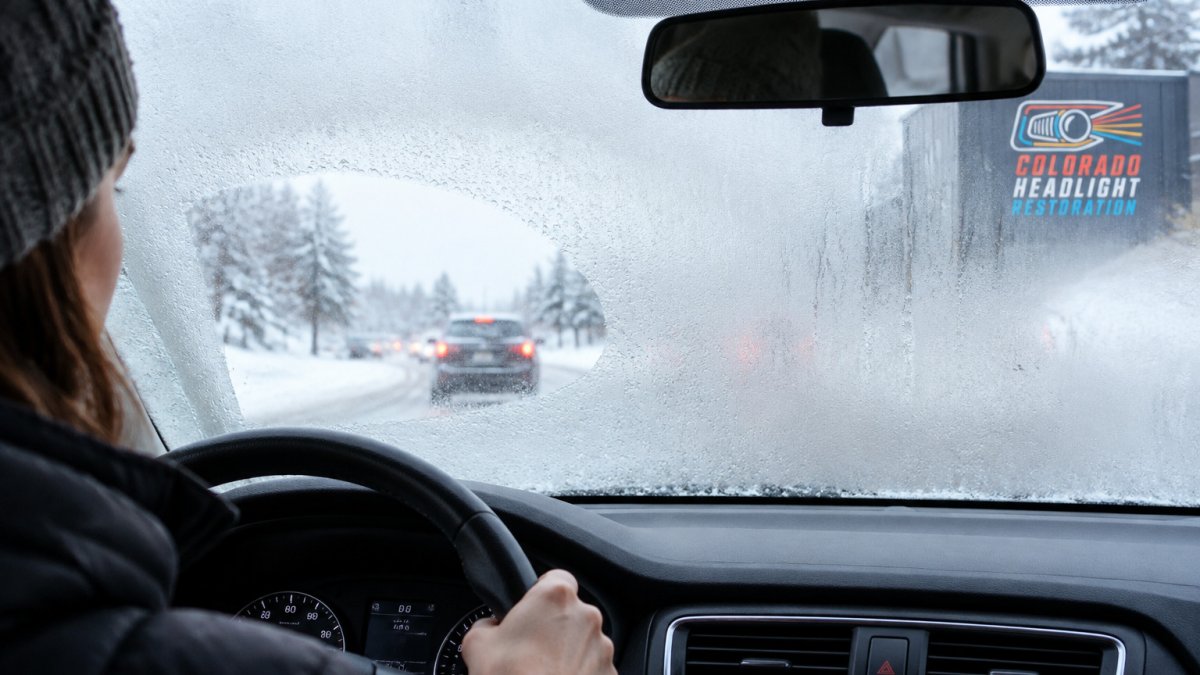
Preventing windshield fogging during Colorado winters comes down to cutting moisture and keeping air moving across the glass. Hit the front defrost, switch to fresh outside air, and turn on the A/C, since cold dry air clears glass faster than warm recirculated air. Shake snow off your boots and keep the inside of the glass clean.
- Press the front defrost button, turn the fan to medium or high, and switch off recirculation for fresh air.
- Turn on the A/C even with the heat on, because it pulls moisture out of the air.
- Do not wipe foggy glass with your hand while moving, since it smears oils and fog returns faster.
- Clean the inside of the windshield with two cloths and skip paper towels, which leave lint that traps moisture.
- Fog that returns within minutes or a sweet smell can point to a heater core leak or clogged cabin air filter.
Table of Contents
- Why Colorado Winters Fog Your Windshield So Fast
- How to Defog a Windshield in Winter Without Waiting
- Car Defrost Settings for Foggy Windows: Front, Rear, and A/C
- How to Clean the Inside of a Windshield to Stop Repeat Fogging
- Windshield Anti-Fog Products: What Works and What to Skip
- Keeping Moisture Out of the Cabin All Winter
- When Fog Keeps Coming Back: Diagnosing Leaks and HVAC Faults
- Book a Headlight Restoration Before Your Next Foggy Commute
- Frequently Asked Questions
Why Colorado Winters Fog Your Windshield So Fast
Windshield fogging is condensation: warm, moist air inside your car hits cold glass and leaves a film of water on the inside surface. For broader tips on improving night driving visibility in Colorado, including windshield clarity and glare reduction, see our guide.
Fog is not just annoying. If your lenses are yellowed or hazy, read our headlight guides for Colorado drivers to see how clarity and visibility work together.
How to Defog a Windshield in Winter Without Waiting
The fastest way to defog a windshield in winter is to hit the front defrost, switch to fresh outside air, and turn on the A/C. Cold, dry air from outside clears glass faster than warm recirculated air, even though it feels backward on a freezing morning.
Here is the order that works:
- Press the front defrost button.
- Turn the fan to medium or high.
- Switch off recirculation so fresh air comes in.
- Turn on the A/C, even with the heat on.
- Crack a window for the first minute if the glass is soaked.
Heat alone takes longer. The A/C pulls moisture out of the air while the heater keeps you comfortable.
What to Do When Fog Appears While Driving
Fog that shows up mid-drive is a safety problem, not a comfort one. Do this in order:
- Slow down and keep both hands on the wheel.
- Turn on your defroster and A/C.
- Switch to fresh air.
- Crack a window if the glass stays cloudy.
- Pull over if you cannot see the lane lines clearly.
Do not wipe the glass with your hand while moving. It smears oils across the surface and makes the fog come back faster. If ice has built up on your lights or glass, learn how to remove ice from headlights safely before you start scraping at anything.
Here is the order that works when your glass fogs up on a cold Colorado morning.
| Step | What to do |
|---|---|
| 1 | Press the front defrost button |
| 2 | Turn the fan to medium or high |
| 3 | Switch off recirculation for fresh air |
| 4 | Turn on the A/C, even with heat on |
| 5 | Crack a window for the first minute if soaked |
Car Defrost Settings for Foggy Windows: Front, Rear, and A/C
Your car defrost settings for foggy windows are three separate tools, and each one does a different job.
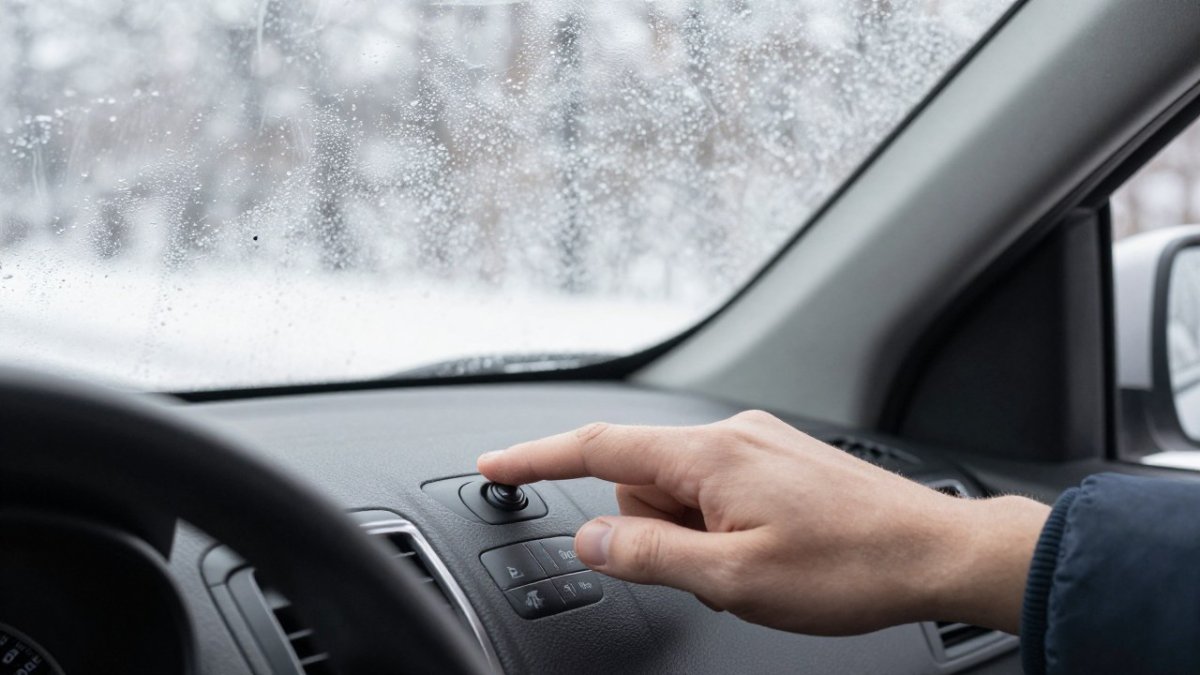
The front defroster blows air at the windshield and front side glass. It is the one you use most.
Run the front defrost with A/C on and fresh air coming in. Use the rear defroster on a timer if your car has one.
Automatic Climate Control and Recirculation Buttons
Cars with automatic climate control often handle this for you. Press the front defrost button and the system sets fan speed, air mix, and A/C on its own. Let it run.
The recirculation button is where most drivers go wrong. Recirculation traps cabin air, including the moisture from your breath and wet clothes. Use it to heat the cabin fast, then switch back to fresh air.
How to Clean the Inside of a Windshield to Stop Repeat Fogging
A dirty interior surface holds moisture. Oils, dust, and residue from plastic dashboards give water something to cling to, so fog forms sooner and lasts longer.
Use two cloths. Wipe with a microfiber cloth and a glass cleaner, then buff with a dry cloth until the glass is clear. Clean the whole interior surface, not just the middle.
Skip paper towels on the inside. They leave lint that traps moisture. Also, do not use ammonia cleaners on tinted glass.
Windshield Anti-Fog Products: What Works and What to Skip
Anti-fog products work by changing how water behaves on glass. Instead of beading into droplets that scatter light, a surfactant film spreads moisture into a thin, transparent sheet.
Here is how the main categories actually perform in a cold-weather cabin:
- Purpose-made anti-fog sprays and wipes. These are formulated with surfactants or hydrophilic polymers that spread condensation. Apply them to clean, dry glass, let them flash off, then buff with a dry microfiber cloth until no haze remains. The trade-off is residue: if you apply too much or skip the buff, you get a smeary film that shows up badly under oncoming headlights.
- Anti-fog cloths. These are pre-treated microfiber cloths that deposit a thin surfactant layer as you wipe. They are convenient for a quick pass before a commute, but the layer is uneven and short-lived. Keep one in the glovebox and re-buff with a dry cloth after use.
- A/C and fresh air. This is not a product, but it is the most reliable anti-fog tool in the vehicle because it removes moisture at the source instead of masking it on the glass. Use it first.
What to skip, and why:
- Shaving cream. It is a popular internet fix because the soap surfactants do spread water, but the residue is thick and hazy. Under oncoming headlights it scatters light and can make night driving worse than the fog did. If you try it, use a pea-sized amount, buff aggressively, and test at night before relying on it.
- Cat litter or silica gel in a sock. These absorb a small amount of moisture, but a cabin exchanges air constantly through the HVAC system. The absorption rate is nowhere near enough to matter on a drive. They are better used as a parked-vehicle moisture absorber between trips.
- Oil-based household cleaners, furniture polish, or cooking spray. These leave an oily film that traps dust and smears when you try to wipe it. They can also damage tinted glass and plastic trim.
- Rain-repellent products marketed for exterior glass. These are designed to shed water from the outside, not to prevent interior condensation. Applying them inside usually creates a hazy film.
Watch out: any product that leaves a visible film will scatter light at night.
One more trade-off: anti-fog coatings and tinted glass do not always get along. Ammonia-based cleaners and abrasive pads can strip both the coating and the tint.
Keeping Moisture Out of the Cabin All Winter
Moisture control is the long game, and in a cold-weather climate the math is simple: every ounce of water that enters the cabin has to leave through the HVAC system or a cracked window.
Start with the sources you control before you drive:
- Shake snow off your boots and pant cuffs before you get in. A pair of snowy boots can carry in enough meltwater to fog the glass within a few minutes of startup.
- Knock snow off floor mats and hang them to dry outside the vehicle. Rubber mats trap water underneath; carpeted mats hold it in the fibers. Either way, it evaporates into the cabin air once the heater runs.
- Keep a dry towel or microfiber cloth in the car for wet seats and dash surfaces. Wipe up spills and melted snow before they soak in.
- Crack a window for the first minute of driving. This purges the humid air that built up while the car sat, and it costs nothing.
- Run the A/C in defrost mode even when you want heat. The A/C coil dehumidifies the air before it reaches the glass, which is why the combination clears fog faster than heat alone.
A pre-trip winter checklist that prevents fog before it starts:
- Clear snow and ice from the hood, roof, and windshield before you start driving. Snow on the hood blows onto the glass and adds moisture.
- Check that the cabin air filter is not clogged. A restricted filter weakens airflow and lets humidity build.
- Verify that the recirculation door is working. A stuck door keeps pulling damp cabin air instead of fresh outside air.
- Look for damp spots on the carpet, especially in the passenger footwell and trunk. A wet floor mat or a leaking trunk seal is a moisture source that no defroster can outrun.
- Keep the inside of the glass clean. Oils and dust give water something to cling to, so fog forms sooner and lasts longer.
Watch out: a car that fogs up faster than it used to is often telling you something changed.
Winter driving also throws road grit, de-icer, and temperature swings at your vehicle. That wear shows up on glass and lights alike, which is why winter headlight damage in Colorado is worth understanding even while you are focused on fog.
When Fog Keeps Coming Back: Diagnosing Leaks and HVAC Faults
Fog that returns within minutes, or a sweet smell in the cabin, points to a real fault, not bad habits.
Check these:
- A coolant leak in the heater core. Fog that will not clear, plus a sweet smell and a low coolant level, is the classic sign.
- A clogged cabin air filter. Weak airflow means the defroster cannot do its job.
- A stuck recirculation door. The system keeps pulling damp cabin air no matter what you press.
- A blocked drain. Water pools under the carpet and never leaves.
A persistent fog problem is worth a mechanic's look. It is usually a cheap fix, but a heater core leak gets worse and costs more the longer you wait.
Book a Headlight Restoration Before Your Next Foggy Commute
Fog is a visibility problem, and so are cloudy headlights. If your lenses are yellowed or hazy, book mobile headlight restoration in Denver, CO and we come to you.
Clear glass, clear lenses, and dry cabin air. That is the whole formula.
Foggy glass and hazy headlights both steal your view of the road, and only one of them needs a professional. If your lenses have gone cloudy, Colorado Headlight Restoration brings the fix to your driveway or office.
Frequently Asked Questions
Should I use hot or cold air to defog a windshield?
Cold air clears fog faster at first because it lowers the dew point at the glass surface, but warm air keeps it clear longer once the cabin warms up. In a Colorado cold snap, start with the A/C on and the defrost vent selected, then bring up the heat as the engine warms. Avoid blasting maximum heat onto a frozen windshield, since a rapid temperature change on cold glass is hard on it. The steady approach clears glass and keeps it clear for the whole drive.
Does recirculating air make windshield fogging worse?
Yes. Recirculation traps the moisture you exhale and track in on your boots inside the cabin, so windshield fogging returns within minutes. Switch to fresh outside air whenever glass starts to cloud. Even cold outside air is drier than the air inside a car with passengers, so it pulls moisture off the glass. Use recirculation only briefly when you want fast cooling in summer, not during winter driving.
Can a clean windshield help prevent fogging?
It can. A film of skin oils, dust, and plasticizer from the dashboard gives water vapor something to cling to, so a dirty interior surface fogs sooner and streaks when you wipe it. Clean the inside of a windshield with an ammonia-free glass cleaner and a microfiber cloth, then buff dry. Pair that with a windshield anti-fog product for extra protection, and you will notice glass stays clear noticeably longer on cold mornings.
What should I do if my windshield fogs up while I'm driving?
Act in this order: signal and slow down, press the front defrost button, switch from recirculated to fresh air, and turn on the A/C. Crack a window if the fog is heavy and it is safe to do so. Do not wipe the glass with your hand while moving, since that smears oils and makes the next fog worse. If visibility drops below a safe level, pull over until the glass clears.

Learn more about our headlight restoration in Denver, or see headlight restoration in Longmont.
Cloudy headlights? Get your price in 30 seconds.
Mobile service across the Denver metro. Most vehicles finished in 30–60 minutes, right in your driveway.