
Last Updated: November 5, 2026
Quick Summary
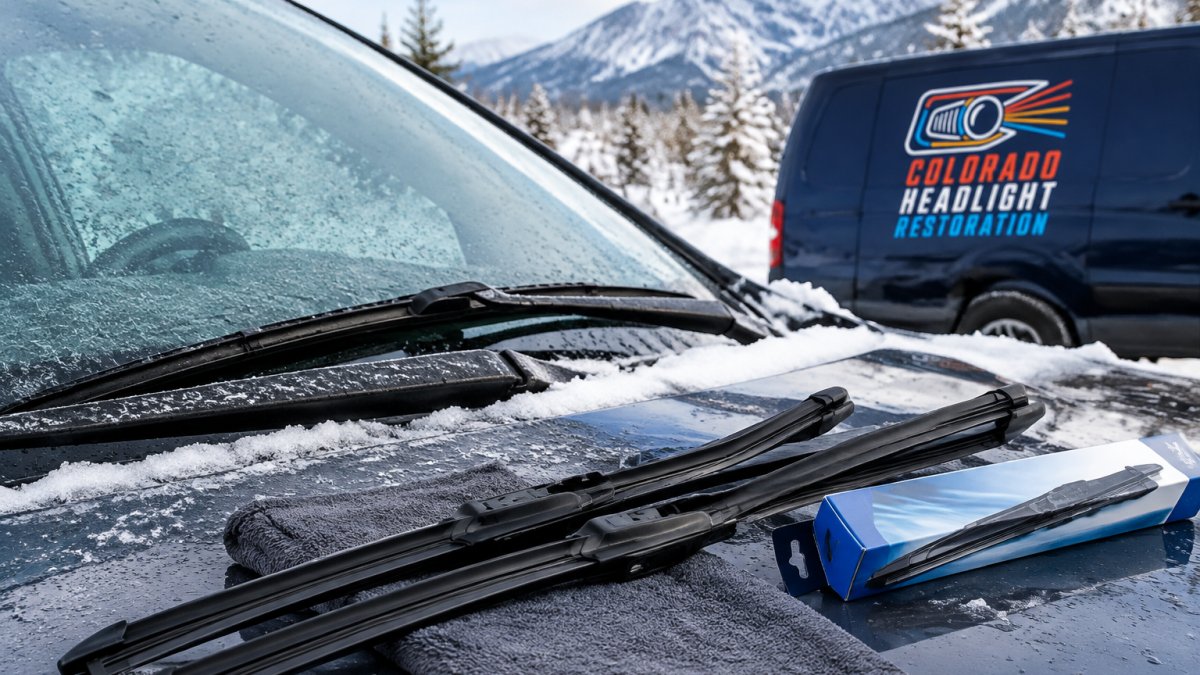
Choosing the right windshield wipers for Colorado snow means picking beam-style blades with a cold-weather rubber compound, since frameless designs resist ice buildup and apply even pressure across the glass. Bosch ICON and Rain-X Latitude are two beam blades that handle freezing temperatures far better than stock conventional blades.
- Factory wipers are built for rain, so snow and ice pack into their joints and lift the blade off the glass.
- Conventional blades trap snow and ice in the exposed frame, while beam blades have no exposed joints.
- Find your wiper size in the owner's manual and buy two blades, since they wear at the same rate.
- Start the defroster before touching the blades, then brush snow off by hand instead of using the wipers.
- Install winter-specific blades in late fall before the first hard freeze and switch back in spring.
Table of Contents
- Why Standard Blades Fail in Colorado Snow
- Beam vs. Conventional vs. Hybrid: Blade Designs Compared
- The Best Windshield Wipers for Snow: Top Picks and Pricing
- Bosch ICON vs. Rain-X Latitude Wiper Blades
- How to Find Windshield Wiper Size for Your Vehicle
- Winter Wiper Blade Maintenance and De-Icing Practices
- When to Replace Blades and How to Inspect Them
- Match Your Wipers With a Headlight Restoration Appointment
- Frequently Asked Questions
Why Standard Blades Fail in Colorado Snow
Factory wipers are built for rain, not the snow, ice, and road spray of a Front Range winter.
Standard blades use a frameless or lightly framed design that lets snow and ice pack into the joints. Once that happens, the blade can't flex against the glass.
Cold makes it worse. Standard rubber compounds stiffen in freezing temperatures, so the blade skips instead of wiping clean.
- Ice bridges form under the frame and lift the blade off the glass
- Stiff rubber leaves streaks and smears instead of clearing
- Sand and de-icer grit grind down the wiping edge
- Snow buildup at the base of the windshield freezes the arm in place
If you want the bigger picture on seeing better after dark, our guide on how to improve night driving visibility in Colorado covers headlight care, windshield clarity, and glare reduction.
Beam vs. Conventional vs. Hybrid: Blade Designs Compared
Beam blades are often recommended for snowy climates because the frameless design resists ice buildup and applies even pressure across the windshield. Conventional blades use a metal frame with several pressure points, and hybrid blades combine a covered frame with a beam-style spine.
Here is how the three designs stack up for winter driving:
| Design | Snow and Ice Buildup | Windshield Contact | Best For |
|---|---|---|---|
| Beam | Low (frameless, no exposed joints) | Even pressure along the whole blade | Most drivers in snowy, icy weather |
| Conventional | High (frame traps snow and ice) | Uneven, multiple pressure points | Mild climates, budget replacements |
| Hybrid | Moderate (covered frame helps) | Good, with a reinforced frame | Drivers who want frame protection |
A beam blade's single curved spine presses the rubber flat against the glass, clearing snow and wet conditions more cleanly. Conventional blades are cheaper, but the exposed frame is where ice buildup starts. Hybrid blades split the difference with a frame cover that keeps snow out of the joints.
How Colorado Conditions Change the Design Math
The design that wins depends on where you drive, not just that it snows. Three patterns matter most:
- Front Range freeze-thaw cycles. Daytime sun melts snow and road spray onto the windshield; overnight temperatures refreeze it. Meltwater runs into conventional frames and refreezes into ice bridges that lift the blade off the glass. A frameless beam blade has far fewer places for water to collect, so it holds contact through repeated thaw-and-freeze nights.
- Mountain snowfall and wind. At elevation, snow falls wet and heavy and is driven sideways. A beam blade's continuous spine keeps even pressure when the windshield is partly packed with snow, while a conventional blade's pressure points can leave unwiped bands. Drivers who park outside at elevation also face overnight accumulation that a booted winter blade sheds more readily.
- Road treatment grit. Sand, magnesium chloride, and other de-icers leave a film and grit that grind the wiping edge. All three designs wear under that exposure, but a beam blade's edge geometry clears the film in fewer passes, dragging less abrasive grit across the glass.
The Best Windshield Wipers for Snow: Top Picks and Pricing
The best windshield wipers for snow are beam-style blades with a cold-weather rubber compound. Two models come up again and again: Bosch ICON and Rain-X Latitude. Both are widely available, fit most vehicles, and handle freezing temperatures far better than a stock conventional blade.
Pricing varies by blade length and retailer, so check current prices where you shop. What matters more is matching the design to your conditions.
Bosch ICON
Bosch ICON is a beam blade with a frameless design. Even pressure keeps the wiping edge flat against the glass.
Best for: drivers who want one blade that handles snow, ice, and everyday rain without fuss. Skip if: you drive a vehicle with an unusual wiper arm that needs a specialty connector.
Rain-X Latitude
Rain-X Latitude is also a beam blade, and it adds a water-repellent coating that helps rain bead and clear.
Bosch Snow Driver and Other Winter-Specific Blades
Winter-specific blades are designed with a protective boot or reinforced frame that can help shield the joints from snow and ice buildup.
Bosch ICON vs. Rain-X Latitude Wiper Blades
Here is the honest comparison:
Neither blade fixes a worn wiper arm or a weak wiper motor. If your blades chatter even when new, the problem may be the arm's spring tension, not the blade.
How to Find Windshield Wiper Size for Your Vehicle
Windshield wiper size is set by your vehicle's manufacturer. The fastest way to find it is your owner's manual or the fitment guide at the parts counter. Driver-side and passenger-side blades are often different lengths, so measure both.
Follow this workflow to get the right fitment every time:
- Check the vehicle owner's manual for the specified driver-side and passenger-side lengths.
- Confirm the connector type your wiper arm uses (pin, hook, or pinch tab).
- Cross-check the blade size against the retailer's vehicle fitment tool.
- Buy two blades, even if only one looks worn; they wear at the same rate.
- Keep the packaging until you confirm the fit on the car.
Watch out: guessing the size by holding a tape measure to the old blade works only if the old blade was correct to begin with. A previous owner may have installed the wrong length, so trust the manual over the blade on the car.
Winter Wiper Blade Maintenance and De-Icing Practices
Winter wiper blade maintenance comes down to three habits: clear snow before you drive, clean the blades regularly, and never yank a frozen blade off the glass. Those habits protect the rubber, the wiper arm, and the wiper motor. What most guides leave out is the sequence, because the order you do things in is what prevents damage.
A Safe De-Icing Sequence
Follow this order on a frosted or snow-covered windshield:
- Start the defroster first. Turn on the front defroster and let the glass warm before you touch the blades. This loosens ice at the base of the windshield, where the blades park and where they are most likely to be frozen down.
- Brush snow off by hand. Lift the wiper arms and brush snow and ice off the windshield with a snow brush. Do not use the wipers to push heavy snow; that loads the wiper motor and can strip the linkage (Winter Tips for Your Windshield Wiper Blades).
- Free the blade before wiping. Gently lift each arm and check that the rubber is free of the glass. If it is stuck, apply more defroster time or use a de-icing spray along the blade edge rather than pulling.
- Clear the cowl and the base of the glass. Snow packed at the base of the windshield refreezes and can trap the arm, so clear it before you drive.
- Run the wipers only after the glass is clear. Dry-running the blades over ice or grit wears the edge and can scratch the glass.
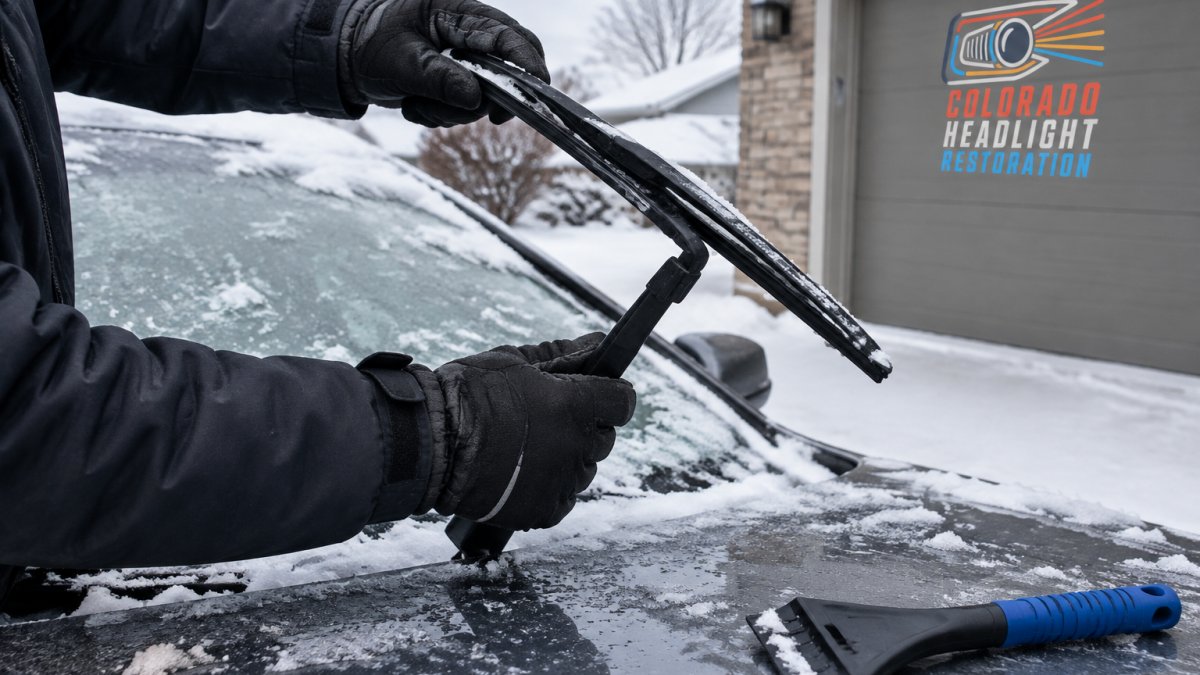
Watch out: pulling a frozen blade free can tear the rubber, bend the arm, or strip the wiper motor's linkage. If the blade will not release after defroster time, keep warming rather than forcing it.
Cleaning and Inspecting Through the Season
Clean the blades with a damp cloth and a little glass cleaner to remove grit and de-icer film. Inspect for damage each time you fill up. Road de-icers are tough on more than rubber; our page on how magnesium chloride de-icer affects headlights explains what that same spray does to your lenses. If ice is already stuck to your lights, here is how to remove ice from headlights safely without scraping.
Seasonal Changeover: Winter Blades On, Winter Blades Off
If you run booted winter-specific blades, plan the changeover around the season rather than waiting for a failure. Install winter blades in late fall, before the first hard freeze, and switch back to a standard beam blade in spring once overnight freezes stop.
When you swap, inspect the arm and connector. Check that the arm springs back firmly against the glass and that the connector locks positively. A loose connector or weak arm spring will shorten the life of any blade.
When to Replace Blades and How to Inspect Them
Run this quick inspection monthly:
- Look for cracks, tears, or missing chunks along the rubber edge
- Wipe the glass and check for streaks or unwiped bands
- Listen for chattering or skipping across the windshield
- Check that the blade sits flat with even pressure along its length
- Confirm the arm springs back firmly against the glass
A blade that chatters when new usually points to a bent wiper arm or a worn connector. A blade that smears after a few months is simply worn out. Replace both sides at once so the driver-side and passenger-side blades wear evenly.
Match Your Wipers With a Headlight Restoration Appointment
Clear wipers and clear headlights both help you see in bad weather and after dark. If your lenses are cloudy or yellowed, new blades alone won't fix your nighttime visibility.
Colorado Headlight Restoration offers mobile headlight restoration at your home or office. Our process takes 30 to 60 minutes and includes a ceramic UV sealant, plus a one-year free re-restoration guarantee. Visit our website for current pricing and to book an appointment.
Get started with Colorado Headlight Restoration and pair fresh wipers with clear lenses for a safer winter commute.
Frequently Asked Questions
Are winter wiper blades better than all-season blades for snow?
For heavy snow and ice, winter blades usually win. They wrap the frame in a rubber boot that keeps slush from packing into the joints, and the rubber compound stays flexible at lower temperatures. All-season blades work fine in light snow but can chatter or smear once ice builds up. If you drive mountain passes or Front Range roads that get plowed slush, a winter-specific set is worth the swap.
Are silicone wiper blades good in winter?
Silicone holds up well in cold and resists UV damage, which helps on high-altitude sun. The catch is that some silicone blades are stiffer in deep cold and can skip across the glass until the defroster warms it. Beam-style silicone blades tend to perform better than conventional ones because the frameless design keeps even pressure on the windshield. Check reviews for cold-weather feedback before buying.
How do I find the correct wiper blade size for my vehicle?
Start with the vehicle owner's manual, which lists driver-side and passenger-side lengths. You can also check the fitment guide at the parts store or the blade manufacturer's website by entering your year, make, and model. Sizes usually run 16 to 28 inches and often differ between the two sides. Never guess by eyeballing the old blade, since a wrong length can cause the arm to hit the A-pillar.
Can you use windshield wipers to remove ice?
No. Running wipers over a frozen windshield can tear the rubber edge, strip the arm, or strain the wiper motor. Clear snow and ice with a scraper and let the defroster soften the rest first. If blades are frozen to the glass, pour a little de-icer along the rubber and wait. This one habit prevents most winter wiper damage and protects the motor from burning out.
How often should you replace windshield wiper blades?
Most manufacturers suggest every 6 to 12 months, and Colorado winters push you toward the shorter end. Inspect for streaking, smearing, chattering, or a rubber edge that looks cracked or torn. If a blade leaves gaps in the wipe pattern or the frame looks bent, replace it. Swapping blades before the first hard freeze beats discovering a failure mid-storm.

Learn more about our headlight restoration in Denver, or see headlight restoration in Longmont.
Cloudy headlights? Get your price in 30 seconds.
Mobile service across the Denver metro. Most vehicles finished in 30–60 minutes, right in your driveway.