Table of Contents
- Why Headlight Restoration Matters for Vehicle Safety
- How Headlight Oxidation Affects Your Inspection
- DIY Headlight Restoration Kit Effectiveness
- Headlight Restoration vs Replacement: What You Need to Know
- Cost of Replacing Headlight Assemblies
- Professional Restoration Process and Long-Term Protection
- Protecting Your Headlights After Restoration
- Frequently Asked Questions
Last Updated: September 25, 2026
Why Headlight Restoration Matters for Vehicle Safety
Cloudy, yellowed headlights reduce your nighttime visibility and create a safety hazard on the road. When your lenses oxidize, light output drops significantly, making it harder to see obstacles ahead and for other drivers to see you. This is why headlight restoration for vehicle inspection has become critical for vehicle owners preparing for safety compliance checks.
Oxidized headlights also hurt resale value and appearance. The good news: headlight restoration is affordable compared to full replacement.
How Headlight Oxidation Affects Your Inspection
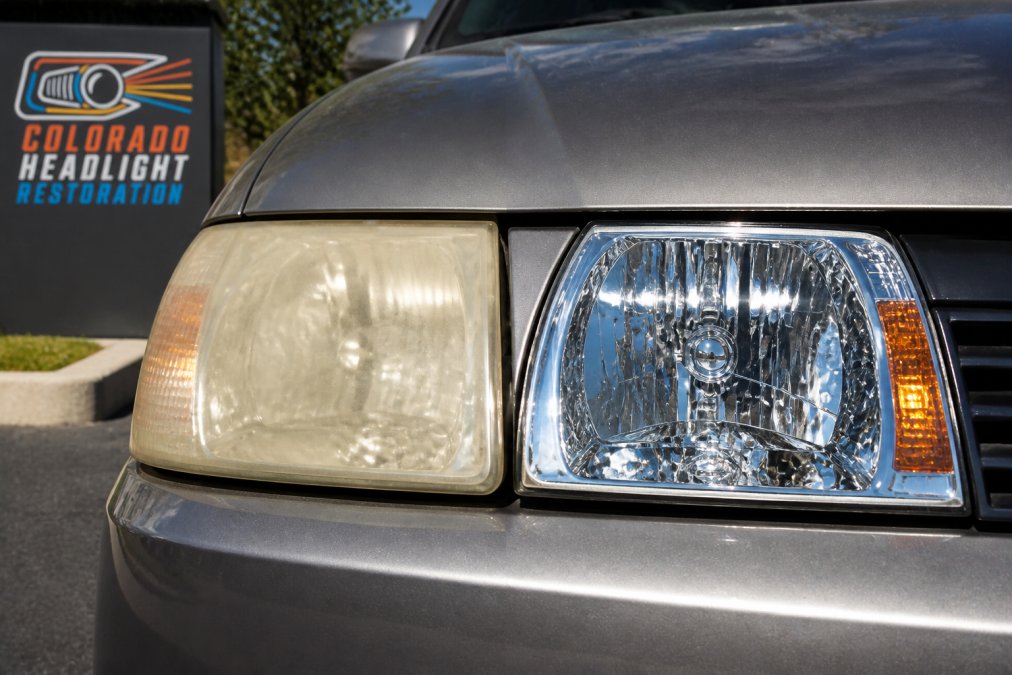
Headlight oxidation occurs when UV rays and environmental exposure break down the polycarbonate lens coating, creating a cloudy appearance that blocks light. During inspection, examiners check beam pattern clarity and light output intensity, oxidized headlights often fail these tests.
What Inspectors Actually Measure
Light Output (Luminous Intensity): During inspection, examiners check beam pattern clarity and light output intensity, oxidized headlights often fail these tests.
Beam Pattern and Cutoff Line: Inspectors verify a defined cutoff line that prevents light from shining into oncoming drivers' eyes. Oxidized lenses create fuzzy cutoffs that scatter light upward, causing glare and inspection failure. Restoration cleans the lens but cannot fix beam pattern issues from reflector damage or misalignment.
Lens Clarity and Transparency: Restoration removes surface oxidation but cannot repair structural damage like deep pitting or delamination.
Color Temperature: Headlights must emit white or slightly amber light. Restoration removes yellowing caused by oxidation, restoring original color temperature.
Common Causes of Oxidation and Inspection Failure
Oxidation accelerates under specific conditions: intense UV radiation at high altitudes, road salt and de-icing chemicals, temperature fluctuations, and age (lenses older than 8-10 years often show significant oxidation).
Why Aggressive Restoration Can Fail Inspection
Overly aggressive sanding can alter beam pattern enough to cause inspection failure even when the lens appears clear. Uneven material removal changes lens curvature, distorting light refraction. Professional restoration uses calibrated sanding grits and consistent pressure; DIY approaches run this risk.
DIY Headlight Restoration Kit Effectiveness
DIY kits (typically $15-$50) include sandpaper, polishing compound, and sealant. The process involves wet sanding, polishing, and sealing. Many owners try DIY because it seems simple and inexpensive.
Initial results look impressive, but durability varies dramatically and inspection-readiness is unpredictable.
Durability Issues with DIY Kits
Most DIY applications last only weeks to months before cloudiness returns. Issues include inconsistent sanding pressure, improper grit progression, generic polishing compounds, and poor coating application.
DIY kits lack adequate UV protection. Consumer-grade coatings break down within 30-60 days in high-altitude regions, leaving headlights vulnerable to re-oxidation.
The Inspection Risk: Beam Pattern Distortion
Uneven sanding can change lens curvature, distorting light refraction and beam pattern enough to fail inspection standards. A visually clear lens may still fail inspection if beam pattern is distorted. Professional restoration uses calibrated equipment; DIY approaches run this risk.
Material Quality Matters More Than You Think
Not all DIY kits are equal. Budget kits often include:
- Low-quality sandpaper: May clog quickly or leave scratches that are difficult to polish out.
- Generic polishing compound: Not formulated for polycarbonate lenses; may leave residue or cause micro-scratching.
- Weak sealant: Often a thin clear coat that provides minimal UV protection; may not adhere properly to the lens surface.
Premium DIY kits (typically $40-$80) include better materials but still lack the professional-grade sealants and equipment that ensure durability and inspection compliance. The labor and technique remain the limiting factor.
When DIY Makes Sense
DIY restoration can work if:
- Your headlights are only lightly oxidized (early yellowing, not severe cloudiness).
- You're willing to invest time in learning proper technique (watching multiple tutorials, practicing on a non-critical vehicle first).
- You accept that the restoration may only last 2-4 months and you'll need to repeat it or upgrade to professional service.
- You're not preparing for an imminent inspection, DIY is a temporary fix, not a compliance solution.
For vehicles preparing for inspection within the next 30-60 days, professional restoration is the safer choice. It ensures both visual clarity and beam pattern compliance, backed by a service guarantee.
Headlight Restoration vs Replacement: What You Need to Know
When your headlights are severely oxidized, you face two choices: restoration or full assembly replacement. Understanding the difference helps you make the right decision for your vehicle and budget.
Headlight restoration cleans and seals the existing lens. This approach works well for lenses that are oxidized but structurally sound. The restoration process removes the cloudy layer, polishes the surface, and applies a durable protective coating. The result is a lens that looks and functions like new.
Full headlight assembly replacement involves removing the entire headlight unit and installing a new one. This includes the lens, reflector, housing, and bulb assembly. Replacement is necessary when the lens is cracked, the reflector is damaged, or the housing is compromised. It's also the only option if the lens material has deteriorated beyond restoration capability.
The key difference is longevity and cost. Restoration addresses the oxidation problem and typically lasts 1-3 years with proper protection. Replacement provides a brand-new assembly that lasts significantly longer but costs much more. For most vehicles with oxidized but intact lenses, restoration is the practical choice.
Restoration also preserves your vehicle's original aesthetic. New aftermarket assemblies sometimes don't match the exact appearance of factory headlights, especially on older vehicles. Restoration maintains the original look while improving function.
Cost of Replacing Headlight Assemblies
Full headlight assembly replacement is expensive. Factory replacement assemblies for most vehicles range from hundreds to thousands of dollars per unit. Labor costs add another significant amount to the total bill. For many vehicle owners, the total cost of replacing both headlights exceeds what they expected to spend.
The exact cost depends on your vehicle's make, model, and year. Luxury vehicles and newer models with advanced lighting systems cost more to replace. Standard vehicles typically require less expensive assemblies, but labor remains a substantial portion of the bill.
When you compare replacement cost to professional restoration, the savings are substantial. Professional headlight restoration costs a fraction of assembly replacement while delivering similar visual results. For vehicles with oxidized but structurally sound lenses, restoration is the logical choice.
This is where Colorado Headlight Restoration makes a difference. Our professional restoration process takes just 30-60 minutes and includes a durable ceramic UV sealant. You save hundreds of dollars compared to replacement while restoring your headlights to OEM clarity. The process is mobile, so we come to your home or office, eliminating the need to visit a shop.
Professional Restoration Process and Long-Term Protection
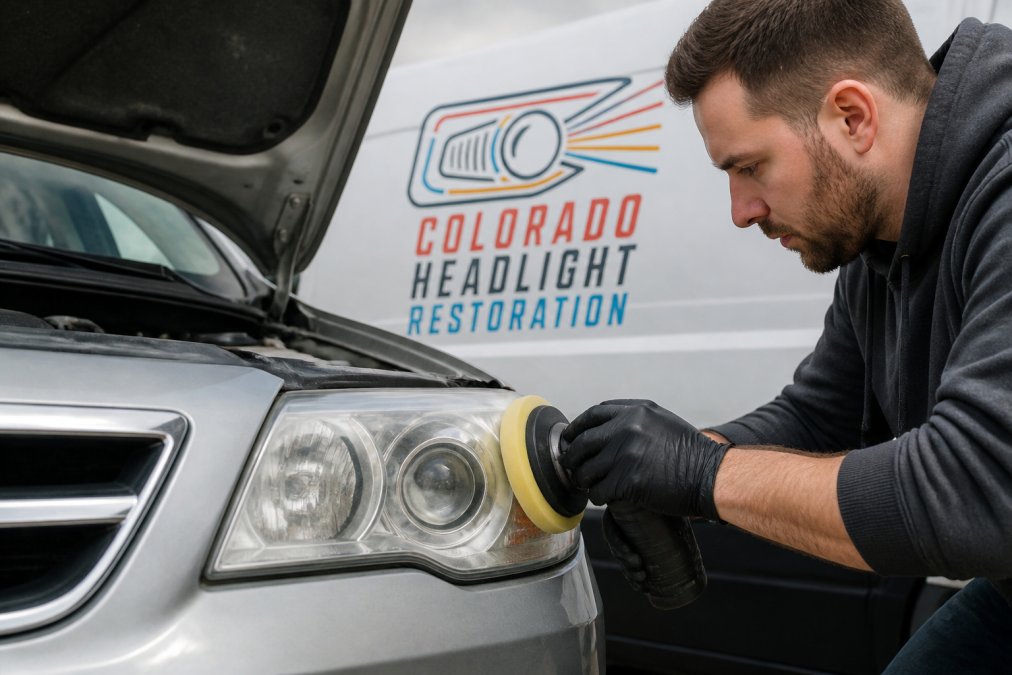
Professional headlight restoration follows a structured process designed to maximize durability. Unlike DIY approaches, professional work uses specialized equipment and materials engineered for long-term protection.
Professional headlight restoration follows a structured process designed to maximize durability. Unlike DIY approaches, professional work uses specialized equipment and materials engineered for long-term protection.
The ceramic UV sealant is the critical difference between professional and DIY restoration. Professional-grade sealants bond chemically with the polycarbonate lens material, creating a protective layer that resists UV degradation. These sealants are formulated to withstand intense sun exposure and environmental stress.
At Colorado Headlight Restoration, our ceramic UV sealant is specifically designed to handle high-altitude sun exposure. Colorado's elevation and clear skies create intense UV conditions that break down standard protective coatings quickly. Our sealant is engineered to last up to three years under these conditions, providing extended protection for your headlights.
The durability of professional restoration also depends on proper aftercare. Protecting your headlights from excessive sun exposure, avoiding harsh chemicals, and regular maintenance extend the life of the restoration.
Protecting Your Headlights After Restoration
Once your headlights are restored, protecting them ensures the work lasts as long as possible. Simple maintenance practices can extend the life of your restoration by months or even years.
UV protection is the primary concern. Parking in shaded areas whenever possible reduces sun exposure. If you park outdoors regularly, consider using a car cover or parking under a carport. Even partial shade reduces the intensity of UV exposure on your headlights.
Avoid harsh chemicals and abrasive cleaners on your headlights.
Frequently Asked Questions
How long does professional headlight restoration last?
Professional headlight restoration with ceramic UV sealant typically lasts 2-3 years, depending on sun exposure and environmental conditions. High-altitude regions with intense UV radiation may see slightly shorter durability. A quality ceramic sealant protects against oxidation and UV degradation much longer than DIY kit results, which often fade within weeks to a few months.
Can my car pass vehicle inspection with oxidized headlights?
Cloudy or hazy lenses that reduce light output below acceptable levels will typically fail inspection. Professional headlight restoration restores OEM clarity and ensures your vehicle meets these safety standards.
Is headlight restoration necessary for vehicle safety?
Yes. Oxidized or cloudy headlights reduce nighttime visibility significantly, increasing accident risk during night driving. Hazy lenses scatter light instead of projecting a focused beam, making it harder to see the road and for other drivers to see you. Headlight restoration improves light output and beam pattern, directly enhancing driving safety and reducing collision risk.
What's the difference between DIY restoration kits and professional service?
DIY kits use abrasive sandpaper and basic polishing compounds that deliver temporary results, typically fading within 1-2 months. Professional restoration includes surface preparation, wet sanding with precise grit progression, specialized polishing compounds, and a durable ceramic UV sealant. Professional restoration includes surface preparation, wet sanding with precise grit progression, specialized polishing compounds, and a durable ceramic UV sealant.
Cloudy headlights? Get your price in 30 seconds.
Mobile service across the Denver metro. Most vehicles finished in 30–60 minutes, right in your driveway.