
Last Updated: October 22, 2026
Quick Summary
The benefits of oem vs aftermarket headlights come down to one tradeoff: factory parts buy certainty, while aftermarket parts buy choice. OEM headlights arrive with guaranteed fitment, factory-grade lens coatings, and compliance with federal lighting standards, while aftermarket assemblies cost less and offer styling options, but quality ranges from excellent to unusable.
- OEM wins on fitment, durability, and resale value; aftermarket wins on price and customization.
- Price the whole job, not the box: parts, labor, programming, adjustment, and risk.
- Verify fitment with year, make, model, trim, body style, VIN, and part number before ordering.
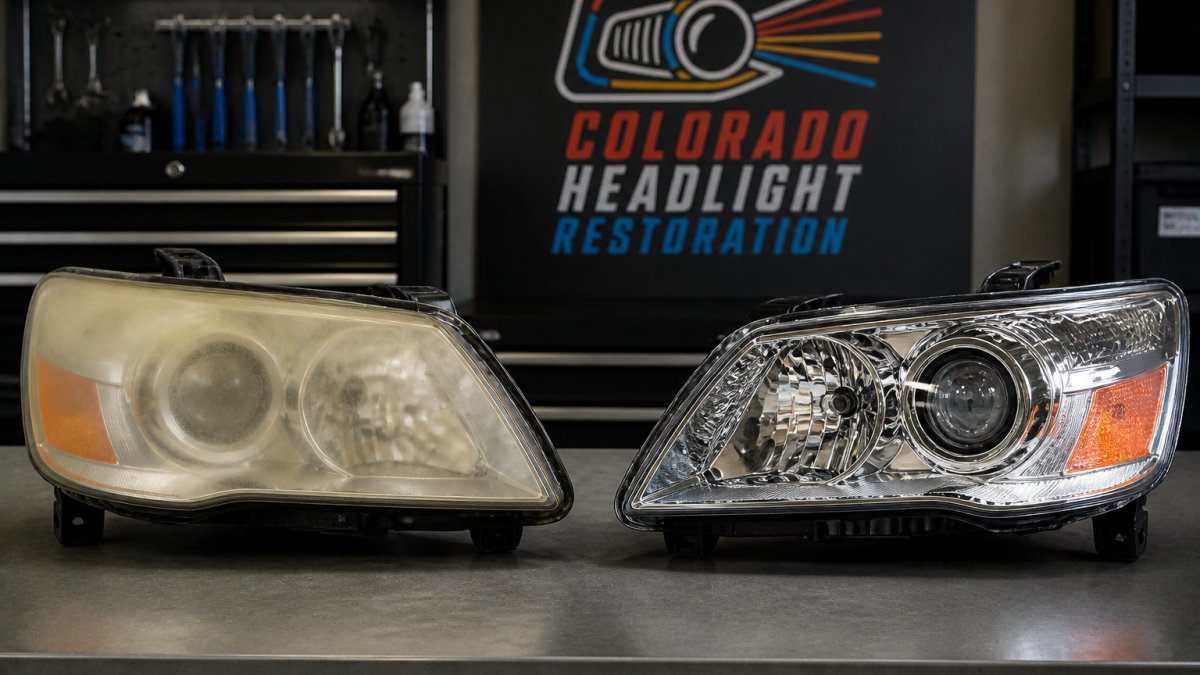
- Restoration restores cloudy lenses to OEM clarity in 30 to 60 minutes at a fraction of new assemblies.
- A legal beam has a sharp cutoff that keeps light on the road and out of oncoming drivers' eyes.
Table of Contents
- OEM vs Aftermarket Headlights: The Core Tradeoff
- OEM vs Aftermarket Headlights: Key Differences at a Glance
- The Cost of Replacing Headlight Assemblies
- Aftermarket Headlight Assembly Pros and Cons
- Headlight Assembly Fitment and Compatibility
- Headlight Restoration vs Replacement: Which Makes Sense
- Light Output, Beam Pattern, and Road Legality
- Conclusion
- Frequently Asked Questions
OEM vs Aftermarket Headlights: The Core Tradeoff
The benefits of OEM vs aftermarket headlights come down to one tradeoff: factory parts buy certainty, while aftermarket parts buy choice.
This guide from Colorado Headlight Restoration breaks down that tradeoff by cost, fitment, durability, and light output. We restore headlight lenses for a living, so we see what happens to both types after years of sun and road time.
OEM headlights are assemblies built by or for the vehicle manufacturer to exact factory specifications. Aftermarket headlights are third-party assemblies built by other companies, sometimes to OEM standards and sometimes not.
The short answer most guides skip: neither option fixes a problem you may not have. A cloudy lens is usually a surface problem, not a failed assembly.
OEM vs Aftermarket Headlights: Key Differences at a Glance
OEM wins on fitment, durability, and resale value. Aftermarket wins on price and customization. The table below summarizes how the two compare across the factors that matter most.
| Factor | OEM Headlights | Aftermarket Headlights |
|---|---|---|
| Purchase price | Highest | Lower, varies widely |
| Fitment | Guaranteed for your trim level | Depends on the specific part |
| Lens coating | Factory UV-resistant coating | Inconsistent across brands |
| Light output | Meets federal standards | Meets standards only if certified |
| Styling options | None beyond factory | Wide range |
| Warranty | Backed by the manufacturer | Varies by brand |
| Resale impact | Maintains original appearance | Can help or hurt |
A common mistake is assuming "aftermarket" means "cheap." Premium aftermarket brands build assemblies that meet or exceed factory output. Budget brands often do not.
The Cost of Replacing Headlight Assemblies
The cost of replacing headlight assemblies is the single biggest reason owners shop aftermarket. Factory assemblies for many vehicles run into the hundreds of dollars per side, and complex LED or adaptive units on newer and luxury vehicles climb far higher.
Here is what the total cost of ownership actually includes:
- Parts: one or both assemblies, depending on damage. A single cracked lens often means buying a pair on aftermarket because matching a factory unit exactly can be difficult.
- Labor: bumper removal and aiming on many modern vehicles. Some front fascias require partial removal of the grille and inner fender liners, which adds shop time.
- Programming: some vehicles require a dealer scan tool or equivalent to calibrate adaptive or LED units, and a few require module initialization before the light will function correctly.
- Adjustment: beam aim after installation. A correctly built assembly still needs to be aimed, and a poorly built one may not be aimable at all.
- Risk: misaligned beam patterns, moisture intrusion, or connector corrosion that sends you back for a second visit.
A cheaper part that needs two installation attempts is not cheaper. The practical way to compare is to price the whole job, not the box. Ask for a written quote that separates parts, labor, programming, and aim, then compare that total against the expected service life of each option.
Why the cheapest option often costs the most
The total-cost math usually turns on lifespan and warranty rather than purchase price.
A simple way to frame the decision:
- Keep the vehicle long-term: weigh purchase price against expected lifespan and warranty. A higher upfront cost spread over many years is often the lower annual cost.
- Short ownership horizon: the cheaper option with adequate certification is usually the rational choice, provided fitment and beam pattern check out.
- Damaged lens only: restoration is almost always the lowest total cost, because it avoids parts, labor, programming, and aim entirely.
That last point is where most owners overspend. Oxidation and yellowing are surface problems on the lens coating, not a failure of the assembly. Restoring the lens costs a fraction of new assemblies and avoids every line item above except the restoration itself.
Before committing to replacement, get a written quote that covers parts, labor, programming, and aim, and compare it against a restoration quote for the same vehicle. The difference is usually large enough to make the decision obvious.
Aftermarket Headlight Assembly Pros and Cons
Aftermarket headlight assembly pros and cons split cleanly.
Premium brands like Morimoto build projector assemblies with DOT and SAE compliance and integrated daytime running lights.
NHTSA's lighting equipment standards set the federal baseline for what a legal headlight must do.
Where aftermarket genuinely wins is the driver who wants a projector upgrade or a different look and is willing to pay for a reputable brand.
Headlight Assembly Fitment and Compatibility
Headlight assembly fitment and compatibility decide whether a swap is a weekend job or a saga. OEM assemblies are built for one vehicle, one trim level, one connector. Aftermarket assemblies vary: some are plug-and-play for specific models, others need adapter harnesses or minor trimming. The gap most guides leave open is how to verify fitment before you buy, using the same information a parts counter uses.
Why fitment goes wrong
Two vehicles that look identical can use different headlight connectors, mounting tabs, and internal electronics. Automakers change harnesses mid-generation, offer appearance packages that swap halogen for LED, and add adaptive or cornering features on higher trims. An assembly that fits one trim can be physically close but electrically incompatible with another. That is why "fits my model" is not the same as "fits my vehicle."
A step-by-step fitment check
Work through these in order before you order any assembly:
- Decode your vehicle exactly. Use the year, make, model, trim, and body style, plus the VIN if the seller asks for it. Trim and body style are where most mismatches start.
- Identify your factory light source. Confirm whether your vehicle left the factory with halogen, HID, or LED. The housing, ballast, and wiring differ, and mixing them creates both performance and legality problems.
- Match the part number. Compare the OEM part number on your current assembly (or a dealer parts lookup) against the aftermarket listing's cross-reference. A listing that only says "fits many models" is a warning sign.
- Check the connector. Match connector type and pin count. Photograph your current connector and mounting tabs and send them to the seller before ordering.
- Confirm mounting points. Verify that the mounting tabs and alignment pins match your current housing, especially if your vehicle has had front-end repair.
- Account for adaptive and automatic features. If your vehicle has adaptive headlights, automatic high beams, or leveling motors, confirm the replacement supports them or that you accept losing them.
- Verify certification. Confirm DOT certification is printed on the assembly or documented by the seller, and that the assembly is legal for your vehicle and use.
Compatibility beyond the housing
Fitment is not only physical. A complete replacement assembly is designed around a specific light source and optic.
Trim level trips up more buyers than anything else. Two vehicles that look identical can use different headlight connectors, and an assembly that fits one will not fit the other. Verifying the seven items above before you pay turns a potential return into a straightforward installation.
Headlight Restoration vs Replacement: Which Makes Sense
Headlight restoration vs replacement comes down to what is actually wrong. If the lens is yellowed, cloudy, or oxidized but the housing is intact, restoration is the practical answer.
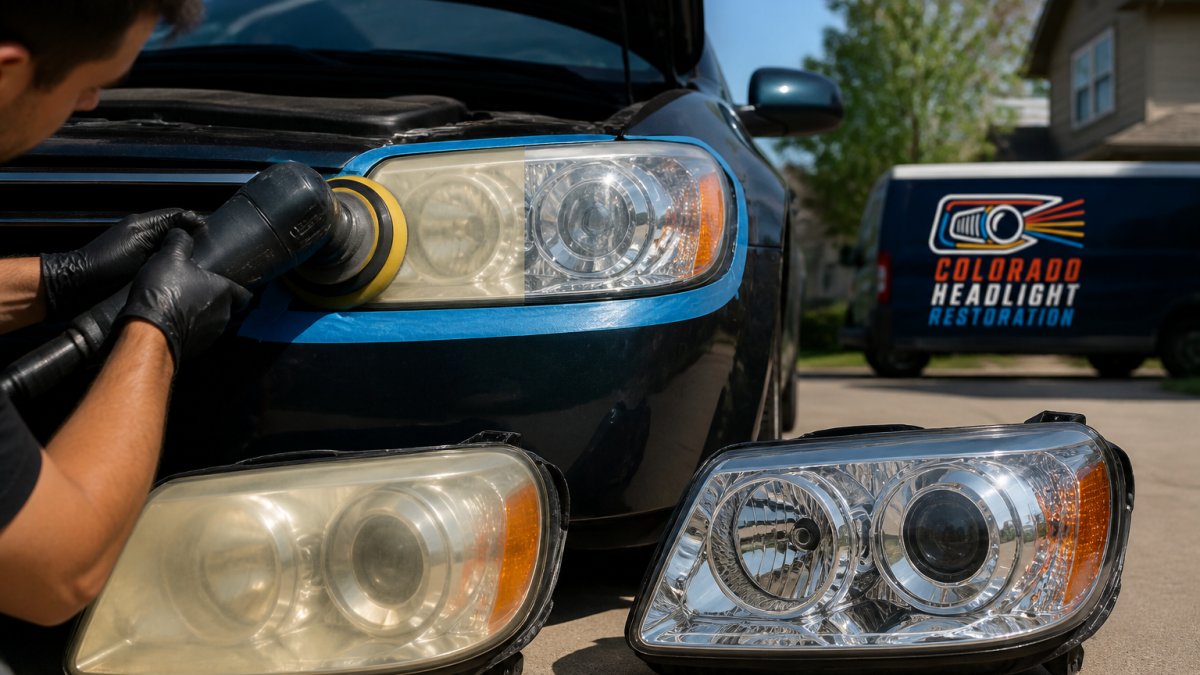
This is where most owners overspend. At Colorado Headlight Restoration, our mobile service restores cloudy lenses to OEM clarity in 30 to 60 minutes, at your home or office, and finishes with a ceramic UV sealant built for high-altitude sun.
Replacement makes sense when the assembly itself is damaged. Restoration makes sense when the lens is the only problem.
Light Output, Beam Pattern, and Road Legality
Light output and beam pattern determine whether a headlight is safe and legal, not how bright it looks in a parking lot.
NHTSA's headlamp regulations govern beam pattern, aim, and allowable output for road use. Aftermarket assemblies and LED bulb upgrades must meet those standards to be street legal.
Technology compatibility matters here too. Halogen housings are designed around halogen bulbs. Dropping an LED or HID bulb into a halogen reflector often scatters light rather than improving it.
Conclusion
The real challenge is not choosing between OEM and aftermarket. It is figuring out whether you need a new assembly at all. Most cloudy headlights need restoration, not replacement, and that decision saves the most money.
At Colorado Headlight Restoration, we bring the fix to your driveway. Our mobile service restores OEM clarity in 30 to 60 minutes, seals the lens with ceramic UV protection built for up to three years, and backs the work with a one-year free re-restoration guarantee.
Frequently Asked Questions
Are aftermarket headlights worth it compared to OEM?
It depends on the vehicle and the part. Budget aftermarket assemblies often cost far less than OEM, but fitment, weather sealing, and beam pattern quality vary widely between brands. Premium aftermarket options from established lighting brands can match or beat factory output, while cheap units may fog, leak, or aim poorly within a year. For a daily commuter where reliability matters most, OEM or a reputable aftermarket brand is the safer bet. For an older vehicle where the goal is appearance or basic function, a mid-tier aftermarket assembly can be a reasonable value.
How much does it cost to replace a headlight assembly?
The cost of replacing headlight assemblies varies widely by vehicle, trim level, and whether you choose OEM or aftermarket parts. OEM assemblies for many models run several hundred dollars per side, and some luxury or complex LED units run into the thousands. Aftermarket assemblies typically cost less, though quality varies. Labor adds to the total if a shop does the work. Because pricing depends on your specific vehicle, check your model's parts pricing directly rather than relying on a generic average.
Do aftermarket headlights fit as well as OEM headlights?
Fitment is where the gap between OEM and aftermarket shows up most. OEM assemblies are built to the exact mounting points, electrical connector, and trim level of your vehicle, so installation is usually plug-and-play. Aftermarket units vary by manufacturer: some are engineered to factory tolerances, while others need trimming, adapter harnesses, or leave small panel gaps. Before buying, confirm the part number matches your vehicle's year, make, model, and trim, and check whether the listing specifies plug-and-play compatibility or requires modification.
Can cloudy headlights be restored instead of replaced?
Yes. Oxidation, yellowing, and surface haze are usually lens problems, not assembly failures, so professional headlight restoration can bring clarity back without buying new assemblies. A proper restoration removes the oxidized layer and applies a UV sealant to slow future yellowing, which costs a fraction of replacement. If the housing is cracked, water is pooling inside, or the reflector has failed, replacement is the better call. For lenses that are simply cloudy, restoration vs replacement usually favors restoration on cost alone.
Are aftermarket headlight assemblies as bright as OEM?
Brightness depends on the optics, not just the bulb. A well-engineered aftermarket assembly with a proper projector and DOT-compliant beam pattern can match or exceed OEM output. Cheap assemblies often produce uneven light, glare for oncoming drivers, or a poorly defined cutoff, which hurts visibility and can fail inspection. If you upgrade to LED or HID bulbs, the housing must be designed for that light source, otherwise the beam scatters. Verify DOT or SAE compliance markings before installing any aftermarket assembly for street use.
Learn more about our headlight restoration in Denver, or see headlight restoration in Longmont.
Cloudy headlights? Get your price in 30 seconds.
Mobile service across the Denver metro. Most vehicles finished in 30–60 minutes, right in your driveway.