Table of Contents
- Why Headlights Oxidize and Yellow Over Time
- Headlight Restoration vs. Replacement Cost
- How Long Does Headlight Restoration Last
- Best Way to Clean Yellow Headlights: DIY vs. Professional
- Safety and Visibility Benefits of Headlight Restoration
- Is Headlight Restoration Worth It for Your Vehicle
- Frequently Asked Questions
Last Updated: September 20, 2026
Why Headlights Oxidize and Yellow Over Time
Polycarbonate lenses degrade when exposed to UV rays and harsh conditions. The protective clear coat breaks down, allowing ultraviolet light to penetrate the polycarbonate and cause yellowing and haze.
High-altitude regions, moisture, temperature fluctuations, and road salt accelerate degradation. Minor haze gradually worsens into cloudy, yellowed lenses that reduce light transmission and compromise nighttime visibility.
A yellowed lens transmits less light to the road, reducing visibility during night driving.
Headlight Restoration vs. Replacement Cost
When headlights yellow, you can restore or replace the assembly. Full replacement costs $400-800+ per side and requires shop downtime. Restoration costs significantly less.
Professional restoration takes 30-60 minutes at your location. The ceramic UV sealant provides protection for up to three years.
Restoration extends lens life at a fraction of replacement cost. Most owners restore multiple times before considering replacement.
How Long Does Headlight Restoration Last
Durability depends on method and materials. DIY kits and professional services diverge significantly in longevity.
Durability by Method
Budget DIY kits last a few months to a year. Application quality varies by user skill, and many repeat the process within months.
Mid-range ceramic DIY kits last 12-18 months. Drill-based systems penetrate oxidation more thoroughly than wipe-on systems but require more effort.
Professional ceramic coatings maintain clarity for 2-3 years and withstand high-altitude sun exposure.
Premium ceramic formulations resist UV degradation longer, delivering better long-term value than cheap coatings.
The Maintenance Cycle Most Articles Ignore
The sealant begins degrading immediately. By month 18-24, haze typically returns at lens edges, the predictable degradation curve of any protective coating.
At month 20-28, you decide whether to restore again or replace. A typical pattern is professional restoration every 2-3 years.
Over 10 years, you might restore 3-4 times, substantially lower than replacement, but requires accepting ongoing maintenance.
Monitoring Degradation: When to Re-Restore
Restore when haze first becomes visible in bright sunlight, typically at 20-24 months. Early restoration yields faster results and longer durability.
Inspect quarterly for haze at lens edges, reduced light output, or yellowing in corners.
Signs before 24 months indicate accelerated degradation. High-altitude, desert, or coastal climates shorten the cycle by 6-12 months.
Environmental Factors That Shorten Lifespan
Real-world durability depends on UV intensity, salt exposure, temperature cycling, and humidity. High-altitude, coastal, desert, and humid climates reduce durability by 6-40%.
If exposed to multiple factors, plan for restoration every 18-24 months.
The Long-Term Value Calculation
Restoration is worth it if you accept the maintenance cycle. Over 10 years, cumulative restoration cost is 40-50% lower than replacement.
Best Way to Clean Yellow Headlights: DIY vs. Professional
DIY Restoration Kits
The Cerakote Ceramic Kit uses a simple wipe-on approach with ceramic protection lasting longer than basic kits, taking 30-45 minutes per headlight.
The 3M System uses a drill-mounted sanding disc to remove deeper oxidation. Results are more dramatic but require a power drill and careful masking.
The Sylvania Kit uses a multi-step process taking 60-90 minutes per headlight, sitting between wipe-on simplicity and drill-based intensity.
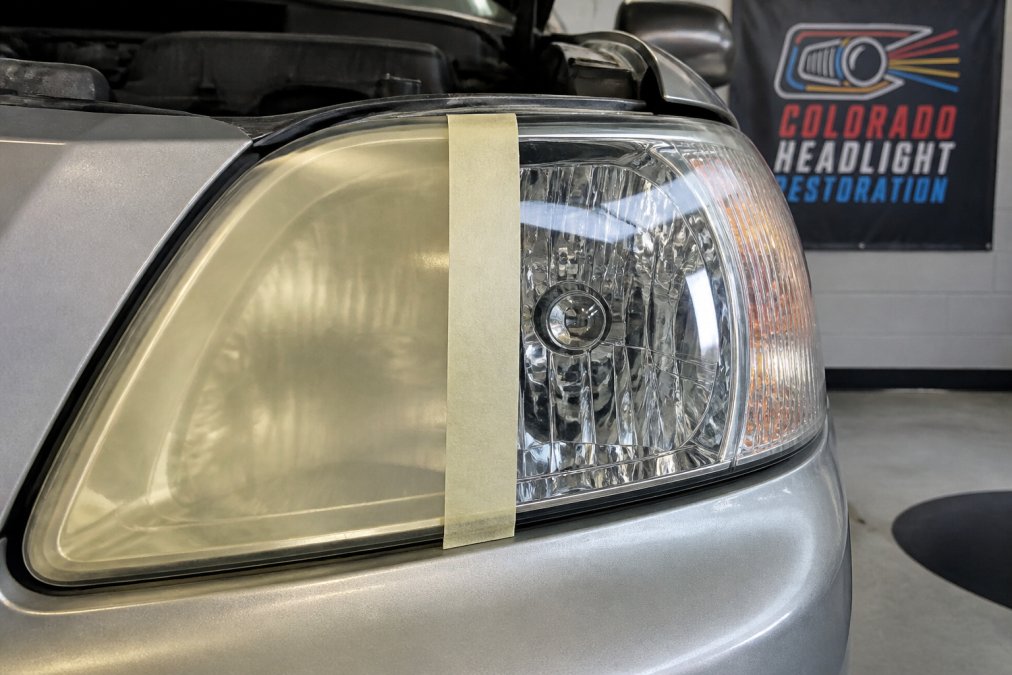
DIY application quality is inconsistent. Uneven coverage leads to patchy results and premature failure. Most DIYers switch to professional service after one attempt.
Professional Mobile Service
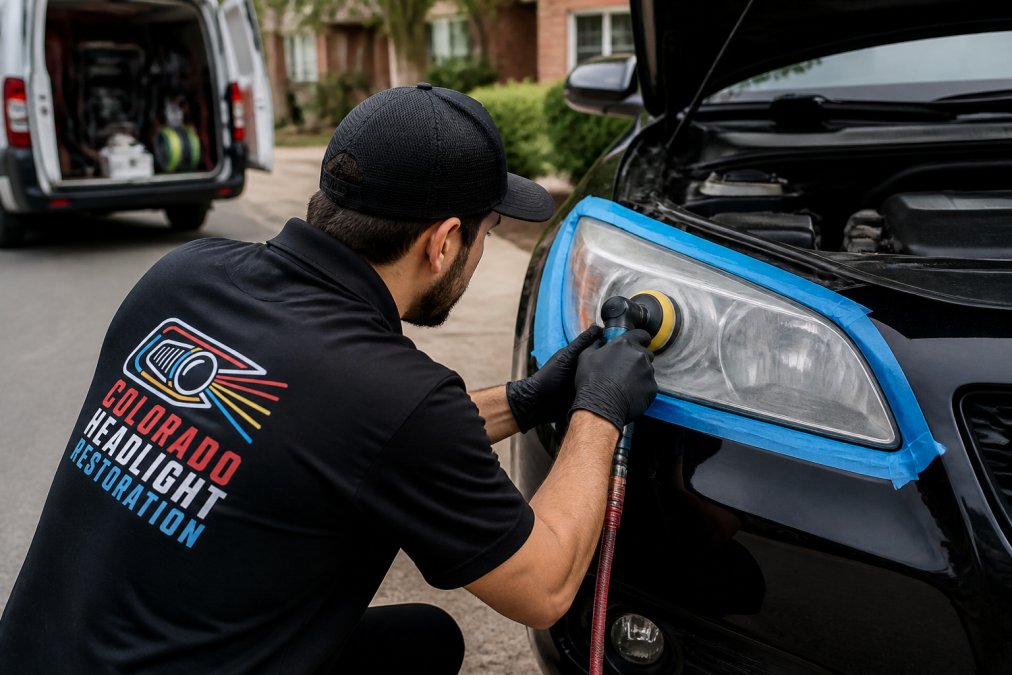
Professional mobile restoration eliminates guesswork. A technician arrives with professional-grade equipment, taking 30-60 minutes and applying a ceramic sealant rated for up to three years.
Professional technicians ensure consistent, even coverage with more powerful equipment and higher-grade ceramic formulations than retail kits.
Professional services cost more but offer expertise and durability. Colorado Headlight Restoration's one-year free re-restoration guarantee reflects confidence in the work.
Safety and Visibility Benefits of Headlight Restoration
Yellowed headlights scatter light instead of projecting it onto the road, reducing your ability to see obstacles and road markers during night driving.
Restoration improves beam pattern consistency, focusing light on the road, especially critical on unlit highways and rural roads.
The safety benefit extends to other drivers. Yellowed headlights are harder to see in your peripheral vision, making your vehicle less visible to oncoming traffic and vehicles around you. Restored headlights project a brighter, clearer appearance, improving recognition distance.
For vehicle inspection purposes, many states and jurisdictions have clarity requirements for headlights. Excessive yellowing or haze can result in inspection failure. Restoration brings your headlights back into compliance, eliminating that barrier to passing inspection.
Is Headlight Restoration Worth It for Your Vehicle
Whether headlight restoration worth it depends on multiple factors: the severity of oxidation, your vehicle's headlight technology type, your vehicle's age and value, how long you plan to keep the car, and whether the headlights meet Department of Transportation (DOT) standards for light output. A one-size-fits-all answer doesn't exist, the decision requires matching your specific situation to the right solution.
Severity of Oxidation: The Critical Threshold
Not all yellowed headlights are equally restorable. Damage falls into three categories:
Mild oxidation (surface haze, 20-40% light reduction): This is the sweet spot for restoration. The polycarbonate lens is intact, and the yellowing is primarily in the protective clear coat. Both DIY and professional restoration work well here. Restoration costs $100-300 and extends lens life by 2-3 years. Worth it in nearly all cases.
Moderate oxidation (deep yellowing, visible pitting, 40-70% light reduction): The clear coat has failed, and UV damage has begun penetrating the polycarbonate itself. Professional restoration with aggressive sanding and ceramic sealant can restore 80-90% of original clarity. DIY kits are less effective at this severity. Cost is $150-300 professionally. Worth it if the vehicle is newer than 8 years old or you plan to keep it 3+ more years. If the vehicle is older and you're considering selling within 2 years, replacement may be the better choice for resale value.
Severe oxidation (extreme yellowing, deep pitting, crazing, 70%+ light reduction): The polycarbonate itself is structurally compromised. Restoration can improve appearance but often cannot restore full clarity or proper beam pattern. Results are unpredictable. Replacement is the only way to guarantee DOT-compliant light output. Restoration is not worth attempting at this stage.
Before committing to restoration, assess your headlights honestly. If you can see deep pits or crazing (fine cracks) in the lens surface, or if the yellowing is so severe that you can barely see the bulb inside, restoration will disappoint. Professional services can evaluate severity during a free inspection.
Headlight Technology Type: LED, HID, and Halogen Differences
Most articles treat all headlights as identical polycarbonate lenses, but the lens material and coating vary significantly by technology type, and this affects restoration success and longevity.
Halogen headlights (most common on vehicles pre-2010 and many vehicles today): These use traditional polycarbonate lenses with a UV-protective clear coat. Restoration works very well. The heat from halogen bulbs (which run hotter than LED or HID) can actually help the ceramic sealant cure and bond more effectively. Durability from professional restoration typically reaches 2.5-3 years. Restoration is highly recommended for halogen systems.
HID/Xenon headlights (common on 2006-2015 luxury and mid-range vehicles): These use harder, more UV-resistant polycarbonate than halogen lenses, but the clear coat is often thinner. Oxidation progresses differently, it tends to be more uniform across the lens rather than concentrated at edges. Restoration works well, but the sealant may not bond as durably because HID bulbs run cooler than halogen. Expect 2-2.5 years of durability. Restoration is worthwhile, but plan for more frequent re-restoration cycles.
LED headlights (2015-present, increasingly common): These use the hardest polycarbonate formulations and the most advanced clear coats. Oxidation is less common and progresses more slowly. When oxidation does occur, it's often due to manufacturing defect or seal failure rather than UV degradation. Restoration works, but LED lenses are also more expensive to replace ($600-1,200 per side). The cost-benefit strongly favors restoration. Additionally, LED headlights are more likely to have integrated electronics and complex beam patterns, improper restoration can affect beam pattern alignment. Professional restoration is strongly recommended over DIY for LED systems.
If you're unsure of your headlight type, check your vehicle's manual or look at the headlight assembly.
DOT Compliance and Light Output Standards
Vehicle Age, Value, and Ownership Timeline
Environmental and Practical Considerations
The Decision Framework
Restore if:
- Oxidation is mild to moderate (less than 70% light reduction)
- Your vehicle is less than 15 years old
- You plan to keep the vehicle 2+ more years
- The headlight type is halogen or LED (restoration is highly effective)
- You're willing to accept a maintenance cycle requiring re-restoration every 2-3 years
- The service provider guarantees DOT-compliant light output post-restoration
Replace if:
- Oxidation is severe (70%+ light reduction, visible crazing or deep pitting)
- The vehicle is very old and you're selling soon
- Restoration cannot restore adequate light output for DOT compliance
- You want a permanent solution and plan to keep the vehicle 10+ years
- The headlight assembly is damaged beyond the lens (cracked housing, failed seals)
Frequently Asked Questions
Do headlight restoration products and services really work?
Yes, both DIY kits and professional headlight restoration services effectively remove oxidation and yellowing. Professional services produce more consistent results because technicians apply ceramic UV sealants with precision and use professional-grade equipment. DIY kits work best on mild to moderate yellowing; severe oxidation and pitting may require professional intervention. Results last longer with professional application, typically 2-3 years with proper ceramic sealant, versus 1-3 months for basic DIY treatments without UV protection.
How long does headlight restoration last?
Professional headlight restoration with ceramic UV sealant typically lasts 2-3 years in high-sun environments, especially at high altitude where UV exposure is intense. The durability depends on the quality of the sealant applied and ongoing exposure to sun, salt, and weather. DIY wipe-on kits without UV protection may fade within 1-3 months, while kits with ceramic coating can last 6-12 months. Regular maintenance and avoiding harsh car washes extend longevity.
What is the cost difference between headlight restoration and replacement?
Professional headlight restoration typically costs a fraction of full headlight assembly replacement. A complete headlight assembly replacement can cost significantly more depending on your vehicle model and whether you choose OEM or aftermarket parts. Professional restoration services are significantly less expensive and take 30-60 minutes. DIY kits require your time and effort. For most vehicle owners, restoration offers substantial savings while delivering results comparable to factory clarity.
Is headlight restoration worth it if I only drive during the day?
Even if you primarily drive during daylight, headlight restoration improves your vehicle's appearance and resale value. Cloudy, yellowed headlights signal poor maintenance and can reduce buyer interest. Restoration also ensures your headlights are road-legal and meet visibility standards for occasional night driving or emergency situations. If aesthetics and compliance are your priorities, restoration is worthwhile. If you rarely drive at night and don't plan to sell, the safety benefit is lower.
Cloudy headlights? Get your price in 30 seconds.
Mobile service across the Denver metro. Most vehicles finished in 30–60 minutes, right in your driveway.