Table of Contents
- Why Headlights Become Cloudy and Yellowed
- The Professional Headlight Polishing Process
- How Long Does Headlight Restoration Last
- Mobile Headlight Restoration Service vs. Shop-Based Options
- Cost of Replacing Headlight Assemblies vs. Professional Polishing
- DIY Kits vs. Professional Polishing: What Actually Works
- Safety and Visibility Benefits of Restored Headlights
- Is Professional Headlight Polishing Worth It?
- Frequently Asked Questions
Last Updated: October 1, 2026
Why Headlights Become Cloudy and Yellowed
Headlight oxidation happens to every vehicle eventually, but the mechanism and severity depend on lens material and headlight design. Understanding these differences helps explain why some headlights restore beautifully while others require replacement.
Polycarbonate Lens Degradation
Nearly all modern vehicles use polycarbonate plastic for headlight lenses because it is impact-resistant, lightweight, and allows complex optical designs. However, polycarbonate is inherently vulnerable to UV radiation. The factory applies a clear coat, typically a thin acrylic or polyurethane layer, to protect the underlying plastic from direct sun exposure.
UV rays break down this protective clear coat by breaking the polymer chains through a process called photodegradation. As the clear coat degrades, it becomes opaque and yellowed. Simultaneously, UV radiation penetrates to the polycarbonate substrate itself, causing oxidation that creates a cloudy, hazy appearance. Moisture seeps into microscopic cracks and pits created by oxidation, trapping water vapor inside the lens and amplifying the cloudy effect. Road salt, bug splatter, and harsh weather accelerate this process, especially at higher altitudes where UV intensity is 10 to 15 percent stronger than at sea level.
The yellowing you see isn't just cosmetic. When the lens surface becomes hazy, light output drops significantly. Your headlights may still turn on, but they scatter light instead of projecting it forward, reducing visibility by 50 percent or more in severe cases. This directly impacts your ability to see the road at night and makes your vehicle less visible to oncoming traffic.
LED Housing Complications
Modern LED headlights present a unique restoration challenge. LED housings are sealed units with internal reflectors and lens elements that cannot be disassembled for polishing. The lens is bonded directly to the housing, and aggressive wet sanding can damage the seal or the internal optical components. Additionally, LED lenses are often coated with specialized anti-reflective or light-diffusing coatings that differ from traditional clear coats. Polishing must be gentler and more precise to avoid removing these functional coatings.
Some professional services decline to restore LED headlights for this reason, or charge a premium for the extra care required. If your vehicle has LED headlights, confirm that the service provider has experience with this technology before booking.
Glass Lenses (Older Vehicles)
Vehicles manufactured before the 1990s typically have glass headlight lenses. Glass does not oxidize the way polycarbonate does, but it can become cloudy from a different mechanism: the reflective coating inside the headlight housing deteriorates, or the lens develops a fine scratch pattern from decades of road debris impact. Glass lenses are also more prone to seal failure, allowing moisture to condense inside the housing.
Glass lenses can sometimes be restored by polishing, but the process is different from polycarbonate restoration. Glass is harder and requires different abrasive grits. If the internal reflector is damaged, polishing the lens will not restore headlight performance. Professional assessment is critical for older vehicles.
Why Comparison Matters
Most drivers don't realize how much their visibility has degraded until they compare their headlights to a newer vehicle's. By then, the damage is substantial. A professional headlight polishing service addresses this at the source by removing the oxidized layer and restoring the lens clarity that came from the factory, but only if the lens material and housing design are compatible with restoration. For LED headlights or severely damaged polycarbonate, replacement may be the only viable option.
NHTSA guidelines on vehicle lighting performance and safety
The Professional Headlight Polishing Process
Professional headlight polishing isn't just wiping the lens clean. It's a multi-step restoration process that removes oxidation, restores clarity, and protects against future UV degradation. Colorado Headlight Restoration uses this proven approach.
Surface Preparation and Wet Sanding
The first step is assessing the damage. Light oxidation requires minimal sanding. Heavy yellowing or pitting needs more aggressive treatment. The technician starts with wet sanding using progressively finer grit levels, beginning with coarser pads to remove the oxidized clear coat, then moving to finer grits to smooth the surface.
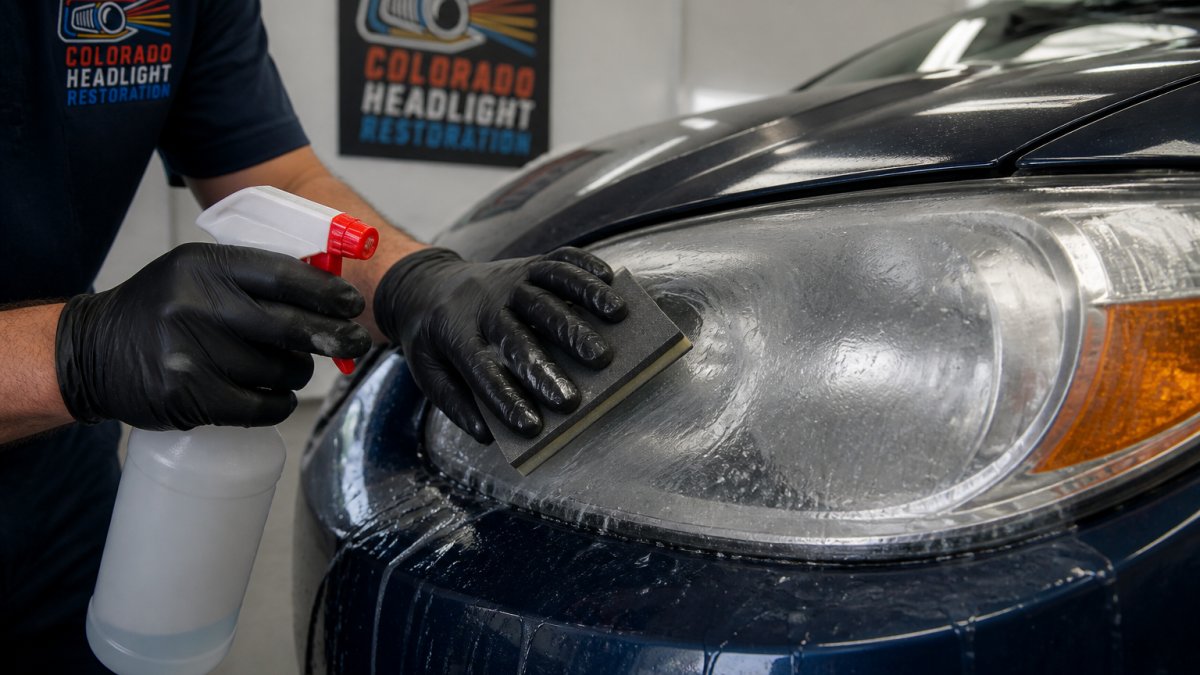
Wet sanding prevents heat buildup that can damage the polycarbonate lens. Water cools the surface while the abrasive grit removes contaminants and oxidation. This stage typically takes 10 to 15 minutes per headlight, depending on severity.
Compounding and Buffing for Lens Clarity
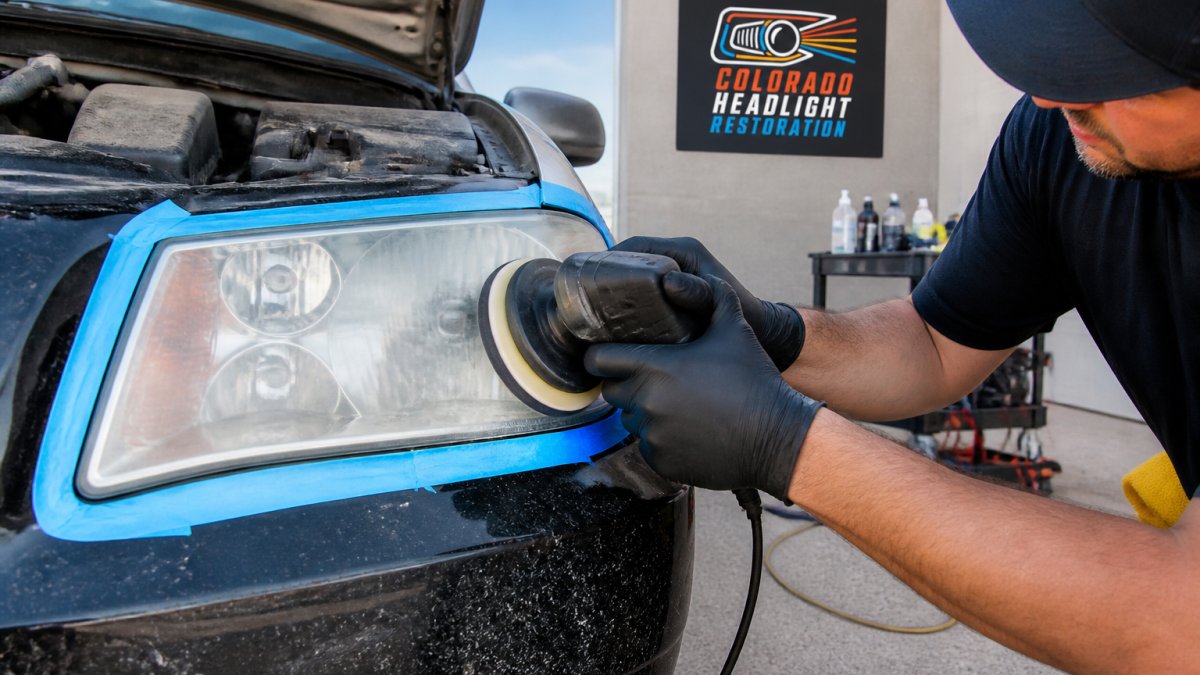
After sanding, compounding removes any remaining haze and prepares the surface for polishing. A professional-grade compound is applied with a buffing pad, working in small sections to ensure even coverage. This stage refines the lens surface and begins restoring clarity.
The final polish uses a finishing compound that brings out the shine and removes any swirl marks left by the compounding stage. The lens should now appear nearly clear, with light output restored to near-factory levels.
Ceramic Coating and UV Protection
The most critical step is applying a protective coating. Without it, oxidation returns within weeks. Professional services apply a ceramic UV sealant that bonds to the lens surface, creating a barrier against UV rays and environmental contaminants.
Colorado Headlight Restoration applies a durable ceramic coating designed to withstand high-altitude sun exposure for up to three years. This coating doesn't just protect, it enhances the lens appearance, giving it a wet-look shine that lasts. The sealant is hydrophobic, meaning water and dirt slide off instead of sticking to the lens.
How Long Does Headlight Restoration Last
The longevity of professional headlight polishing depends entirely on the protective coating applied. Without a sealant, restored headlights typically stay clear for 3 to 6 months before oxidation begins returning. With a quality ceramic coating, you can expect 2 to 3 years of protection.
Colorado Headlight Restoration's ceramic sealant is engineered for durability.
Mobile Headlight Restoration Service vs. Shop-Based Options
The convenience factor alone makes mobile service appealing. A technician comes to your home or office, completes the restoration while you work or relax, and leaves your vehicle ready to drive. No appointment scheduling around shop hours. No dropping your car off for the day.
Cost of Replacing Headlight Assemblies vs. Professional Polishing
The decision becomes clearer when you consider that polishing addresses the actual problem, oxidation of the lens surface. Replacement is necessary only if the housing is cracked, the internal reflector is damaged, or the lens cannot be restored to acceptable clarity.
DIY Kits vs. Professional Polishing: What Actually Works
DIY headlight restoration kits have improved over the years. Early versions produced mediocre results that didn't last. Modern kits like the Cerakote Ceramic Headlight Restoration Kit include oxidation removal pads and ceramic clear coat, offering better performance than older products.
| Method | Time Required | Cost | Durability | Best For |
|---|---|---|---|---|
| DIY Kit | 1-2 hours | $20-$30 | 2-4 months | Budget-conscious DIYers |
| Professional Service | 30-60 minutes | See pricing page | 2-3 years | Most vehicle owners |
| Headlight Replacement | Shop time varies | $800-$2,400+ | Permanent | Damaged housings |
Safety and Visibility Benefits of Restored Headlights
Cloudy headlights don't just look bad, they're a safety hazard. Oxidized lenses reduce light output, directly impairing your ability to see the road at night. This increases accident risk, particularly on unlit highways or during poor weather.
Is Professional Headlight Polishing Worth It?
The answer depends on your priorities and vehicle condition. If your headlights are mildly oxidized and you're comfortable with a DIY approach, an affordable kit can work. If you value time, want guaranteed results, and need protection that lasts years instead of months, professional service is worth the investment.
NHTSA guidelines on vehicle lighting and safety
SAE International standards for automotive headlight performance
Consumer Reports on vehicle maintenance costs
Frequently Asked Questions
How long does professional headlight restoration last?
Professional headlight polishing typically lasts 1 to 3 years depending on the ceramic sealant applied and environmental conditions. A durable ceramic UV coating designed for high-altitude sun exposure can extend protection to 3 years. Factors like frequent sun exposure, hail, and road salt affect longevity. Many professional services offer a 1-year free re-restoration guarantee to maintain clarity if oxidation returns within that period.
Is professional headlight restoration worth it compared to DIY kits?
Professional headlight polishing delivers longer-lasting results than DIY kits. While restoration kits provide temporary improvement, professional services apply industrial-grade compounds, precision buffing, and ceramic coatings that restore OEM clarity for years. Professional work takes 30-60 minutes versus hours of manual labor with DIY kits. For drivers prioritizing durability and night driving safety, professional polishing offers better value despite higher upfront cost.
How much does it cost to replace headlight assemblies versus professional polishing?
Full headlight assembly replacement costs hundreds of dollars per headlight depending on vehicle make and model, with luxury vehicles running significantly higher. Professional polishing services cost a fraction of replacement and restore lenses to OEM clarity without the expense of new assemblies. For most vehicles, professional restoration saves hundreds of dollars while delivering the same visual clarity and improved light output for night driving.
Can severely oxidized headlights be restored professionally?
Yes, even severely oxidized or yellowed headlights can be restored through professional polishing. The wet sanding and compounding process removes surface oxidation, haze, and yellowing to restore lens clarity and light output. Compatibility depends on lens material (polycarbonate vs. glass), but modern vehicles with polycarbonate headlight housings respond well to professional restoration. A technician can assess whether your headlights are candidates for restoration during an initial evaluation.
Why do headlights turn yellow and cloudy over time?
Headlight yellowing and cloudiness result from UV degradation, oxidation, and surface contaminants. Polycarbonate headlight lenses degrade when exposed to ultraviolet light, causing the clear coat to break down and oxidize. Road salt, dirt, and environmental pollutants accelerate this process. High-altitude sun exposure intensifies UV degradation. Professional headlight polishing removes oxidized material and applies protective ceramic coatings to slow future degradation and restore light output for safer night driving.
Learn more about our headlight restoration in Denver, or see headlight restoration in Longmont.
Cloudy headlights? Get your price in 30 seconds.
Mobile service across the Denver metro. Most vehicles finished in 30–60 minutes, right in your driveway.