
Table of Contents
- What Is Ceramic Coating for Headlights?
- UV Protection and Oxidation Prevention
- Hydrophobic Properties and Water Repellency
- Improved Clarity and Nighttime Visibility
- Ceramic Coating Durability for Headlights
- Headlight Restoration vs Ceramic Coating
- Proclear Headlight Restoration Alternatives
- Maintenance and Long-Term Care
- Frequently Asked Questions
Last Updated: October 4, 2026
What Is Ceramic Coating for Headlights?
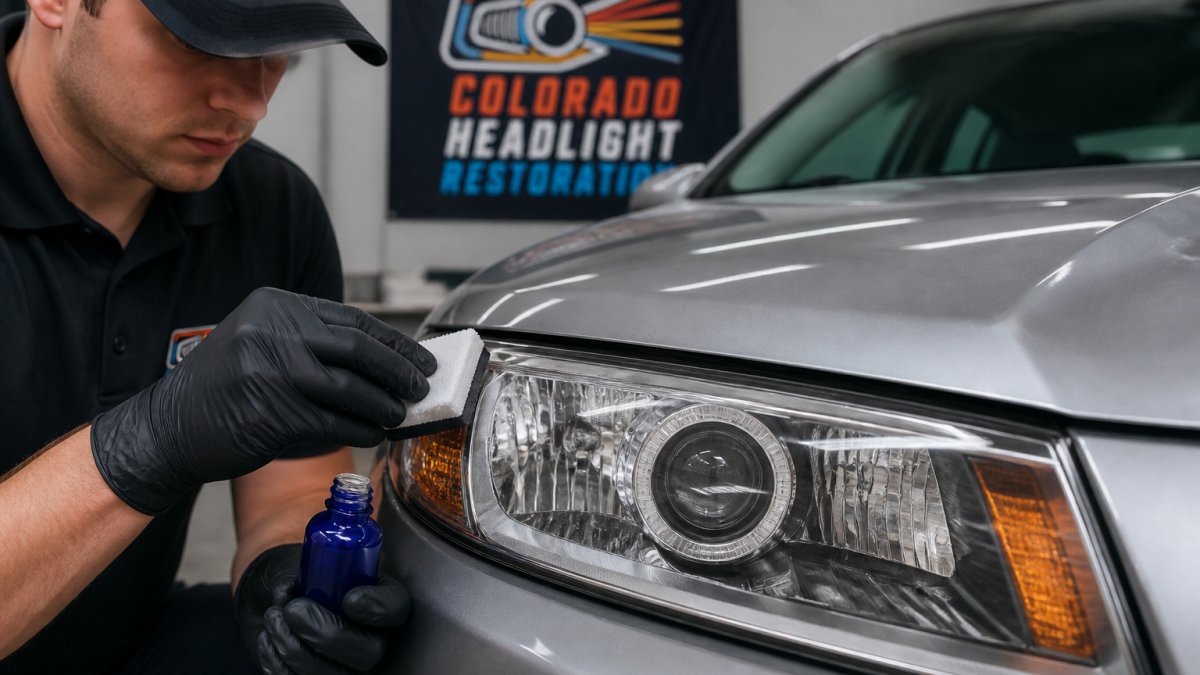
The benefits of ceramic coating for headlights include a protective liquid polymer that bonds to the lens surface, creating a durable barrier against UV rays, oxidation, and environmental contaminants. Unlike traditional wax or sealants that wear away quickly, ceramic coatings form a semi-permanent layer that can last up to three years with proper maintenance. This advanced protection restores clarity to yellowed or cloudy lenses while preventing future degradation from sun exposure and harsh weather conditions.
Professional-grade ceramic coatings fill microscopic imperfections and create a hydrophobic barrier that repels water, dirt, and UV radiation, keeping headlights clearer longer with less maintenance than untreated restored lenses.
The coating bonds at the molecular level to polycarbonate, providing long-term protection that DIY kits cannot match.
UV Protection and Oxidation Prevention
UV rays are the primary cause of headlight degradation, breaking down the polycarbonate material and causing yellowing, hazing, and loss of transparency over time. Ceramic coatings contain UV-blocking compounds that absorb and dissipate harmful radiation before it reaches the lens substrate, significantly slowing the oxidation process that clouds headlights.
High-altitude environments like Colorado experience intense year-round UV exposure. Without ceramic protection, restored headlights can degrade within months.
Professional-grade ceramic coatings withstand high-altitude sun and offer protection for up to three years, maintaining consistent nighttime visibility.
Ceramic coatings prevent environmental contaminants from adhering to the lens, maintaining clarity far longer than protective waxes.
Hydrophobic Properties and Water Repellency
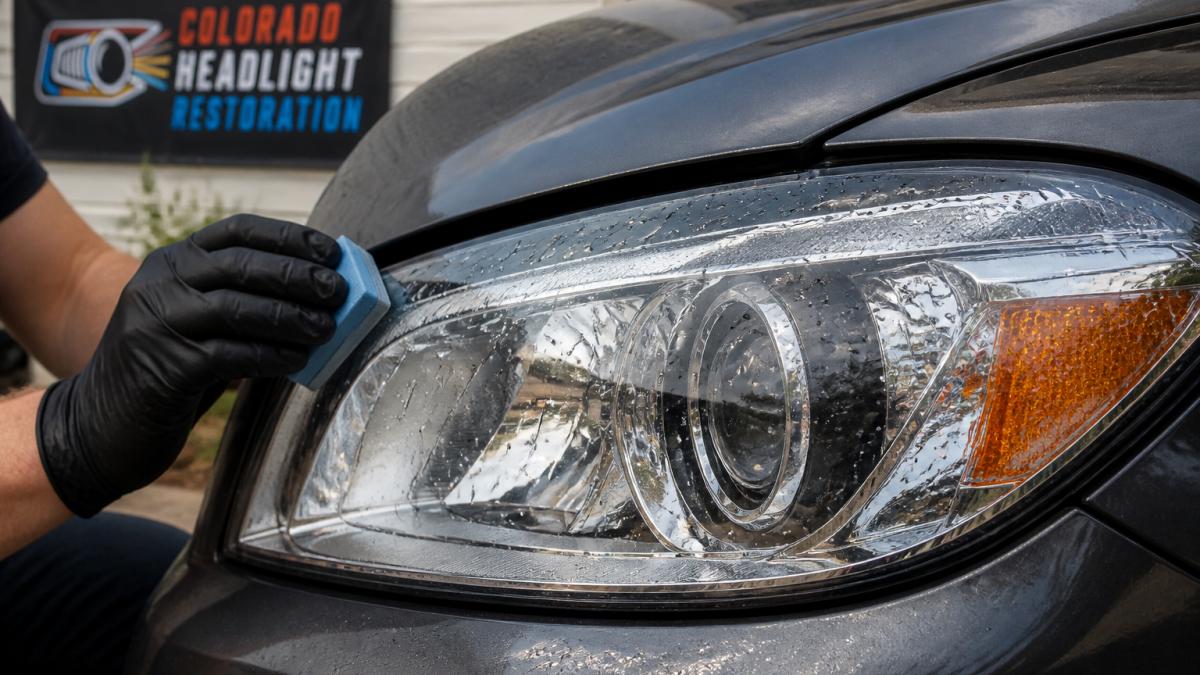
The hydrophobic nature of ceramic coating for headlights causes water to bead and roll off, preventing moisture from trapping contaminants and promoting oxidation.
Hydrophobic surfaces reduce adhesion of environmental fallout and bird droppings, making them easier to rinse away and reducing maintenance time.
Water beading indicates the coating is intact and functioning properly.
Better water management reduces water spots and mineral buildup, maintaining optical clarity for nighttime driving safety.
Improved Clarity and Nighttime Visibility
Ceramic coating for headlights maintains maximum light transmission, improving nighttime visibility by preventing yellowing and hazing that reduce light output.
Ceramic-coated restored lenses recover 90% or more of original brightness, compared to cloudy headlights that reduce output by 50% or more, a substantial safety improvement for early morning and evening commuters.
The ceramic barrier maintains clarity throughout its three-year lifespan by blocking UV rays and environmental contaminants.
Brighter headlights increase visibility for oncoming traffic, reducing accident risk for all drivers.
Ceramic Coating Durability for Headlights
Professional-grade ceramic coatings last through molecular bonding to polycarbonate, far exceeding waxes or sealants that degrade quickly.
How Curing Time Affects Durability
Professional ceramic coatings require specific curing times for polymer chains to cross-link and bond. DIY applications often fail because vehicle owners wash their cars too soon, interrupting curing.
Full hardness develops over time, which is why durability claims assume proper curing before service.
Layering and Thickness
Professional applications use multiple layers, extending durability; single-layer applications provide less protection.
Consumer kits use single applications that wear unevenly; professional multi-layer applications distribute wear evenly.
Factors Affecting Lifespan
Lifespan depends on UV exposure, maintenance, water quality, and environmental exposure.
Removal and Recoating
Failing coatings can be removed and recoated for another period of protection, costing less than full restoration.
New coating cannot bond to degraded old coating, so professional removal before recoating is essential.
Long-Term Performance Beyond Three Years
Coatings gradually diminish rather than failing suddenly. Removal and recoating or touch-up applications can restore protection; well-maintained coatings may provide noticeable protection for an extended period.
Unlike restoration alone, which can begin re-yellowing within months without protection, the benefits of ceramic coating for headlights include consistent, long-term defense against the environmental factors that damage headlights. This extended durability is why the coating investment makes financial sense compared to repeated restoration cycles or eventual headlight assembly replacement.
Headlight Restoration vs Ceramic Coating
Headlight restoration removes oxidation, yellowing, and hazing from cloudy lenses, returning them to near-original clarity through professional polishing and surface treatment. However, restoration alone leaves the lens unprotected against future UV damage and environmental degradation. Without a protective barrier, restored headlights can begin showing signs of yellowing again within weeks to months, depending on sun exposure and driving conditions.
Ceramic coating builds on restoration by adding a durable protective layer that prevents future oxidation and UV damage. While restoration addresses existing damage, the coating prevents new damage from occurring. The combination of restoration plus ceramic coating delivers both immediate clarity improvement and long-term protection, which is why Colorado Headlight Restoration includes ceramic UV sealant with every restoration service.
Restoration alone might be appropriate if your headlights are only mildly yellowed and you're willing to re-restore them periodically. However, for most vehicle owners seeking a permanent solution that maintains clarity for years, ceramic coating is the superior choice. The coating ensures your investment in restoration lasts far longer and requires minimal maintenance to keep your headlights performing at their best.
The cost difference between restoration alone and restoration plus ceramic coating is modest compared to the protection gained. Full headlight assembly replacement costs hundreds of dollars, making the ceramic coating a cost-effective way to extend the life of your restored lenses and avoid expensive replacement down the road.
Proclear Headlight Restoration Alternatives
When evaluating headlight restoration options, you'll encounter several approaches: DIY restoration kits, professional restoration without coating, professional restoration with standard sealants, and professional restoration with ceramic coating.
DIY Ceramic Coating Kits vs. Professional-Grade Formulations
DIY ceramic coating kits sold at auto parts retailers typically contain lower-concentration ceramic particles compared to professional-grade formulations. This concentration difference directly impacts durability. A consumer-grade kit might last for a shorter period under typical conditions, while a professional-grade ceramic coating lasts longer.
Application technique also matters significantly. Professional applicators use controlled humidity and temperature environments during curing, conditions that optimize molecular bonding. DIY application in a driveway or garage rarely meets these specifications, resulting in incomplete curing and premature failure.
Layering also differs. Professional applications typically involve multiple thin, sequential coats with curing time between layers, building a thicker, more durable barrier. Consumer kits usually recommend a single application, resulting in a thinner protective layer that wears unevenly.
Chemical Compatibility with Polycarbonate Lenses
A critical factor rarely discussed in headlight coating guides is chemical compatibility. Polycarbonate, the standard material for modern automotive headlight lenses, can be sensitive to certain solvents and polymers.
If you apply an incompatible coating, you may see hazing, white spots, or a milky appearance develop within weeks, essentially ruining the restoration. This is why choosing a coating explicitly formulated for polycarbonate headlights, rather than a generic automotive ceramic, is essential.
Professional Restoration Without Ceramic Coating
Professional restoration alone, polishing away oxidation without adding a protective barrier, offers excellent immediate clarity but leaves headlights vulnerable to re-yellowing. Without protection, UV rays immediately begin attacking the exposed polycarbonate again.
Professional Restoration with Standard Sealants
Some shops apply traditional automotive waxes or polymer sealants after restoration. These products are cheaper than ceramic coatings but degrade much faster.
Professional Restoration with Professional-Grade Ceramic Coating
This approach combines immediate clarity improvement with long-term protection. The ceramic barrier prevents future oxidation and UV damage, keeping headlights clear for 24-36 months with minimal maintenance.
Maintenance and Long-Term Care
Maintaining ceramic-coated headlights is straightforward and requires minimal effort compared to unprotected restored lenses. Regular washing with pH-neutral car soap and a soft microfiber cloth is sufficient to keep the coating clean and functioning effectively. Avoid harsh chemicals, abrasive scrubbing, or automatic car washes with stiff brushes, as these can degrade the ceramic barrier over time.
Inspect your headlights periodically for signs of coating degradation, such as water no longer beading on the surface or the return of hazing. If you notice these signs before the coating's expected lifespan, contact Colorado Headlight Restoration about re-coating or touch-up options. Early intervention prevents oxidation from progressing and keeps your headlights performing optimally.
Water spotting can occur on ceramic-coated headlights if you allow water to dry on the lens surface, particularly in areas with hard water. Drying your headlights with a clean microfiber towel after washing prevents mineral deposits from forming and maintains the coating's clarity. This simple step takes seconds but significantly extends the life and appearance of your ceramic protection.
Avoid parking under trees or in areas where bird droppings are common, as these acidic materials can damage the ceramic coating if left sitting on the surface. If droppings contact your headlights, rinse them off promptly with water and a soft cloth.
Cloudy or yellowed headlights don't just affect your vehicle's appearance, they reduce your nighttime visibility and create a safety hazard on the road. Professional restoration followed by ceramic coating is the most effective way to recover your headlights' clarity and protect them for years to come. Colorado Headlight Restoration combines expert restoration with durable ceramic UV sealant, delivering results that last up to three years with minimal maintenance.
Frequently Asked Questions
What are the primary benefits of applying ceramic coating to headlights?
Ceramic coating for headlights provides UV protection against oxidation and yellowing, creates a hydrophobic barrier that repels water and contaminants, restores optical clarity for better nighttime visibility, and protects against environmental fallout like bird droppings and road grime. The coating bonds to the polycarbonate lens surface, creating a durable protective layer that maintains clarity and appearance for years with proper maintenance.
How does ceramic coating prevent headlight oxidation and yellowing?
Ceramic coating forms a transparent barrier that blocks UV rays from penetrating the polycarbonate lens material. UV exposure causes oxidation, which leads to hazing and yellowing over time. By sealing the lens surface, ceramic coating prevents direct UV contact with the headlight material, significantly slowing the oxidation process. This protection is especially important in high-altitude areas with intense sun exposure, where headlights degrade faster than in other regions.
How long does a professional ceramic headlight coating last?
Professional ceramic headlight coatings typically last up to three years, depending on environmental conditions, maintenance habits, and exposure to harsh elements like hail, intense UV rays, and chemical contaminants. High-altitude regions with intense sun can shorten durability. Regular washing with gentle methods and avoiding abrasive buffing or polishing helps extend the coating's lifespan. Colorado Headlight Restoration offers a one-year free re-restoration guarantee to maintain optimal protection and clarity.
Is ceramic coating better than traditional headlight sealants?
Ceramic coating offers superior bonding and durability compared to traditional sealants. While basic sealants provide temporary protection, ceramic coating creates a molecular bond with the polycarbonate lens surface, offering longer-lasting UV protection and better resistance to environmental fallout and chemical contaminants. Ceramic coating also maintains superior water beading and sheeting properties, making headlights easier to clean. The enhanced clarity and transparency retention make ceramic coating the preferred choice for long-term headlight protection.
Does ceramic coating improve nighttime visibility?
Yes, ceramic coating significantly improves nighttime visibility by restoring and maintaining lens clarity. Oxidized and yellowed headlights reduce light output and create a hazy, diffused beam pattern. Ceramic coating removes existing hazing and prevents future yellowing, allowing headlights to emit a clearer, brighter beam with proper focus and intensity. This restoration of optical clarity directly improves visibility of the road ahead during night driving, enhancing safety and reducing eye strain.
Can I apply ceramic coating to headlights myself, or is professional application better?
While DIY ceramic coating kits exist, professional application delivers superior results and durability. Professional technicians properly prepare the lens surface, ensuring optimal bonding. They apply the coating in controlled conditions, manage curing times correctly, and have access to professional-grade formulations. DIY applications often fail prematurely due to improper surface preparation, uneven application, or inadequate curing. Professional services provide guarantees, making them a more reliable long-term investment.
What is the difference between headlight restoration and ceramic coating?
Headlight restoration removes existing oxidation, hazing, and yellowing through buffing and polishing to restore the lens to near-OEM clarity. Ceramic coating is a protective sealant applied after restoration to prevent future oxidation and yellowing. Restoration addresses current damage; ceramic coating prevents future damage. Many professional services combine both processes: restore the lens first to remove existing damage, then apply ceramic coating to protect against UV rays, environmental fallout, and contaminants for years to come.
How does ceramic coating compare to other headlight restoration alternatives?
Ceramic coating outperforms traditional sealants and waxes in durability, UV protection, and chemical resistance. Unlike temporary solutions that last weeks or months, ceramic coating bonds to the lens surface for up to three years of protection. It provides superior water beading, sheeting, and resistance to bird droppings and road grime compared to basic sealants. Professional ceramic coating services also include comprehensive restoration of existing damage and come with a re-restoration guarantee, offering better value and peace of mind than DIY alternatives or competing budget-focused services.
Learn more about our headlight restoration in Denver, or see headlight restoration in Longmont.
Cloudy headlights? Get your price in 30 seconds.
Mobile service across the Denver metro. Most vehicles finished in 30–60 minutes, right in your driveway.